| |
| Tuesday, 04 August 2026 |
| Prospect Hall Arboretum |
|
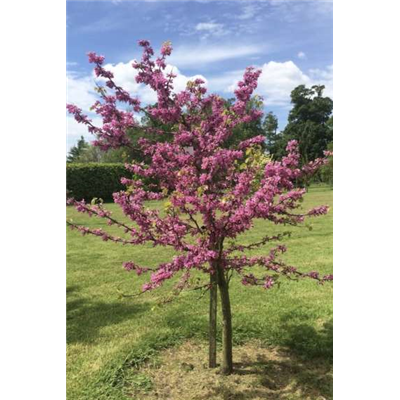 |
Hugh Povey and his wife welcomed members of the Gardeners of Eden on Tuesday August 4th to Prospect Hill Arboretum . After a very wet morning, the weather improved somewhat to enable the 17 Members to enjoy the Arboretum while keeping relatively dry. With views across the Eden Valley, the Arboretum is located between the Lakeland Fells and the Pennines. It is hard to believe that only 18 years ago, it was an open field with grazing sheep.! As it has developed it has become a haven for wildlife with numerous birds nesting and taking shelter in the hedgerows and maturing trees. . Planting began in 2009, and continues up to the current time and no doubt beyond. The first task was to plant native hedging around the area to protect from wind damage, Prospect Hill is a very exposed site with the prevailing South Westerly wind and the Helm wind. The planting took place over 4 sequential winters but took several years to become a wind break. . Gates and Fencing also needed to be replaced to discourage visiting local livestock. To date over 300 trees and shrubs have been planted , a mix of popular specimen plants and others which are not common in the UK, in addition varieties of Rhododendron and Azalia are interspersed to give in season and evergreen structure in winter. In 2010 a pond was dug out and banks created, now in its maturity it is a haven for wildlife and in a beautiful setting. The Arboretum hosts the Plant National Collection of Cercis a genus of flowering plants containing deciduous trees and large shrubs, known as “ redbuds” in the USA ,characterised by heart shaped often multicoloured leaves, and pinkish-red flowers borne in the early spring on bare leafless shoots on both branches and trunk ( cauliflora) . Specifically the Arboretum hosts the cultivars Cercis chinensis( Chinese Redbud), Cercis candensis, ( Native to the USA, Eastern Redbud) and Cercis siliquastrum known as the European Cercis, and includes the small deciduous Judas Tree. Hugh himself led us on a tour of the amazing two-acre site, during which we visited the orchard, the pond, and the trees, which Hugh had collected from all over the world. Such was his enthusiasm, he knew every tree and every shrub personally, hardly surprising as he had planted them all over the last 18 years. A wonderful afternoon for us all. |
|
| Tuesday, 07 July 2026 |
| Netherby Hall |
|
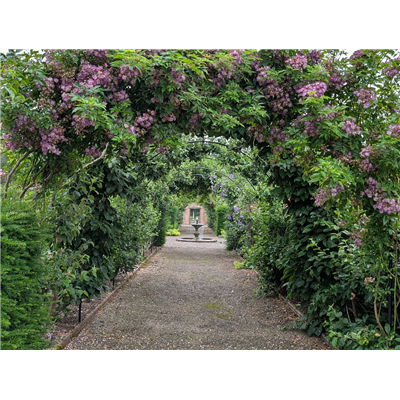 |
Mr Gerald and Mrs. Margo Smith On a warm but overcast day, 18 Garden of Eden Members visited Netherby Hall gardens. The hall was built on the site of a Roman Fort and contains within it a 16thcentury Pele tower. The hall is located on the border with Scotland on the edge of “Debatable lands “(originally a Lawless Zone controlled by the Border Reivers, between the Solway Firth and Langholm in Dumfries ) The 36 acre site includes extensive lawns, woodlands and fine specimen trees. Sunken gardens with Hosta’s that seemed to have avoided becoming a banquet for slugs. The mature Lime trees attracted many bees although a high number appeared dead under the Lime trees, leading us to ask whether Lime nectar is actually good for bees. Ed. The adverse effect of Lime tree nectar on Bees is quite a well-known phenomenon but is not clearly understood. Some studies have shown that Caffeine is present in Lime tree nectar, and while in itself is not toxic to Bees it is thought it might be affecting their judgement!!! Studies have shown that caffeine can enhance the memory of bees for floral traits, and this can result in the Bees overvaluing a caffeinated food source which becomes depleted, an effect enhanced by the far reaching sweet scent of the Lime tree. In other words Lime Trees maybe a fatal attraction for Bees. !! The 1.5 acre walled garden was a delight with, walkways lined with over 60 varieties of apples. There were bed upon bed of vegetables , destination the Pentonbridge Inn a Michelin stared 18th century Inn. Notably beds of Flowers are grown to be used for weddings at the hall, and in the Self-Catering Cottage. The Glasshouses housed, grapes , peaches and a novel device for rooting cuttings by the use of tiny sponges. The borders were all organically tended, with no sprays used on the roses, removal of plants susceptible to blackspot being the preferred method of control. Blood, fish and bone keeping the topsoil in good condition, as the underlayer is think clay heavy enough to cast pots. A firm favourite was Persicaria Capitata ( Pink headed knotweed, thought to be beautiful but invasive !) its triangle leaves causing quite a stir in the border. The Delphiniums were beautiful colours but unfortunately as with all Delphiniums needed staking as they tended to drop over the border. Another favourite was the American Oak, Rubra an impressive specimen that puts up an autumn display of reddish-brown leaves. The five star accommodation for Bilco the cat was a delightful addition and he is no doubt responsible for keeping down the nibbling mice. |
|
| Tuesday, 02 June 2026 |
| Chapelside Mungrisdale |
|
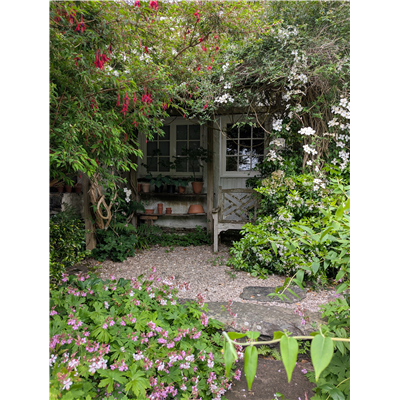 |
Tricia and Robin Acland As showers threatened, 17 Garden of Eden members gathered on the green lawn of Chapelside in Mugrisdale. This was the second visit we have made, the first being in July of 2014. The property, including an 18th century farmhouse with several picturesque outbuildings, has been lovingly redeveloped by Tricia and Robin Acland over many years. The house is entirely surrounded by the garden, with Bannerdale Crags offering an impressively solid, green backdrop. Blencathra lies beyond, just out of site. Tricia is the primary garden designer while Roger has moved rocks, stones and earth to shape the land into smaller areas, often adding quirky and humorous works of naturalistic art. For example, at the entrance gate, a hefty rock appears to float, magically, in a still pool of water. Hidden in the back woodland, a rough wooden post has been pierced with random spears of wood and named ‘Nothing Important in the Post’. A tiny space between the house and fence has been given a sinkhole feature by using slabs of slate set on edge to suggest water swirling around mossy boulders. A collection of ferns enhances the illusion. And stunning Euphorbia griffithii ‘Fireglow’, red poppies, Crocosmia ‘lucifer’ and yellow Flag Iris underline a view towards the fells beyond the fence line. Any vegetables that grew in the Kitchen Garden nearby, were hidden among a mass of softer colour. Ox-eye daisies, Aquilegia ‘stellata’, forget-me-not, Phlomis and the odd blue mecinopsis mingle around a pyramidal greenhouse. Roger has created a wet ‘stream’ and Tricia lined it with blue hostas, Heuchra, Shield ferns, rushes and Maianthemum bifolium ‘false lily of the valley’, of diminishing sizes, to create the illusion of a stream flowing from distant woods. It leads to a pond where we found a stem of Iris laevigata ‘Snowdrift’ in bloom. Further along, ingenious use has been made of random small round pebbles, angular slates and odd boulders to fashion a circular mosaic that sits in a depression of the back lawn. Walking over mossed cobbles, past a rusted gate hemmed with a froth of London Pride and ducking under a magnificent flat Juniper held up by strong wooden crutches, we come to another lovely, still pond half covered with floating lily pads. A small copse of 6 Betula jacquemontii sits in an orchard area where damsons, crabapples Cornus kousa and roses bloom over the summer. Back at the front of the house, Tricia and Roger were assisted in serving tea by another couple familiar to our group, Romola and Edward Acland, owners of the fascinating Sprint Mill that we visited in August 2022. So our visit drifted to a relaxing close as some went off to the Barn to enjoy the amusing art installations by Roger and Edward, others read the history displays and everyone enjoyed a final chat over the perfect sponge cakes. |
|
| Tuesday, 07 October 2025 |
| Low Fell Hall West |
| Barbie Handley |
 |
Our group of Gardeners of Eden visited this undiscovered 2 acre woodland of absolute delight. Cones of trees do shelter the west side, but their shapes belie the eye’s feast of colour and shape beyond. We all found our way forward, as a drizzle added beads of pearl to an opening view of the yellow-leafed Acer and gave glimpses in today’s mist of Scout Scar. The busy birds fluttered with colour as we took time to stand and stare. Barbie Handley, now widowed, greeted us at he gate with a comprehensive photographic display of their work to develop the acres of un-tamed wilderness aka 2014 to present day.. Therefore let us take a walk through to now, 2025, also closing in splendid colour: We have grassy outcrops decorating the Silurian Slate. There are numerous slate paths also to explore but we stayed with our guided tour. The array of Blue, Green, Purple to Indigo Hydrangeas made an unusual display of shade with big canopies of flower head. They have so obviously found their home here and marched in rounded formation to please our eyes. Jack Frost still reigns supreme beneath the trees in silver pools of veins which must reflect the Moon sometimes. Small pockets of red grasses and wild flowers to bloom shall grace the floor again in Spring. Along the walk we gazed upon a ruby red Crab Apple tree and its fascinating shape. If we squat down and look through its branches we see different perspectives. Nature has an artistry which, when left alone, fills all the vista. The Bow topped caravan proclaims: look at me now so fully restore to my former glory. Barbie’s eye still gazes with love upon the Betula Utilis Jacquemontii - all alive in their silver coats. We still had a surprise with the Katsura wafting delicate Toffee Apple aromas into the air. So much more to see and the woodlands warrant seasonal visits to truly unlock the miracles of growth and their survival in winter to unfurl miracles in Spring. Very understated and fascinating... Low Fell Hall 2-acre woodland. Val Wright |
|
| Tuesday, 15 October 2024 |
| Visit to Thorpe Perrow arboretum |
|
 |
Sixteen Garden of Eden members made the hour-long drive through mist and light mizzle, to Thorp Perrow, near Bedale, Yorkshire for a return visit, after 5 years. This was our second autumn trip to see what had changed, and to admire the colours and shapes in the Arboretum. Those who arrived early had time for the 15 minute walk to the Bird of Prey Centre, where we watched a Barn Owl, Little Owl and Snowy Owl take flight. Lunch and the Hallowe’en trail through the Bog Garden kept some entertained until our guided tour, with Faith, began at 2:00. Faith gave us a brief history of the property, explaining how the Ropner family, starting with Sir Leonard in 1931, had established and developed the Arboretum. Pictures from old family albums of trees being planted to celebrate special occasions have been used to fill out the story of this 100-acre woodland. Further details of the history and also the layout of Thorp Perrow can be found in the Report of our last visit in 2018on G of E website, where you will see that Faith still carries a cup of hot water to keep her hands warm during tours. Our tour started in the section that is planted with trees which would look attractive in most household gardens. Here, particular attention was paid to shape, pattern, texture and colour of the specimens and they tend to be smaller, more ‘domestic’ size than the trees in other sections where they are encouraged to reach full, overwhelming potential. Faith has observed differences in colouring and flowering over the 15 years that she has been here: some autumns glow with patches of scarlet, others favour the butter yellows and then there are the years when brown leaves predominate – euphemistically termed ‘golden’ years. This year the Cotinus ‘smoke’ flowers have been sparse and, curiously, a Persian Ironwood has begun to drop it’s leaves while they are still quite green. Every year brings a change. Our next stop was in a clearing beside a wall of tall firs underplanted with trees that provided both spring interest, autumn colour and berries for wildlife: cherry trees, laburnum, cotoneaster Lucidus (Hedge Cotoneaster) and various euonymus, including variety known as Spindle Tree or European Euonymus, We then moved to the spectacular Main Avenue and stopped near the graceful domed monument to Sir Leonard Ropner. From there, one looks down a long avenue that is planted with a backdrop of tall evergreens, towards the main house. The avenue is lined with Italian Alders that have replaced a line of diseased elms, They have the advantage of a low canopy that holds its green colour ‘til late in the season, making them the perfect backdrop to the Acer palmatum 'Osakazuki' which, although a subdued red today, shone a bright scarlet last year. An old Cherry Avenue has been cleared of unproductive trees, and after years of deliberation it has been replanted, re-aligning the design to take advantage of a statuesque incense cedar. The cedar tree is encircled by a memorial engraved with the words: ‘Don’t Waste Time’! – the habitual urging by younger Sir John Ropner’s to his staff. Now four different species of cherry trees, planted in a repeating arrangement, extend the season of flowering and the variety of autumn leaf colour. The next step will be to lighten the display by planting other prunus between the cherries and the stately backdrop of conifers that protect them from wind. Our next stop was at the foot of a veteran tree called Mama Beech – Mother of the Woods, The Matriarch. Fifteen minutes spent under its boughs is enough to lower a human’s blood pressure as oil essences drift from the leaves, affecting cortisol levels that reduce stress and relax the body. Trees communicate with each other in a similar way, warning other plants about invading pests or disease using Mycelium, which form networks of fungal strands that work between and within trees to move water, nitrogen and minerals between plants. A tree as dominant as Mama Beech has an extensive mycelium network that benefits a large area of the woodland around her. Nearby, an Oak tree, of the same age though smaller may have an invigorating effect on anyone who stands close and hugs it. It, too, is connected to the Mycelium network. Like all important woodlands, Thorp Perrow contains Mature, Veteran and Ancient trees. A mature tree is one that has reached its full height and crown size, and is ready to reproduce. Its crown may continue to spread and it’s trunk to widen. A veteran tree may not be very old, but it will have significant decay features, such as branch death and hollowing. An ancient tree is one that has passed beyond maturity and is old, or aged, in comparison with other trees of the same species. It may have an unusually wide girth and be hollow inside, but it could well be very healthy. All ancient trees are veteran trees, but not all veteran trees are ancient. Next we re-visited the ‘habitat stump’ -an old Veteran Beech - cut down for public safety reasons - that has become a teaching laboratory. It houses insects, a small ash tree, ivy and fungus, including the fruiting body of the Ganoderma applanatum ‘Artist’s Fungus’ an part of the Mycelium network that grows in living or dead trees. It’s presence indicates that a healthy-looking tree is rotting inside. Our particular tree stump suffered from breakage and snow-damage last year and although it is deteriorating quickly, it will continue to support other woodland life, for many years to come. Thorp Perrow holds 5 National Collections including: Cotinus, Ash, Lime , Laburnum and Walnut. The National Collection of Cotinus includes ‘Red Beauty’ - a good doer with rounded leaves in shades of deep red and purple and purplish-pink flowers that are borne in large, feathery plumes in summer. ‘Peter’s Purple’ is a Cotinus with strong autumn colour that the arboretum is trying to propagate by layering. It is very rare and virtually irreplaceable, otherwise. Other interesting trees nearby included a native of Eastern Asia, the Blue Bean tree (Decaisnea fargesii) with a few really very blue bean pods still hanging, a Liquidambar styraciflua (Sweet Gum), a Trident maple, so called because its leaves grow in triplets and several Parrotia (Persian Ironwood) which show variable colour depending on their situation. The Acer griseum, or ‘paper bark maple’ has bark of a stunning rusty colour that peels in small layers. It is rare because it has to be reproduced by the vegetative method i.e. grafting, as it is not a particularly fertile species. The Lime Avenue is very important, and contains some Champion trees. Champions are so called because they are the tallest, widest, oldest, rarest or perhaps simply the oddest-looking specimen known in the country. There is a great diversity amongst the limes here, and they form another of Thorp Perrow’s National Collections. In the spring, the avenue is buzzing with bees. There is also a National Collection of 18 different types of Juglans (walnut) here. They were initially planted too closely together. Now, since they are mature trees, a plan to re-site them has been abandoned and they continue to adapt to their imperfect placement. Some of them are Champion trees and irreplaceable. As we walked back towards the entrance, we passed the Mound - a feature made from the soil of another project with a central stone structure that began as an ‘egg-shape’ and morphed into an a larger, more noble ‘acorn’. It is surrounded by lavender, grasses and buddleia, and steps have now been fashioned to give access to the herbaceous border at the top. Springwood is another named area in the arboretum that was mentioned in the Doomsday Book. It is a medieval piece of the woodland growing with several historic yews, in an area where there are many springs.. We ran out of time to explore the oaks, but Faith explained that if we returned at another time of the year, there will be something interesting in every season: snowdrops and crocus in the woodland and one of the largest collections of daffodils in the country come into their best in Spring. And from late summer into autumn the collection of hydrangea is amazing. We ended the tour in the Tearoom where Ian Torkington expressed our thanks to Faith. A warm drink and an exit through the plant sales ended the visit perfectly. Websites: Thorp Perrow website |
|
| Tuesday, 03 September 2024 |
| Visit to Whaup Cottage |
|
 |
On a perfect sunny, gardening day in September, Gardeners of Eden members met at the home of Ian Torkington for a tour of his garden. This is the third time he has generously invited the group and so it is especially interesting to see how his plants and his plans have been developing over the years. A glorious show of bright pink Phlox and tall, yellow Evening Primrose with splashes of colour from red salvia, blue-purple Echinopsus led us up a path past the geodesic dome that housed a variety of climbing cherry tomato plants. We passed a pond, so well camouflaged with greenery that the single pink waterlily was a surprise. On through a hedge and into the back meadow we found an area which consisted of a jumble of grasses, yellow rattle, teasels, crocosmia, iris and loosestrife. In the middle was a cleared patch with a surprise – a private dining area with table and 3 chairs. From there, mowed paths led off toward the surrounding drystone wall over which the stunning fellside could be admired. Ian pointed out the highest part of his garden where he intends to place a water tank that will eventually feed a small rill, running water down through the clearing to the water lily pond below. Further up, a small terrace has been built, from which the views are even lovelier. And nearby is a mound of wild and garden flowers jumbled together inside a rock-bordered bed. This was a simple solution to the problem of removing a difficult pile of rocks and earth. Ian has built several deep raised beds. The first one held an amazing second flush of strawberries. Another, a healthy patch of brassicas companion-planted with calendula and nasturtiums. Further along was a bed of healthy leeks and near that other brassica that had been allowed to flower and seed for the sake of pollinators. However there was no sign of the specially-purchased seedlings (peas? Lettuce?) that had been raided by some mysterious, hungry pest, so the garden does hold unsolved puzzles. We visited the Rambling Rosie which Ian bought on a G of E visit to David Austin some years ago. A recent pruning miscalculation meant it was only half itself, but that may strengthen if for next year. The lean-to next to it will soon be rebuilt to provide a warm glassed area for extending the gardening season. (The huge patch of Crocosmia that was due for removal has been donated to the club’s autumn plant sale in a couple of weeks, held in memory of Cath Thompson and for Cancer research.) Ian then led us out to the Ravenstonedale allotment where we saw what hard work and experience can produce. Climbing beans and trailing pumpkins and squash, abundant leeks and broadbeans, new currant bushes and zucchini. The allotment members have plans to reconfigure the water supply and composting areas, and the plot is a credit to that pretty village and it’s inhabitants. It was an excellent afternoon and we were all grateful to Ian for his kindness is sharing his garden with us. We adjourned to The Black Swan for Coffee and Cake. Perfect. |
|
| Tuesday, 06 August 2024 |
| Yews Bowness n Windermere |
|
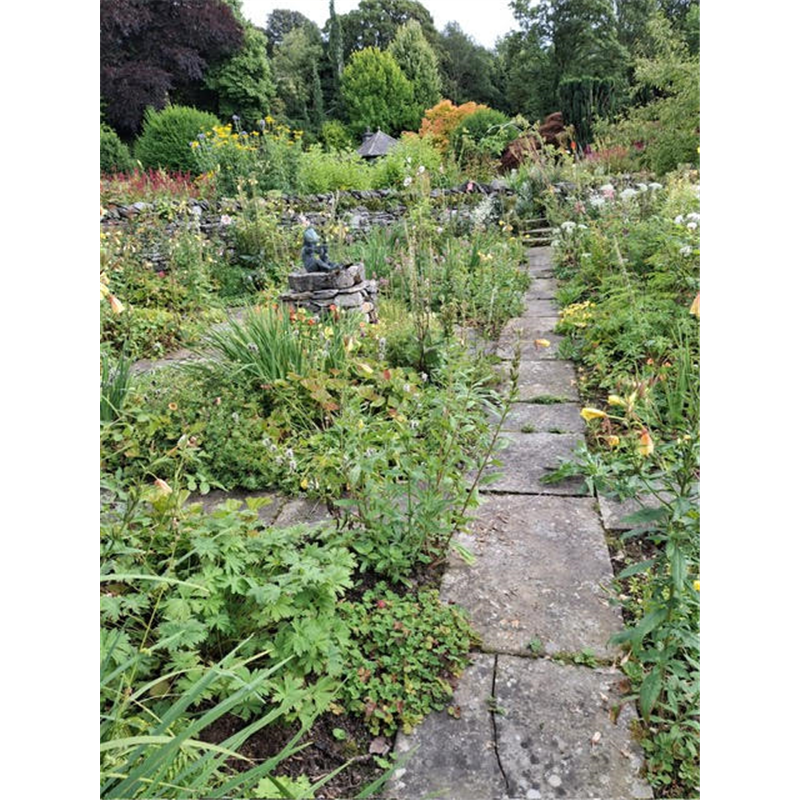 |
In August, G of E members drove by car to Yews, a short distance south of Bowness-on-Windermere. The beautiful shell-pink residential buildings at Yews were built during the 17th and 18th centuries and are in the Arts and Crafts style. They stand in a 7-acre ornamental garden originally designed by Thomas Mawson and later worked on by Avray Tipping, which includes Sunken Borders, a Rose Garden and a Croquet Lawn. Sweeping lawns and borders of fern, roses and Iris greet the visitor. A tall hedge offers a pleasing screen so the colours of the blooms are not swallowed up by the pink bubble exterior of the house. A low, grey-stone wall borders the house with a line of well-cut shrubbery marching along the front. A grove of small trees set in ground-cover is bordered by Hydrangea – splashes of blue pompoms and cones of pink and white – and punctuated tastefully by the bold shapes of huge rocks. Another border themed in purple, yellow and white, leads off from the front of the house. For the more adventurous, there was a Woodland walk, a Bog Garden and a renovated Yew Maze to explore. The visit was made perfect by the bright day, and easy by the groomed gravel paths. Well worth another visit! |
|
| Thursday, 04 July 2024 |
| Visit to Growing Well Tebay |
|
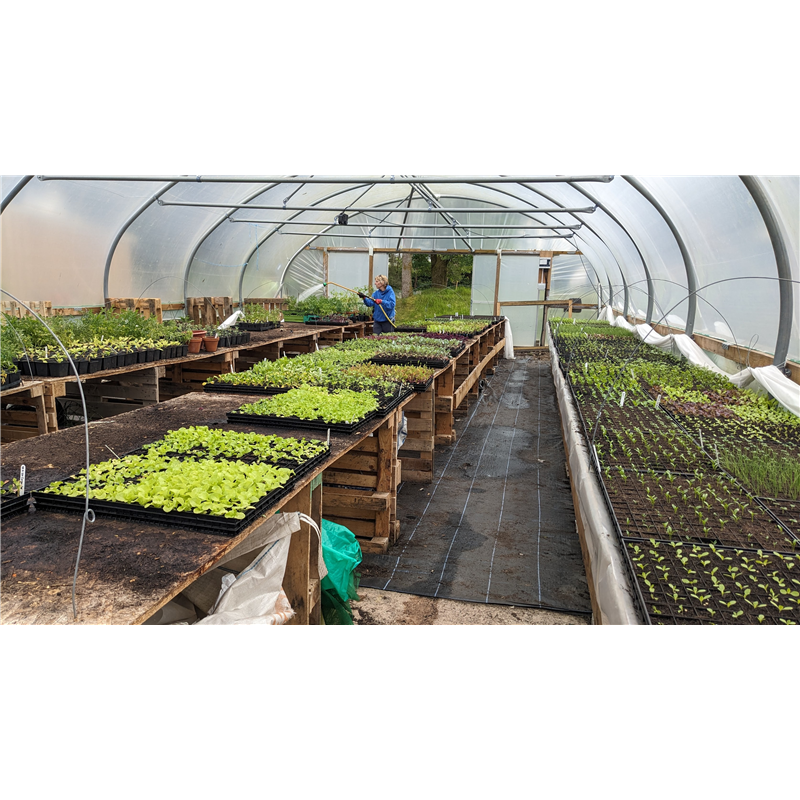 |
In April 2023, a representative from Growing Well came to one of our indoor meetings to explain the history and ethos behind this worthwhile new project to support people who are dealing with mental health issues in our community. So on this summer’s day, about 15 Gardeners of Eden members arrived by car at the Tebay site of Growing Well to see the project in action. Westmorland Services has donated a former caravan park; consequently most of the area had once been covered in asphalt. Much of this has now been removed to make way for several vegetable beds and two large green houses. Several high-sided raised beds at the entrance are accessible for wheelchair users; nearby, in a large plot protected from rabbits by wire fencing, lie several ground-level beds, each being narrow enough to reach and step across comfortably. Beside them, stand the most recent additions - 3 generous concrete composting bins, thanks to the Rotary Club. A long, low shelter used for sorting produce, office work, coffee breaks and displays, took up one side of the site. This is where the staff and the volunteers meet to discuss plans and pass on the knowledge of horticulture and marketing that are so important to those attendees for whom these new skills enhance mental health, social well-being and employment opportunities. Meals are also prepared for workers, using the totally organic produce. The first of two Polytunnels is divided into 3 long raised beds. One is planted with ‘top story’ climbing beans, ‘middle story’ tomatoes and ‘ground covering’ cucumbers and lettuces. Interestingly, the central part of each bed was a couple of weeks behind in growth, possibly due to lack of water or overheating in that area. However, staff appreciated that this quirk allowed some produce to naturally mature later, thus evening out supply and mitigating glut of salad and other leafy vegetables that are supplied to the nearby Westmorland Services restaurant. Another Polytunnel housed 3 full-length workbenches built on pallets. This is where seeds were planted into cells and eventually transplanted to pots for growing on until they were ready for planting out. Recycled materials and equipment were used wherever possible and experimentation is encouraged, as demonstrated by a line of strawberries grown in old hanging baskets. As the plot develops, produce will also be sold to the Westmorland Services shop and the hope is to include flowers and more herbs next year and to offer vegetable boxes for sale to the public eventually. Rabbits are a problem on the site. Fencing had been constructed around the plots, and an ingenious sliding gate made from pallets was a successful measure to protect the polytunnels. The trees and bush adjacent is wonderful for bird life and it offers scope for wildlife projects, too. The group ventured up along the wooded path and were rewarded with stunning views. Black and redcurrant bushes have been planted on the ridge in the hope that next year they, too will produce a useful crop. Our group was most appreciative of the visit and especially of the service that Growing Well offers to Cumbrians. On Tuesday and Thursdays there is a free bus for participants and on Field Fridays the general public is welcome to visit and learn more about Growing Well. Donations are always useful. Their Growing Well-Tebay Website has further information. |
|
| Tuesday, 04 June 2024 |
| Visit to Abi and Tom's Garden Plants witherslack |
|
 |
It was a wet and windy day when the Gardeners of Eden visited the garden centre of Abi and Tom, in Witherslack. Our club has followed their story since they first bought and cleared the site in 2011, so it was with curious anticipation that we finally opened the car doors and put up the umbrellas, to explore. We gathered in a covered entrance filled with colourful potted plants - cosmos, geraniums, coleus, variegated ivy – where Tom gave us an overview of their history before a tour around the site. A small area near the entrance has been recently replanted in rows with canna, cosmos, blood-red ornamental grasses and attractive woven hazel-twig structures ready for climbing beans. A pebble mosaic pathway led down to an open-sided greenhouse constructed of substantial timbers and a light-penetrating polycarbonate roof, which replaces an original high-maintenance glasshouse. It houses ferns and succulents, protected from the worst of the weather. Further on we stopped near a new gravel garden where several unusual trees are already established. On their Facebook page and Website, Tom regularly introduces plants that they find particularly useful and we could see some of his ‘stars’ as we looked around: Arbutus unedo aka Strawberry Tree, Aspen ‘populus tremula’, Pinus sylvestris ‘Norska’. Towards the back of the property stand two large polytunnels, protecting an array of raised benches that hold recently planted seed trays. As the seeds sprout and mature, they are pricked out into trays of individual plug cells for further growth, before being transplanted into individual pots for sale, or the garden grounds for display. By doing all the work of the growing process, with the help of a few student volunteers and staff members, Abi is able to ensure a wide variety of plants – ones that, through trial and error they eventually choose for hardiness and health in the challenging northern England environment. The polytunnels provide shelter from winter rains, but they are unheated, so plants have to be hardy to survive the sharp cold of this garden’s frost pocket. Thus they can assure customers that their plants will grow successfully in the north west where our winters are wet. Our final stop was in the family garden area where raised beds contain a mix of colourful flowers and vegetables. Here Abi and Tom’s children can learn and play while their parents are in the centre, or hold gatherings for friends. There is an adventure path through tall grasses - Miscanthus & Eupatorium - running behind a wooden summerhouse, a climbing frame in an open area and a beautiful, big bug hotel. Before leaving, G of E members enjoyed browsing the beautiful grounds and relaxing with coffee and cake at the self-serve café. Finally several of us made the trip in to Grange-Over-Sands to visit their Plant Centre there. |
|
| Tuesday, 07 May 2024 |
| Himalayan Garden and Sculpture Park |
|
 |
Himalayan Gardens Visit 7 May 2024 There was a good turnout for our visit to The Himalayan Gardens and Sculpture Park near Grewelthorpe, Ripon in North Yorkshire. About 20 G of E members shared cars and gathered at 11:00 am for an orientation by one of 4-strong gardening team, before going off in small groups to explore. Originally owned by the Bishop of Truro for a hunting lodge, Peter and Caroline Roberts bought the 20-acre property in 1996 as a privately owned woodland garden, from the Dalton family who still live nearby. Over the years they extended it to 45 acres. In 2013 the Roberts donated it to a charitable trust - The Hutts Foundation- to secure its future. Over time, the opening hours have been extended, three lakes added as well as an arboretum, Garden Tearoom, plant sales area and an education centre. Although the Park is quite remote, it is gaining a wider reputation with improved publicity, including the Himalayan Garden and Sculpture Park website. In the beginning, coppiced Hazel woodlands and an infestation of Japanese Knotweed had to be cleared and the dense forest of Sitka Spruce was reclaimed and opened up. Now the acid soil, an abundance of springs and the microclimate of the valley make the site ideal for growing Himalayan plants, among which they display over 90 sculptures, some permanent and several for sale. The garden has one of the North’s largest collection of rhododendrons, azaleas and magnolias and holds a National Collection of Rhododendron subsect. Fortunea. With advice from rhododendron expert Alan Clark, Peter sent out to the Sino Himalayas for specimens which he has used to develop new hybrids according to their scent and flowering habits. Most of these were in bloom for our early May visit as were the magnolias along Magnolia Lake, wild Bluebells, a few precious blue Meconopsis betonicifolia, Candelabra Primula and yellow Erythronium in the newly planted Woodland Garden. Several unusual structures have been built around the park. The Pagoda, originally built in Bali, was brought to England and reassembled near Magnolia Lake. The Himalayan Shelter is constructed in the style of Kath Kuni architecture with courses of cement layered with the cedar wood which grows well at 4000 m in the Himachal Pradesh region of North West India. The Norse Hut, which was built from the timber of the Park, references the address Hutts Lane, derived from the Norse word for ‘Head of the Valley. Nearby, sits one of several areas that are maintained to attract butterflies and moths. The Park contains a range of plants such as Himalayan Honey Suckle, Buddleia Bush, sedums, various grasses and scabious. Willowherb, brambles and nettles are allowed to grow in some open areas and strimming, and pruning of shrubs is carefully timed to protect the insects at pupa stage. The Arboretum comprises 12 acres of Birch, Acers and several unusual trees such as Chitalpa, a Paper Mulberry and Bean Trees. There are 52 varieties of Oak, including one tree directly descended from King Alfred’s 1000 year old Oak at Blenheim Palace which site across from the Himalayan Shelter. Members were very impressed by the placement of sculptures in the landscape. A stunning river of blue ceramic poppies and The Book Tree were two of many. The weather was perfect for our visit and members departed with memories and photographs of a beautiful area that has been lovingly tended and expanded with the objectives of “ the advancement of the arts, horticulture and environmental protection or improvement, particularly but not exclusively by promoting the cultivation and conservation of rare and endangered plant species of the world and the use of sculpture within natural and cultivated landscapes.” A most worthwhile visit for our Gardeners of Eden. |
|
| Tuesday, 02 April 2024 |
| Garden Organic - Composting |
| John Ockenden |
 |
Garden Organic – Composting Twenty members of the Gardeners of Eden gathered at the Friends Meeting House on 2 April to listen to a talk by Gardening Organic speaker, John Ockenden. John began by explaining that Garden Organic, originally formed in North America, had established a presence in the UK in 2001. Since 2017, the Cumbria council has provided funds to run courses and train volunteers, with the aim to reduce the amount of waste collected from homes across the region, and to raise awareness of the benefits to composting household materials. Local volunteers like John have been very active with home visits, presentations to schools, cubs and service groups, conducting a webinar, writing articles and setting up information booths at events such as the U3A, Sedburgh Apple Day and farmer’s markets. A very common question at such events has always been, “Why doesn’t my compost bin work?” John explained that in nature, a mixture of materials and great variety of microorganisms ensure that decay and composting are an ongoing process. However in our plastic or wooden bins, the effectiveness of microorganisms is limited, most often because of the mix of green and brown waste is faulty. Green waste is moist, soft, decomposes quickly and is high in nitrogen. Nettles, vegetable scraps, hay, grass cuttings (herbicide-free), coffee grounds, annual weeds, soft prunings are examples. Brown waste is tough, woody and decomposes more slowly. Autumn leaves, woody prunings, kitchen paper, newspaper, hair and cardboard packaging are examples. A third category Brown/Green would include old bedding plants, animal manure, tea leaves and teabags, hedge clippings (beware of sharp thorns), cut flowers and pet bedding and cat litter (but first remove animal droppings – especially dog and cat which contain dangerous pathogens). Vacuum cleaner contents are also acceptable unless you have recently used de-worming meds for pets, or you have a lot of plastic fragments from synthetic carpeting. Other materials such as wood ash, chimney sweepings from wood-burning and eggs shells will add minerals to the end product, making the compost even more valuable to plants. By throwing in whole rather than crushed eggshells, air is also trapped. Air, heat and moisture are all important. Without oxygen, decay results in a slimy, smelly mess and proceeds very slowly. This ‘anaerobic’ decay is often seen inside thick layers of grass. Adding grass clippings in only thin layers and uncrushed eggshells that trap pockets of air helps. A productive compost pile generates its own heat, which kills pathogens. However excess heat, as sometimes experienced in the summer, will stop the activity of the beneficial organisms. Regulating moisture is important, too. Use a cover that prevents too much rainwater getting in and check the pile in the summer with your hand – it should feel just damp – to determine if it needs a bucket of water adding. By turning and remixing the materials, the best combination of air, moisture and warmth is achieved so that composting is efficient. If left alone a heap takes an average of 6 – 18 months to form the desired crumbly, earthy-smelling mass. The time can be shortened by chopping woody bits into smaller pieces and turning the heap a few times. Adding activators also speeds the process. Commercial forms exist as do natural sources such as comfrey, grass clippings and urine, which have abundant Nitrogen. The finished product will not look like bagged compost. It may have twiggy bits and lumps but is still full of life and goodness which makes excellent soil improver to use as a mulch on top of beds or an ingredient in potting mixtures along with loam, coir, grit, etc. Troubleshooting: - Rats live close to humans. If you don’t want them in your bins, rat-resistant bins are commercially available. Don’t add foods that may attract rats, such leftover cooked food, meat or dairy products. Or simply place your bins far away from your house. Processed food can be safely composted in a Hotbin or a Green Johanna. -Flies can be deterred if the mix of 50 green to 50 brown is maintained. -If the bin stops working, check to see if it is ‘done’ and if not, adjust the mixture. -Worried about spreading weeds? The tops of perennials are safe if you avoid the seedheads. For perennial roots, bake them in the sun until dried out or drown them in water for 6 weeks to rot them, before adding to your bin. Bins and digestors: There are many options available such as Wormeries, Daleks, ready-to-assemble timber bins, homemade bins from pallets, tumbler-style for easy mixing and wire frames best suited to reducing autumn leaves to leaf mould. -Bokashi is an anaerobic, fermenting method of making food scraps into a fertilizer, using Bokashi bran as a starter. -Green Cones are an example of a food scraps (only) digestor. They are activated by the heat of the sun and although they do not produce compost, they release nutrients in the soil that then nourish nearby plants. They will work in easily-drained, sandy soil. Websites for ordering a variety of bins: https://getcomposting.com/ https://www.greatgreensystems.com/ After John had answered many questions from the audience, Alison expressed our gratitude to him for an informative talk, given with humour and clarity. It was excellent and useful way to spend the afternoon. |
|
| Tuesday, 05 March 2024 |
| restoration of Jubilee Park |
| Anne Taylor |
 |
Jubilee Park Speaker: Anne Taylor 5 March 2024 Twenty members gathered in the Methodist Church Hall for the March meeting of the Gardeners of Eden. Our speaker, Anne Taylor is well known in the community for her extensive knowledge and enthusiastic promotion of out local history, including the background to our present day Jubilee Park, which is located just south of Kirkby Stephen. In 1855 a 4-acre piece of land was divided into two parts, one for allotments to benefit ‘the labouring poor’, and the other for ‘a place of exercise and pleasure’. While the allotments were soon put to use, the recreation area was neglected and subjected to ‘fly-tipping’ until in 1887, when the Golden Jubilee celebrations inspired citizens to think of ways to establish ‘a pleasure ground’. Still, it was several years before the Master of the Workhouse, Andrew Mackereth, came forward to put his designs for a planting scheme, pavilion, drainage and boating lake, into action. Even then, the park, then named Victoria Park, had problems with vandalism, theft of soil and littering for many years and by the time of its millennium year in the 1950’s it was in a sad state. Fortunately, in 2005, funding was found for a new pavilion. A general tidying-up was accomplished by a small group of town councillors and volunteers, making it more pleasant for walkers. Then in 2021, a grant from the Westmorland Dales Landscape Partnership provided money to employ Luczak Associates to survey the land and compile a detailed management plan for an updated design. The new design is a departure from the pleasure gardens of the Victorian age in that it puts more emphasis on the natural environment and native species. The original layout of paths, boating pond and summerhouse are being preserved, but they will be enhanced. Five zones have been identified to help direct the efforts of volunteers. The Welcome Area at the northern, lower end, holds Spanish bluebells, garden daffodils and a lovely group of lilies which, while they do not fit with the natural scheme, provide pretty, seasonal colour. In any case, the Spanish bluebells are impossible to eradicate so we must live with them. The Woodland Zone, in the centre section, lies under tall lime and beech trees. Excess underbrush, dangerous diseased/decaying trees and weedy saplings have been removed to allow more light to reach the understory where daffodils, bluebells and ferns have been set out. Ivy has been stripped from some trees but left to grow on sturdier ones to provide shelter for birds and insects. In October 2023, 1000 very small wild daffodil bulbs, sourced from a reliable wild-plant dealer, were sown in only an hour with the enthusiastic help from a community group of volunteers and families. Already a couple of flowers have been spotted this spring and as more light filters to the floor, it is hoped other woodland plants will begin to flower as well. On either side of the centre lie the Tranquil Areas, where the Rotary Club have installed 10 ‘luxury’ nest boxes built by the Scouts with wood donated by local building suppliers, Atkinsons. In June orchids can be found near the Goat Willow Salix caprea on the upper level. From the Woodland walkers climb, a short flight of stone steps that are flanked by an old rockery. This bank of boulders is now covered with ivy and recent, hopeful plantings of hellebore, periwinkle, foxgloves and ferns. On the level above, Box shrubs form a loose sort of hedge that defines the boundary of the upper Children’s Activity Woodland. A community group called Stomping Ground have planted a child-friendly willow maze that is woven and trimmed annually. Nearby sits a large Summerhouse/pavilion of stone and wood. The wooden steps leading to this shelter are in need or future replacement, but for now they are a mini-wilderness of small plants, moss and insects. Visitors can rest on benches inside the shelter and enjoy a view of the landscape, looking beyond a pond and wetland area, towards the imposing summit of Wild Boar Fell. Pond Area - By early spring, a large rectangular man-made pond has been filled by the winter rains and on calm days reflects Wild Boar Fell. As spring advances, alliums, daffodils, and tulips – many donated by the greengrocer – begin to bloom and define the farthest boundary of the park with a strip of colour. Future plans for the Park include placement of sponsored benches along the Woodland Zone paths. This summer Anne hopes to repeat two successful events for families, one in June and another during Westmorland Days. These may involve activities such as a woodland scavenger hunt, crafting of tiny boxes from leaves and pine needles or assembling collages from natural materials, similar to the pictures of moths with antennae fashioned from sprigs of grass and feathers as seen at last year’s forays. Anne has been active in co-ordinating an informal group, Friends of Jubilee Park, to meet on the second Saturday of every month, from 10 am to 12, to do maintenance, planting and fund-raising. Some of our Garden of Eden members join in regularly and others are certainly welcome. Vivienne thanked Anne for coming to tell us about the progress that has been made to restore Jubilee Park, and for the invitation to meet up with the Friends who are tending this pleasant and historic corner of our town. We are very grateful for her efforts to tie a piece of Kirkby Stephen’s history to today’s growing enthusiasm for environmental awareness. |
|
| Tuesday, 07 November 2023 |
| Beyond the Garden Gate |
| Carole Berryman |
 |
Beyond The Garden Gate Carole Berryman 7 November 2023 Twenty members gathered in the Methodist Church Hall for the November meeting of the Gardeners of Eden. Our speaker, Carole Berryman, explained that she was one of several Assistant County Organizers for the National Gardening Scheme (NGS) in Cumbria. With only 6 paid staff, and 400 volunteers like herself, the NGS welcomes about 670,000 visitors to view 3500 remarkable and beautiful gardens across the country, as their owners serve up homemade cakes to the public and raise considerable funds for several nursing charities. The scheme had its infancy in Liverpool where William Rathbone, a wealthy entrepreneur, who was fortunate enough to afford excellent nursing care for his dying wife, felt moved to help less fortunate families around him. With the help of Florence Nightengale, who became a life-long friend, he witnessed the beginnings of an organized movement in district nursing that grew rapidly in the days when horses and carts were the common mode of transportation for nurses on their rounds. The Queen’s Nursing Institute (QNI) was soon set up to train more nurses. Funding was needed for this important work and at a QNI council meeting in 1927, philanthropist Elsie Wagg, came up with the idea of opening private gardens to the public and charging ‘one shilling a head’ to raise the money needed. King George V was persuaded to offer Sandringham. In total, 609 gardens opened and such was the success that over £8000 was raised in that first year. Soon others property owners joined, including Winston Churchill (Chartwell), Vita Sackville-West (Sissinghurst) and Ramster Garden in Surrey. A guide to the gardens was put together and in 1949 the guidebook was printed with a cover in bright yellow - influenced by The Yellow Earl, Hugh C Lowther who was a patron - that reflected a more optimistic post-war national mood. In the 1980’s, the NGS became independent of the QNI and instead began to support other nursing charities. Macmillan Cancer Support, Marie Curie, Hospice UK, Carers Trust, Maggies and Parkinsons UK are permanent beneficiaries. More recently under Mary Berry’s presidency, funding has been given to support gardens and Health-related projects such as Horatio’s Garden. (Homemade cakes have also taken on an increasingly prominent role!) At present, the NGS awaits a decision about the continued patronage of King Charles III, who has been active as Prince of Wales for the past 20 years. Success has been such that in 2021 there were 3552 garden owners who participated; 1651 of them allowed dogs; 247 were group gardens (e.g. several small gardens joining forces in a village); 34 were allotment groups; 14 were hospice gardens; 2812 sold teas and 2663 sold plants. And over £3.1 million was raised. 40,000 booklets will be printed this year, but there is also a very good website and app, where updated information can be found, including the latest on pop-up gardens whose owners may wish to join ‘at the last minute’. As the style of gardening has changed, so have the garden styles on offer. Some years ago Sprint Mill was publicized as ‘a typical garden’ much to the confusion of visitors who found themselves in a very ‘atypical’ space. Nowadays, however, Sprint Mill is one of many more relaxed and wild gardens on show. Also, with climate change come some surprises in the behaviour of plants such as the South American native, Gunnnera, that previously demanded special care but whose seedlings now pop up with ease even where they are unwanted. Carole went on to describe several local gardens that might interest our group, including: Summerdale House which specializes in primulas (and auriculas). Matson Ground with 2 acres of topiary, herbaceous and shrub borders, a stream leading to a pond and a wonderful walled kitchen garden c1862 with fruit, nut trees, cut flowers and herbs. Yewbarrow House, Grange -over-Sands where the Gulf Stream softens the climate to allow exotic and rare plants, an Orangery and Japanese garden with infinity pool. Dahlias are also a specialty. Brockhole Gardens and Yews, both are Arts and Crafts gardens designed by Thomas Mawston. Yew is reopening after renovations and offers sunken borders, a rose garden, woodland walk, bog garden and the original Messenger glasshouse. Crumble Cottage, Beckside nr Cartmel – totally charming with its different colour schemes, rewilding, Kitchen garden with companion planting and more. Cragwood Hotel – new this year, its gardens blend beautifully into the surrounding views and it offers afternoon teas. Chapelside, Mugrisdale with quirky bits and a sense of place created with a range of unusual plants, alpine, gravel, herbaceous and local stone and art constructions. Owned by an artist. Winton Park – well known to our G of E gardeners who have watched its transformation over the recent years. Netherby Hall, Longtown nr Carlisle Larch Cottage, Melkinthorpe with its incredible array of plants for sale, opens the private garden and chapel for NGS days. To take part as an NGS garden, a property should have 45 minutes of interest, space to park cars, access to toilets and if possible, great cakes. The open times can be for a week, a day or by appointment only, and it’s also possible to join the scheme spontaneously in mid-season, as a pop-up garden. The Gardeners of Eden thanks Carole sincerely for her talk which inspires us to visit, helps us to plan our next year’s programme and encourages us all to take part as contributors or visitors. |
|
| Tuesday, 03 October 2023 |
| visit to Sizergh Castle gardens |
|
 |
Tour of National Trusts Sizergh Gardens 3 October 2023 With the sun peaking from behind rain clouds and the temperatures mild for an October day, 11 members of the Gardeners of Eden gathered at the Welcome desk to begin their visit to Sizergh Gardens. A group of seven set off with guides Jackie and Bridgette on a guided tour while the rest explored by themselves. The tour first stopped within sight of the long entrance ramp to an imposing stone barn, part of the original farm, that was built when its size, shape and prominent situation signalled the wealth of the owners. Our path was shaded by a huge Davidia Handkerchief tree whose famously white fluttering June flowers had given way to small green, round autumn fruits. As we entered the South Garden we passed an Eutryphia lucida 'leatherwood' which is a large shrub from Tasmania. In August it was covered in large white flowers which are responsible for the rich antioxidants and prebiotic properties of leatherwood honey, though in October its glossy elliptical leaves hid small black berries. We continued through the symmetrical design of the South Garden, with it's pyramid-shaped box shrubs, and through a flat arch - plain on one face but decorated on the side that family and guests could view from a Solar Tower that had been built against the house in the 14th century. From there a long ramp leads to a herbaceous garden which runs alongside a south facing brick wall that soaks up the heat of the sun for the benefit of the pears and grape vines. This garden is planted in annuals grown from seed and includes a dazzling variety of dahlias, nasturtium, Nicandra Physalodes 'Shoo fly plant' and Cobaea scandens, the 'cup-and-saucer vine' that is a native of Mexico. Another Mexican native - Erigeron Karvinskianus 'Mexican Fleabane' edges the steps and paths around the Solar Tower, and some of our group remembered falling in love with it when we visited years ago. The National Trust is updating and restoring parts of the garden. A very long fuchsia hedge is due to be replaced, probably with the more historically-correct yew, when the steep bank below it is examined and strengthened. Looking up from the Dutch garden, we could see this bank, covered with a variety of miniature plants such as Saxifraga Panticulata. It formed one side of a long stretch of grass that once held statues, sold off long ago and replaced by raised beds and now grass. Soon it will be covered with a more relaxed planting of Verbina, Camassia, Alliums and spring bulbs. We admired the soft leaves of a purple-headed Hydrangea Aspera which can grow to 10' tall. Nearby, a pavilion built in the 1920's now has a newly-renovated Wisteria filling out one pillar, and soon part of the National Trust's National Collection of Ferns will take root here. Elsewhere, parts of the fern collection can be seen in The Stumpery and along a path curving in to The Orchard. Asplenium scolopendrium, Custoperis Dryopteris and Osmunda are all looking healthy and abundant. As we made our way down to the South Terrace, we passed the small yellow caps and sweet, wispy wigs of a Bill Mackenzie Clematis, and a Crimson Glory grape vine, Vitis amurensis, that promised a stunning show of colour. Past a circular platform - originally a fountain whose water spout has now been replaced by shooting spikes of bronze and orange Canna - we gazed upon Mirror Lake. However, its glassy surface is now mottled by reeds and waterlily, which will eventually be removed by contractors since it has now grown out of control. Low lying, muddy ground around the lake was protected by a cleverly simple 'fence' of willow sticks which had been bent into overlapping curves, forming delicate but effective barriers to grassy areas that needed protection from visitors. A clump of Rhus typhina 'Staghorn Sumac' was just starting to turn it's brilliant red. The Orchard contains many varieties of apple including a Royal George, a very large green cooking apple, plus a variety of a 'Lady's Finger apple' - a descriptive term given to many tall, oval shaped apples which actually do not look like fingers at all. Bridgette explained how the autumn pruning now in progress involves some reshaping of the tree as well as shortening this year's growth by half, on stems of over 30cm. Summer pruning, she said, was meant to open the tree, removing enough leaf so that the sun could ripen the fruit. A striking centrepiece of Sizergh, the Rock Garden, lies in a dell that is fed by streams, waterfalls and pools from the lake above. The original high-maintenance alpines have given way to a variety of conifers, acers, ferns - Matteuccia struthiopteris 'ostrich fern' - and bog-loving plants. The original culvert system that drained the depression was recently checked by underground camera which revealed that they were bunged up with roots and debris such that a new system may have to be laid. In the meantime, some of the natural stone paving that shapes and decorates the garden, has been cleaned off to reveal interesting faces. A faint whiff of sweet caramel alerted us to a glorious golden umbrella - shaped tree nearby, the unmistakable Candy Floss tree - Cercidiphyllum Japonicum. Further on stood the Bee Tree - Tilia Tomentosa 'Petiolaris' bearing pendulous branches of heart-shaped dark leaves with whitish undersides and highly scented flowers that are narcotic to bees. Some of us walked through the Kitchen Garden, full of strong purple and green kales, cabbages, onions, and a stand of sweetcorn. And then we made our way out of the garden, past a flaming Parrotia Persica ' Persian Ironwood' related to the witch-hazel, whose very dense wood has been used for police truncheons. A wonderful way to spend an autumn afternoon. Many thanks to volunteer, Jacky, and National Trust Guide, Bridgette, for such an informative tour and Ester for planning it. |
|
| Tuesday, 05 September 2023 |
| visit to Crook Hall Co Durham |
|
 |
Crook Hall, Durham It was a perfect, sunny day for visiting a garden when about 20 members of Gardeners of Eden gathered at the entrance to the National Trust's Crook Hall for the September meeting. The property consists of a Grade 1 listed house with medieval hall adjoining Jacobean and Georgian living quarters which form the backdrop to a series of garden rooms. The National Trust acquired responsibility for 5 acres of garden and field only a year ago, and with the help of 60 - 70 volunteers, have been caring for and gradually redeveloping the landscape ever since. Our tour by Anne and Matt began with a view of The Maze and its Hornbeam centre and cotoneaster outer walls. Annual pruning will begin soon now that the children, for whom it is a main attraction, are back at school. A few steps later and a grassy area to our right, with 3 circular patches of meadow, comes into view. It is soon to be the site of a scything workshop. On the left is a mixed border filled with end-of-season colour from annuals, including cosmos, nicotiana, campanula and pale pink spidery Dianthus superbus. Wisteria vines climb behind a Scotch Briar rose with it's unusual shiny, black hips. NT gardeners are required to use no peat-based compounds and so they are having to experiment and work through the problems of planting seed and growing-on seedlings in peat-free composts. Lupins are especially tricky. For this reason, they use of seed beds anchored to the ground and have a raised bed near the vegetable plot, to nurture seeds into plants for the year ahead. The Cathedral Garden is named for a view of Durham Cathedral and was used as a wedding venue by previous owners. The Shakespeare Garden, with its neatly trimmed box hedges and impressive topiary columns, will soon have more plants related to Shakespeare's sonnets such as lillies, herbs, phlox, rue, foxgloves and fruits commonly found in Elizabethan gardens. It will then be one of many inspired by The Bard, to be found world-wide. The Orchard Garden, which grows a variety of apples and some cherry, is enclosed by a mixed hedge of hawthorn, rosa rugosa and hazel. The apples have just had a summer pruning, shortening side shoots to allow air circulation and keep shape in check. It was a poor year for apples, however, and so they were juiced. The Silver garden, established in 1983 by the former owners to commemorate their Silver Wedding anniversary, comprises beds with cosmos, phlox, silver ragwort, Pulmonaria and Japanese anemone. A small plant with thick, variegated leaves and native of New Zealand -Clemisia semicordata - sports a white daisy with yellow centre earlier in the summer. The Snowberry clusters were filling out nicely and the Mexican Orange shrub was in full white blossom. On we went to the composting section where work was in progress to establish 3 large concrete block bins. A hotbin was on trial as well. Part of the area has been temporarily dedicated to a huge marrow and gigantic cabbages. Beyond this patch lay a grassy soccer pitch, and the staff has observed that parents seem drawn to play with their children here, kicking balls into a net recently setup as a bit of an experiment. We passed by the Moat Garden, which is actually a pond with beautifully clear water, aided by 2 electric pumps. A couple of moorhens floated among the reeds as we stood by. The Vegetable Garden uses the Growing Green principles which involve no-dig, composting, conserving water, and controlling pests with natural methods. Green manure crops such as crimson clover, a nitrogen fixer - and Phacelia, a nitrogen lifter, are planted and dug in before they set seed. Fixers add nitrogen to the soil through a symbiotic relationship with bacteria in the nodes of their root system; lifters take ready-fixed nitrogen compounds from the soil and hold them in their tissues until they are dug in. Soils are thus made nitrogen richer and the added organic matter also improves water-holding capacity and microflora of the soil. New areas or the garden are started with layers of cardboard, covered with 2-3 feet of hay from the nearby meadows, onto which potatoes are laid, then covered with compost. This has proven successful and very easy to harvest. Winter crops of Kale, once established, are underplanted with clover and Leeks have rye grass sown between rows to preserve the soil over the winter, while the vegetables mature. Mammal pests are not a particular problem in this well-protected garden, though deer have invaded and moles leave precious mounds of earth that are used in potting up plants from the seed beds - primula, aquilegia and foxgloves. The old Croquet Lawn has been turned into a lovely open space with a variety of hydrangea planted around the perimeter and a Harlequin Glorybower whose berries turn from bright blue to black cupped in contrasting red calyces. The final retreat, The Walled Garden, was first glimpsed through a window secreted in a part of the wall which will eventually have a curtain of wisteria flowers dripping across it. The garden itself is a tumble of small trees - two of them dead and soon to be covered by clematis, colourful straw flowers, a gingko, a purple smoke bush and countless perennials. It has been the scene of a Dawn Chorus adventure, complete with tea and Marmalade toast for attendees, and of butterfly and moth surveys. And against the wall of the house, an ancient pear tree, thought to be 300 years old, possibly planted in medieval times to ward off evil spirits, continues to leaf and fruit. Crook Hall has had a very successful first year, and the Gardeners of Eden were very appreciative of the excellent and informative tour given by Anne and Matt. |
|
| Tuesday, 04 July 2023 |
| visit to RHS Bridgewater in Manchester |
|
 |
Report_2023_07_Bridgewater Our bus of 37 members and friends left Kirkby Stephen at 8:00 am and arrived at Bridgewater about 10:00 for the long anticipated visit to the newest RHS garden. Bridgewater is the most northerly RHS garden, and as such, is most relevant to our own gardening experience in the Eden Valley. Those members who had visited shortly after it opened in 2022 were surprised to see how much progress has taken place already, and how well-established the plantings looked. Bridgewater, rescued from an abandoned estate and once containing terraced lawns and tended parkland, is now the site of what is presently the largest gardening project in Europe. After a brief introduction by RHS guides, everyone drifted off to explore at their own pace until our tours began at 12:00 , at which point we were divided into 2 small groups and taken around the Weston Walled Garden. At 4:00 we gathered for the bus and returned home by 6:00, well satisfied. Bridgewater is the only RHS garden conveniently adjacent to an urban area and so the local population has been very important to its planning. Nearby Salford takes its name from the Salix, or willow, which is commonly found along streams. The largest tree in Bridgewater is an ancient willow that stands proudly near an entrance to the Walled Garden. The symbol for nearby Manchester City is the Bee, and these insects are well catered for by intentional plantings that provide nectar from early spring until late summer. Their hives are protected from view by willow fences in the Orchard Garden where fruit trees such as cherry, apple, pear, damson and quince are being trialled and observed for northerly cultivation. The Weston Walled Garden is divided into sections. In the Community Garden, several hexagonal-shaped raised beds give a nod to the honeycomb design that encourages interconnectivity and sociability for people to learn and work together in a hive-like setting - and they can rest on benches beneath a striking pergola of interwoven mulberry trees. Nearby is the Peel Learning Garden which aims to nurture, in children, a curiosity about plants as 'factories' that produce - recalling the industrial heritage of the local area. It provides a variety of microclimates and encourages playful experimentation and observation. The Well-Being Garden, supervised by an RHS Therapeutic Gardener who works out a programme for those referred by their doctor, is part of a research programme to assess the benefit of gardening on people's wellbeing. Woodland walks, crafts using woven willow, digging and planting in the fresh open air, sky gazing on the Sky Mound - these are a few of the activities being offered in a safe space that can be gated for protection and safety. A large part of the Walled Garden is devoted to The Paradise Gardens which were first devised in the early Achaemenid Empire as enclosed spaces of peace and beauty with streams and water features. Here the Lily Pond is central and a calming place to rest. To the west, the Asian area is lush with fig, honeysuckle and pleached Persian Ironwood trees. To the east, gravel has been added to impoverish the soil and increase drainage that supports Mediterranean plants such as bearded iris. The central area hosts American favourites that put on a colourful show towards the end of summer. Outside the Walled Garden there are another 150 acres to explore. The Chinese Streamside Garden is being developed to use 'borrowed scenery' from the local landscape and will focus on several elements of Chinese garden design, including 'four seasons', in which different areas of the garden are assigned to look their best in a certain season, and at a specific time of day. Chinese meadow and bamboo gardening, streamside pools and classical Chinese garden structures will eventually blend together. North-eastern China was an extremely important source of flora to the Victorian plant hunters, so the involvement of the Manchester Chinese citizens is a significant and useful partnership with RHS Bridgewater. There are many, many more aspects of Bridgewater that are well worth exploring and studying to those of us who garden in The North. The website rhs.org.uk/gardens/bridgewater is a good place to start, but better yet, a personal visit to see the progress over the next few years, is highly recommended. |
|
| Tuesday, 06 June 2023 |
| Ravensfold farm |
|
 |
Our June trip took us to Ravensford Farm - a beautiful garden created over the past 30 some years by Jonathan and Caroline Peacock, around an old farmhouse hidden in the countryside near Hamerstly , Co Durham. A long straight path bordered by slim white birch trees and perennials (Iris, Rock roses, Alchemilla Molis, Bergenia, etc.) led to a doorway flanked by vines and containers holding Azaleas, hostas and ferns. Beyond this lay a farmyard transformed. The old piggery now a cozy, low, tiled workshop cum office covered with Cotoneaster horizontalis and Ceoanthus, sits beside a pond edged with purple and yellow Irises and bullrushes. A glorious Laburnum, dripping in golden racemes, outshone the white, delicate blossoms of a young Heaven Scent Magnolia and the flowering ash, Fraxinus Siboldiana. As we moved to the front of the house, Jonathan explained that Ravensford Farm is a very challenging plot because it is sited in a valley that funnels the wind, and being on a north facing slope, it is also in a frost pocket where temperatures often fall to -2 degrees C. Roses and acers are not expected to succeed in such conditions, but by following the rule to 'keep moving things around 'til the right place is found', a variety of non-hardy plants have been encouraged to survive and actually thrive in adverse conditions. Near a gate in a protective wall, a young Mulberry tree shelters across from a twining semi-evergreen climber Jasminum beesianum - soon to have red-pink flowers, a large purple-flowered Clematis 'Lasurstern’ and two plum trees, Victoria and Bluetip, which are not supposed to grow here but are, so far. The land was farmed up until 1960. The loam is a foot deep over clay so that although plants may take a long time to establish, they grow very well and often become larger and taller than advertised, once they take. In the area of the old Cow Byre, layers of manure increased the pH of the soil, resulting in the acidic, organic soil that rhododendrons prefer. The Woodland Trust was called upon to help establish a woodland area and hedge. Under their guidance, only native trees such as field maple, oak, silver birch, European beech, alder, ash, etc were allowed for the first 5 years. The end of that contract allowed more exotic trees to be trialled. Now a woodland path winds past examples such as Viburnum lantana (Wayfaring Tree) found along pathways in Europe and north Africa, Euonymus planipes (Spindle Tree) with its red and organge flowers and fruits, Ribes Odoratum (Golden currant) with a spicy clove scent, Parrotia persica (Persian Ironwood) with attractive flaking bark, crimson flowers on bare twigs and varied autumn colour, and Betula pendula (Golden birch) whose first spring flush is strikingly bright and light. The well-labelled garden also included a Red horse-chestnut (Briotii) in full bloom that keeps its shape well and is popular in European parks; Crinodendron hookerianum (Chillian Lantern tree with oval waxy red flowers); the fast growing variegated sweet Chestnut (Castanea sativa); Weigela Middendorffiana with pale yellow flowers; a young Medlar seen climbing through the limbs of its predecessor; Cornus kousa and Cornus Satomi (pink flowers); Nothofagus antarctica with its small, dark green crinkly leaves and the pretty shrub, Kolwitzia easily confused with Weigela though the flowers have a different shape. As we passed under a lone Scots pine, there was a gentle thud and to our surprise, a baby woodpecker struggled, then began to climb up the trunk, offering a rare privilege for close examination of an elusive bird. Back on the large lawn, members admired the use of a garden folly, resembling an old ruin, as the focal point for a large herbaceous planting that included Tradescantia 'Osprey' with strapped leaves and delicate blue flowers; hostas, Stachys byzantine, iris, Astrantia and many more perennials that promised abundant summer colour. There were also tables set up with plates of cake and a garden house with a big pot of gunpowder tea, so we settled happily to rest and take in views. |
|
| Tuesday, 02 May 2023 |
| members visit to Dalemain |
|
 |
On a chilly, cloudy day in May about 16 members of the Gardeners of Eden, gathered near a Chaenomeles japonica 'Orange Beauty', blooming in its full red glory, on one side of the Elizabethan cobbled courtyard of Dalemain. After an introduction to the history and layout of the property, we were given a useful handout and freedom to roam the gardens at our own pace. The front of the house looks over 18-th century parkland, to the fells beyond. Around the first corner, The Terrace Walk, which was created in the 1700's before hahas were common, offers both a broad pastoral view on one side and the detail of a herbaceous border along the house on the other. At this time of year, the plants were just starting to bud and unfold, but we could identify the drought-tolerant Euphobias, Sedums, some Salvias and Agapanthus coming through. At the end of this terrace, there is a soaring Silver Fir (Abies cephalonica), which was planted in 1826 and is noted in The British Tree Register. Next, one comes to The Spiral Garden with its path of spring flowers such as Fritillaria meleagris and crocus. Later in the season scallop shells to signify pilgrimages will be laid in their place, circling towards a central tree. All are surrounded by a yew hedge. Nearby, the Elizabethan Parterre was set out with a low box hedge infilled with terracotta pots of white tulips, willow and Chinese forget-me-nots (Cynoglossum amabile. Sylvia's garden is devoted to plants with animal connotations that might interest children and there were signs of Bear's breeches (Acanthus), Foxgloves (Digitalis), Dogwood and Zebra grass coming through. Adjacent, the roses in the Rose Walk were barely showing signs of life but the Brunnera, primulas and Solomon's Seal were well on the way. A lovely Lonicera rupicola var. syringantha with pink flowers reminiscent of daphne, though with honeysuckle tendencies, gave of a lovely scent. And near by an ancient apple tree stood solemnly, completely covered in moss. At the end of the walk was a door with the curious sign 'Lob's Wood - please close the door'. And beyond it was a path flanked by yellow deadnettle, ferns, bluebells and a weird and wonderful collection of big brown stumps that have been uprooted from other parts of the property. Back to the main garden, the beds of the Top Garden are linked by wandering paths and several features may be seen including plantings of black (dark hellebores) and white (Pachyphragma macrophyllum), and a quince tree planted by King Charles. The Lower Garden featured a huge topiary sleeping dragon, lying among silver birches as it watched over a semi-wild area of wild flowers on one side and an extensive planting of mecanopsis on the other. The latter should be stunning by mid-May, but on the day of our visit, one poppy was just beginning to unfold it's purple and crimson petals. (Look for the pictures in Photos.) |
|
| Tuesday, 04 April 2023 |
| Growing Well |
| Paul Cambret |
 |
The Gardeners of Eden welcomed Paul Cambret, Head of Horticulture at Growing Well, to our April Meeting at the Methodist Community Hall. Paul joined Growing Well about 18 months ago, to oversee the commercial viability of this innovative, community-based business which gives support to people who are experiencing mental ill health. Growing Well offers those who are struggling with low moods, depression, anxiety or other mental health difficulties, a place to build self-esteem and confidence, feel the benefits of being part of a group and increase their sense of purpose through setting and achieving goals. Volunteers pick up vocational and life skills such as horticulture, cooking, catering, creative photography, marketing, back-to-work preparation and teamwork. People can be referred by a GP or other health care professional. It is a timely alternative to the prescribing and talking therapies which currently involve a 4 - 6 month wait for an NHS assessment alone. Many choose to join because they believe that activity is the best therapy for them. Growing Well began with a 6-acre organic farm at Low Sizergh Farm and is now expanding to a site near the Tebay Services on the M6. The programme involves working on the land or in the polytunnels, tea breaks, a session to discuss how skills are progressing and field walks to find out what other Volunteers have been doing. Other work in the community kitchen, or packing produce for sale and distribution and office tasks are included, thus catering for a range of developing interests and abilities. Regular morning planning sessions ensure that each day's structure is clear so that Volunteers can see how the activities are contributing to the success of the venture. Thus they are energized and encouraged to move forward. Success towards goals is measured using the Warwick and Edinburgh Mental and Well Being Scale. Peer to peer support is invaluable in developing social skills and so top marks are earned for the ability to teach a skill to someone else. As for the commercial side of the venture - which is essential to Growing Well since government funding has been cut while need for help has grown - ¼ of their funds come from Crop Share sales of produce while ¾ comes from corporations. CropShare households pay £450 a year for a supply of seasonal organic vegetables which they collect at the farm gate. Each CropShare bag contains at least 8 items, a small selection of the 85 - 90 types and 200+ varieties of plants. With 100 - 125 Crop Sharers last year, a turnover of £85,000 was realized. A further £15,000 came from wholesale to shops, cafes, online sales and to a Manchester company called Organic North which distributes further across the region. Last year a donation of dahlia bulbs proved to be a colourful success and so future crops may include flower bouquets as well as herbs and salad leaves. Volunteers recognize their part of a rhythm in which seeds sewn today become plants that become crop shares that are then sold to support their charity which is so valuable to society. As the new Tebay plot develops, produce will also be sold to the Westmorland Services shop and restaurant. Sections of this patch are under hardcore where raised beds and polytunnels with firm paths can be constructed to give easier access for people with physical disabilities. The trees and bush adjacent is wonderful for bird life which offers scope for wildlife projects, too. Plans are to grow 40 - 50 types of vegetable. Labour intensive crops such as salad greens, tender vegetables grown undercover, herbs and maybe flowers are planned for the needs of the restaurant, and selling to passing trade. On Tuesday and Thursdays there will be a free bus for participants and on Field Fridays the general public will be able to visit and learn more about Growing Well. Being an organic farm means that GW must use only organic seeds - with the exception of some quick-growing salads for which they are granted an exemption. Part of the farmed area at Sizergh Low Farm is under polytunnels fields. The open fields are divided into a market gardening area, long season cropping and a dairy herd field (which now replaces more labour intensive 'green manure' cropping). Rotational cropping is practiced. For example winter squash will be followed by a mix of Vetch to fix N, and Rye to improve soil structure. There are also permanent plantings of black and red currants, 500 feet of summer fruiting raspberries and a line of cordoned fruit trees. The computer programme, TEND, has proven useful for keeping Volunteers up to date with what goes on in which patch. The lay out of garden beds is planned to encourage Volunteers who will do everything by hand. Rows are 30 m long so that the seeding and weeding never looks endless; pathways are kept to 50cm for kneeling and the 75 cm width of the beds allow for easy straddling, reaching across and stepping over. These dimensions are used on all parts of the garden meaning that all geotextiles can be standardized. Some of the varieties that have proven successful in our Cumbrian climate and soil include: Cauliflower Romanesco (this attractive swirling green variety is the only one they grow now), Cabbage Denham & Caraflex; Squash Blue Ballet, Orange Summer, Green Hokkaido & Tuffy (Acorn Type), Turnip Tokyo Cross and Kale Redbor. Jerusalem Artichoke grows well, too. In the polytunnels, the aim is to have 3 crops, e.g., a winter Kale, a summer cucumber and a catch crop of radish. Favourite vegetables are used such as Chilis Ring of Fire and Hungarian Hot Wax (bred so the fruit is easy to harvest), French beans 'Cobra' (very prolific at 10 kg/day) and Squash Delicata (an elongated cream variety with strong green vertical stripe). To help avoid blight, cucumbers will have their first 6 nodes pinched off; then every 2ndnode is left to fruit. As with tomatoes, the lower 1 metre of the plant is trimmed to allow air circulation. The resulting leafy top storey provides beneficial shade for some other plants in the tunnels. A double-leader system has been used successfully on tomato plants. Twine from the base of the plant supports the strongest vine. Three weeks later, a second vine is selected to be supported at an angle away from the first, and all others are trimmed off. Some crops have been trialled for the fun and interest of the Volunteers: Radishes China Rose, Moolie & Blue Moon; Genovese Courgette; and summer squashes such as Patty Pan, Goldie& Custard White. An intriguing small vegetable called Kalette (https://kalettes.co.uk/) takes a long time to grow but has a very long harvest season, too. Shiso leaves are an aromatic herb from the same botanical family as mint and Growing Well has successfully grown the variety Perilla frutescens Britton which is bi-coloured. Pests include rabbits, which are kept at bay with an electric fence powered by battery and a solar panel. Fleece is kept almost permanently over brassicas to inhibit cabbage butterfly. Fleece also adds 2-3 degrees of warmth in a polytunnel - enough to prevent freezing when supplemented by a small heater. Mypex is used to inhibit weeds and warm the soil while allowing enough moisture in to the vegetables. Tools are also chosen with for hand-gardening. Oscillating/stirrup hoes easily cut weeds just below the surface; colinear hoes are very precise. Rakes can be fitted with lengths of old hose placed on a couple of teeth according to the desired planting distance. They are then dragged down the length of the bed to make perfectly spaced drill rows. Soil blocks are made onsite using a peat based compost called Northern Gold. Soil blocks allow for air-pruning, where the roots grow until they meet the air, dry out and stop growing. The plant then responds by growing fibrous roots which transplant with less trauma. A new blue 2-wheel walk-behind tractor is the only motorized equipment in regular use. Besides being lighter on the land it has the advantage that Volunteers don't need a test or licence to operate it, as a large tractor would require. There are opportunities for community involvement at Grow Well as a Mini Bus Driver (paid), a Support Volunteer, a subscribing Shareholder to the CropSharing scheme or to go along on Friday's open days. Paul's lecture was greatly appreciated for his depth of knowledge and infectious belief in the value of the Growing Well enterprise. A valuable contribution to our area. For more information, including a videos and contact details, go to: https://www.growingwell.co.uk/ Or telephone 07512316564 Info about visiting the farms: https://www.lowsizerghbarn.co.uk/visitor-information/growing-well/ Info about their Growing Year: https://www.lowsizerghbarn.co.uk/wp-content/uploads/2016/03/ayeargrowing2015.pdf |
|
| Tuesday, 07 March 2023 |
| Perennial Vegetables and Permaculture |
| Ana and Brunof Acorn Bank |
 |
Our March meeting saw a good turnout of Gardeners of Eden members for a lecture on Perennial Veg and Permaculture. Our speakers from Acorn Bank had both been influenced by the wonderful childhood experience of following grandparents around family gardens. Ana is the Apprentice Gardener at Acorn bank; Brun is the Garden Volunteer Coordinator who organizes 40 enthusiasts at Acorn Bank. Perennial vegetables, both native and cultivated, are defined as plants that provide a yield for 2 years or longer, without requiring annual replanting. Their cultivation requires less work and expense because gardeners do not have to buy seeds, nor replant every year. Time and energy is saved because beds do not need to be cleared; leaves that drop provide a natural, valuable mulch that protects the soil structure and inhibits weeds. Once established, their root systems develop widely and lock nutrients and moisture in to the soil while protecting nearby plants, too. Finally, Perennials, unlike annuals that tend to yield during the summer and early autumn, can be planned to provide food all year round. Babington Leek, (Allium ampeloprasum babingtonii), the ancestor to our garden leeks was first noted on the Island of Aran by Wm MacCalla. It has a garlicky leek flavour and every part of it can be eaten. It is naturally found in sandy, stony areas near the sea and is wind tolerant, growing in sun or semi shade. Tiny bulbils develop in the flower-head during the 2nd year. When chopped to ground level, it regrows an edible green top. As the plant matures over time it forms clumps tha can be dug up, the large ones eaten and the slender ones replanted. Chiltern Seeds is one source. Cultivated forms include elephant garlic, pearl onion, Persian leek and the regular garden leek. The Welsh onion is a bunching onion that multiplies by forming perennial evergreen clumps. It is sometimes referred to as green onion, salad onion, and spring onion. These can be started from seeds, or from mature plants that will multiply by elongated underground bulbs which then form perennial evergreen clumps. When established, seeds are produced and can be collected as well. The Egyptian Walking Onion and Spring onions are also well worth growing as perennials. The Wild cabbage B. oleracea is the ancestor of many cultivated vegetables such as cabbage, broccoli, cauliflower, brussels sprouts, collards and kale. It has been cultivated for at least 2000 years and was a staple in Medieval times. It is rich in essential nutrients including vitamin C. It does not like other plants so should have it's own area of the garden, allowing one or two plants per person. It can be propagated from seed or cuttings and both the young leaves and florets are very tasty. This, the true 'wild cabbage' of the UK, is in decline, so we were advised to grow it if possible. Globe Artichokes are both edible and pretty in a garden. Taunton Dean Kale is a perennial kale that was preserved in Knightshayes Court garden in Devon and propagated for centuries solely by passing on cuttings to new growers. It is a strong plant, that develops a woody stem and can grow up to 2 metres in height, providing plenty of green leaves throughout the year. It can live for up to 5 years and is best propagated from stem cuttings because it has lost its ability to produce flowers and seeds reliably. Nine Star Broccoli was developed by Charles Curtis of Cambridge. It has florets and resembles a cauliflower. It can be propagated by cuttings and will live for about 5 year. Skirret, Sium sisarum, is a hardy perennial root vegetable of the carrot 'umbellifer' family which is very attractive to insects such a hoverflies, bees and beetles. It pre-dates the potato, and until the middle ages, was a main root crop in Europe. It fell out of favour because potatoes were easier to clean and prepare. Skirret tastes somewhere between a Parsnip and a carrot with a hint of pepper. It needs regular watering and can be lifted, divided and replanted like other perennials. Perennial Salads - Buckler's Sorrel has a sharp lemony taste. Caucasian Spinach is a climber that saves space in the garden. Wild Rocket has a sharp flavour and unlike the regular rockets, is a perennial. The three together make a very fragrant mix to spice up green lettuce salads. A stock of perennial vegetables can be increased for free by collecting seeds, or by taking cuttings about August-time. These should begin to root in about 2 weeks and the young plants should be protected from caterpillars. As they mature, they will have less appeal for insects, particularly if planted near complementary companion plants. A food forest, sometimes called a forest garden, is a diverse planting of edible plants that is set out in layers similar to the vertical pattern found in a forest. It will have several distinct ecosystems that should offer a variety of growing conditions which support the needs of different plants. Sterile land can be turned into a lush food forest with determination and patience. A field growing a monoculture crop can be changed in a matter of only 20 years while a dessert would take much longer - even centuries. The purpose of making a forest garden is to create a self-generating system that supports itself over the long term. Some factors to consider when planning one are: decide what to grow by observing the plants and animals that naturally thrive in the area; aim to capture and store energy from the sun, wind and water flow - e.g., using a nearby brook or portable solar panels to supply electricity if needed; consider what yield you want - herbs or berries for medicinal use? Or larger crops for establishing a food business?; aim to produce zero waste, for instance by composting and using leaves, mowings and prunings as mulch and habitat piles; think in terms of small, slow solutions such as planting native apple trees (from seed) that, although they take time to grow, may be more robust long-term that the common nursery grown varieties; consider the margins of the forest carefully - they can offer protection from wind and trespassers as they provide shelter for beneficial flora and fauna. Forest gardens are composed of layers, the 7 most common being identified as The Upper Canopy (e.g. Walnut trees or Mulberry trees) that provides windbreak and shade Lower Canopy or Sub-Canopy (Crab Apple) that also produces an edible yield Vines and Climbers (Grapes, Caucasian Spinach) Shrubs, and understorey bushes (Blackcurrant, Blueberry) Herbaceous perennials and annuals (Daylily, Mint) Ground Cover (Chamomile, Strawberries) Roots and Rhizosphere (Turnips, Skirret) Over time, such a design should furnish the planted area with a root system which protects against flooding and drought, a network of fungi for nutrient exchange between plants and an improved soil structure. It will become carbon neutral as plants grow, die and decay. And it can become a place where people gather to enjoy and learn, thus furthering a sense of community. Other methods of permaculture gardening include: The Three Sisters Method (planting maize, sweetcorn or sunflowers as a climbing structure for beans + Beans to fix nitrogen in the soil + pumpkins or squash to shade the soil, thus retaining moisture and suppressing weeds.) Huglekulture (a German method where a mound is created by digging a hole and filling it with woodchips or 2-year old branches that are already beginning to rot and will provide nutrients longterm. Then comes a layer of leaves, straw, etc., upturned sods and compost or organic matter, and finally a thick 30cm+ layer of soil, in which the plants will be sown on the sunny or shaded side of the mound, according to their need.) The benefits include increased productivity of salad crops, space saving, less need for watering, the inner rotting layer creates aeriation for roots as the wood breaks down so there's no need to add nitrogen fertilizers, and it could last for 10 years!) Hotbeds (piling an existing raised bed with a thick layer of manure to generate heat, covered by a 30 cm+ layer of compost, topped with a dome of plastic sheeting that will collect the heat from the manure and promote earlier germination of seeds. This method can be adapted to a small scale hotbed using a terracotta pot and a plastic bag. Our group greatly appreciated the information and visuals that Brun and Ana shared with us. There is a good deal of enthusiasm to explore their subject further by visiting Acorn Bank in the near future. |
|
| Tuesday, 01 November 2022 |
| Botany and Archeaology |
| Trish Shaw |
 |
The speaker began by explaining that she was an archaeologist and archaeobotanist who works on human occupation sites searching for anthropogenic and botanical remains. Soil samples were collected from the investigation sites and then washed using basic equipment consisting of a ‘Rug Tub’, a fabric mesh and a hose pipe. The samples were washed to remove the enclosing mineral grains, hoping to leave behind any pottery sherds, seeds, plant fragments or biological remains such as fish bones or pieces of animal bone. Following separation by washing, the samples were dried before being carefully examined for diagnostic material. Seeds and plant fragments reveal the characteristics of the environment in which the residents of the time were living, as well as their diets and agrarian practices. Extraction of wood and charcoal samples allow radio carbon (C14) dating to establish the period in which the site was occupied. By way of background to the archaeological studies, a chronological sequence of events was described in which botanical evidence has indicated an amelioration (warming) of the climate concurrent with worldwide deglaciation from around 10,000 years ago. Post glacial climatic warming encouraged a steady northward migration of peoples, concomitant with a parallel northward advance of southern plant (food) species. For example, the speaker explained that apples had first become established in Britain during the post glacial period, and miniature apples that had been the first arrivals on British soil were still growing in Scotland. Bee keeping methods also evolved and were refined over this period. Glacial sea level fall had created a land bridge between Britain and Europe that facilitated the spread of peoples and plants. Post glacial sea level rise flooded the North Sea Basin, excluding this mode of land migration, but encouraging the development and expansion of sea routes to the outer isles of Scotland and beyond to Iceland. Advanced seafaring skills of the Nordic countries led to devastating raids by Vikings, Angles and Saxons during the Medieval Period, events that disrupted the steady progress of settlements and agriculture in Britain. Two particular archaeological projects were described, the investigation of old hamlets in rural Romania and monastery sites in Britain and Iceland. Largely abandoned Romanian hamlets, located high up on steep hillsides, were investigated to determine the way of life of their former occupants. Subsistence farmers lived in rudimentary wooden houses and cut hay that was stacked in conical haystacks, or hayricks, up to 12 feet high. Fish was smoked to preserve it for winter consumption, and bees were kept for their honey and to pollinate the crop plants and local vegetation. Flagons, large stone jars, bound with straw, were found, vessels that were used to hold wine made from locally grown grapes. Viticulture was only possible as the climate had warmed sufficiently to allow the cultivation of vines. Monasticism came to Britain from Egypt and steadily expanded until the 9th and 10th centuries when Viking raids looted the monasteries. They gradually re-established over the 11th and 12th centuries until their dissolution by Henry VIII. The monks investigated, cultivated and promoted a wide variety of plant species for both food and medicine. Settlements in Iceland developed preferentially in the south and east where the topography was more favourable. In particular, a low-lying coastline allowed the convenient landing of ships whereas the rugged volcanic terrain in the north and west was less hospitable. The excavation of Skriouklaustur Monastery in Iceland was described. This institution thrived from around 1000 AD to 1550 AD, run by Augustinian and Benedictine monks. During the works, very few seeds were recovered from the excavations at this site, the exception being the ‘exciting’ discovery of a crab apple pip in 2015. In conclusion, the speaker explained that the movement of people and their chattels, crops and animals could be determined from careful archaeological investigations. Anthropology also gave valuable clues, the red hair of Icelanders being evidence of raids on Irish settlements, stealing both their goods and womenfolk. |
|
| Tuesday, 04 October 2022 |
| Cottage Gardening All Year Round |
| Diane Nichol-Brown |
 |
The Gardeners of Eden met in the Methodist Hall this month to listen to a talk by Diane Nichol-Brown entitled Cottage Gardening All the Year Round. Diane’s house near Durham sits inside a garden that measures approximately 18m x 18 m. This means that she has beds facing all 4 directions, resulting in different conditions according to sun hours, shade, wind and rainfall. Every year, for the last 24 years, she has planted a different sort of fruit tree or shrub with the aim of having fresh garden fruit almost all the year round. There are many kinds of fruit - either edible and tasty or edible and unpalatable that grow here in The North. Fruit such as apples, plums, cherries are referred to as top/tree fruits whereas soft fruits like blueberries, currants, kiwi and some figs grow on shrubs or vines. Interesting Fruit Facts: There are more than 2000 types of apple grown in the UK. For her garden, Diane chose ‘Sunset’, which is ready to eat now, and ‘Brownlees Russet’ which will ripen in time for Christmas and has the extra benefit of being a good pollinator with attractive flowers. Apples fall into 3 use categories: dessert apples are sweet enough to eat from the tree; cookers often have a sharper taste and benefit from the addition of sweetener; cider apples may include windfalls or specific bitter, acidic varieties bred for pressing. Tree fruits can be trained into different shapes: cordons, espalier, stepovers, dwarf, standard, half-standard and columnar. Stepover apple trees average about 10 lb of fruit while a half-standard may yield up to 100 - 250 lb! Apples grown for the garden are generally grafted on to a rootstock according to the desired size and shape of the tree. M9 and M26 are used for bush or cordon apples while dwarf and stepovers grown on M27 grow smaller. Pruning fruit trees encourages a manageable shape and more fruit. Secateurs are used for twigs and finger-sized branches; loppers are better for slightly larger branches and a pruning saw is used for anything over 1”. If using a saw, make a small first cut under the branch to prevent bark being stripped away as the branch falls. Diane keeps her tools clean and bacteria-free using boiled linseed oil and a stiff brush. Prune according the 3 D’s – take out Dead, Diseased and Damaged growth first. Then examine the buds on the branches you chose to shorten for shape. Some apples are spur-bearing and you can prune just above any bud growing along the main stem, choosing a bud that points in the direction you want it to grow. Tip-bearers generally need less pruning since the fruit is produced at the tips of the branches. Cut these if over 9” long. A ‘maiden’ fruit tree has only a single stem; ‘feathered maidens’ are a year older and have several small branches that should fruit a year earlier than simple maidens. Diane has had success growing a hardy Kiwi called ‘Jenny’ in a protected south-facing wall. It is self-fertilizing, very hardy and both fruit and leaves are edible. Such exotic fruits thrive best in our northern climate in a sunny spot if there is some protection from the prevailing wind. A hedge of 1 m high will protect plants within about 10 m. Diane’s Fuchsia hedge makes an attractive protection, and the berries are edible, too if they are pesticide free. When Diane grew a quince, she disliked the flavour of the medieval fruit, so dug it up and put in something more to her taste. She had better success with a pear tree called ‘Humble’ whose striped fruit has a nice, sweet flavour. She has found that Raspberries and Blueberries prefer a more acidic soil that that found in her garden, where they struggle along for only a couple of years. Diane holds the National Plant Collection of Fragaria vesca, commonly known as Wild or Alpine strawberries. These fruit-bearing perennials of the Northern Hemisphere generally fall into two types: the ‘wild’ or ‘woodland’ strawberry, has a distinct strawberry perfume, delicate flavour with small fruits on small plants with many runners and are found in fields and wooded areas. Alpine strawberries, are evergreen, usually form in better-behaved clumps with have larger leaves and fragrant fruits that go on and on from spring to autumn. Seed companies sell varieties of Alpines such as ‘Atilla’ (long runners that could give a long display of foliage and fruit spilling out of a pot of bulbs or provide groundcover under fruit trees), ‘Alexandria’, ‘Minionette’ (happy in shade), ‘Rugen’ (rabbit-resistant) or ‘Red’ and ‘Yellow Wonder’. To store fruits, freeze as for raspberries. With thoughtful planning, a gardener can have a progression of fresh fruit throughout most of the year, starting with forced Rhubarb in the spring, followed by strawberries, cherries, plums apples and grapes in the autumn. ‘Tomcot’ apricots can perform well in the UK, in a south-facing position, protected from the wind. Even grapes such as Black Hamburg grow well in a sheltered place and Figs (eg. Brown Turkey) fruits well if its roots are restricted. In general, fruit trees benefit from a high potash feed in spring, such as comfrey or nettle tea. Comfrey leaves also make an excellent feed and mulch for fruit bushes. A Seaweed feed provides essential trace elements, such as boron which is necessary for pollination and seed setting. Molybdenum helps a tree use nitrogen, but beware over-feeding: for example, too much nitrogen often results in a very leafy plant that fruits poorly. And finally, if a fruit tree is performing poorly, a hard pruning session just might shock it into fruiting again in the coming season. |
|
| Friday, 02 September 2022 |
| a visit to Rose Croft Levens |
|
 |
Rose Croft, Levens 2 September The Gardeners of Eden enjoyed an afternoon visit to the NGS garden at Rose Croft, near Levens. The garden covers a steep, tiered slope with winding paths flanked by naturalistic plantings of grasses and a great variety of perennials, including cosmos, poppies, lavenders. The wild flower garden had gone to seed by the time of the September but the beautiful birch trees framed a view of Whitbarrow Scar. The soil is stony and shallow over limestone bedrock and planning for a long succession of colour and interest has been a challenge, successfully managed by the owners. |
|
| Tuesday, 02 August 2022 |
| visit to Sprint Mill |
|
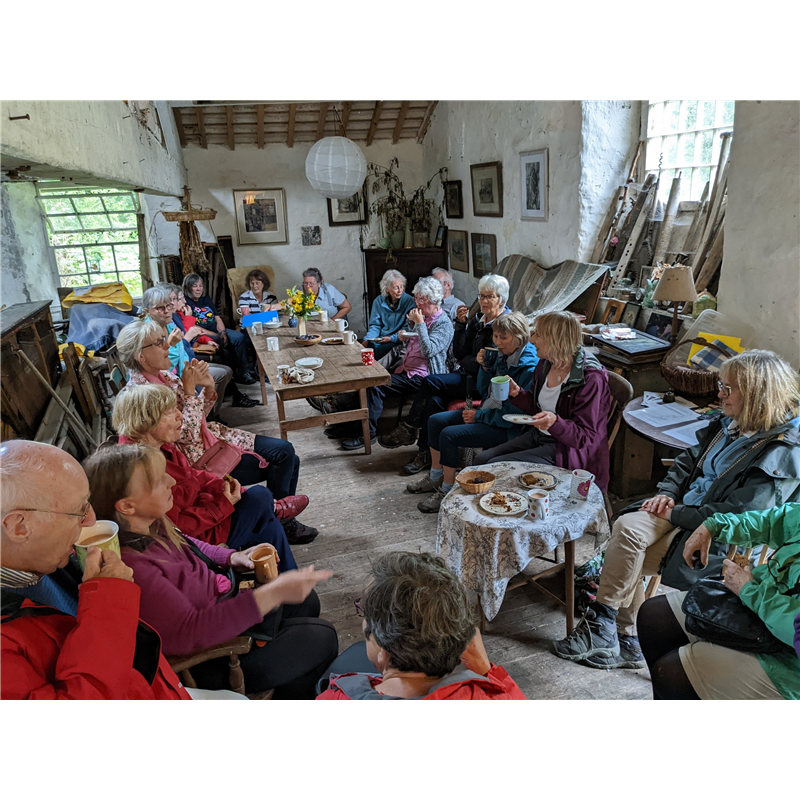 |
An enthusiastic turnout of 24 Gardeners of Eden members braved the grassy lane up to Sprint Mill where we were met by Romola and Edward Acland. The former 3-storey fulling mill, built in the 1840’s, was in a state of disrepair when they first laid eyes on it. It had operated as a sawmill until 1954 but the original turbine - still on show - became unuseable when the weir was altered and river water diverted. Even though the mill and attached dwelling are close to the Sprint River, there has been very little problem with flooding. The Aclands saw potential in the ruin and over the years bought pieces of land nearby so that the total of their smallholding is now 15 acres. They practice an alternative approach to land management that includes no dig planting and permaculture principals. Their emphasis is very much on 'guardening' - guarding the land and soil for the future. The vegetable garden is protected from rabbits by chicken wire fencing. Lush crops of calabrese, chard, sugar snap peas, courgettes, corn and runner beans mingled with hogweed – planted to attract hoverflies that devour aphids, and comfrey that attracts bees and provides a valuable compost ingredient. Teasels, quite at home near a fulling mill, provide nectar for pollinating insects and seeds for goldfinches. Rather than put in the garden all at once, vegetable plantings are staggered to provide a succession during the whole growing season. Plastic collars, some made out of flower pots with their bottoms removed, keep slugs at bay. Garden waste is composted in 2 large wooden bins: when one is emptied onto the garden, the other is turned into that space, thus reactivating the process of bacterial decomposition that matures it into useful mulch over the next year. Mulches, applied generously over a liberally-watered patch, are invaluable for retaining an even moisture level during dry weather. Leaves from the shade trees surrounding the vegetable plot, are gathered into an open bin and after 3 years of fungal-driven processing, provide a soft, dark brown material perfect for sowing seeds, potting up plants and improving soil texture. Fruit is grown in this area: Gooseberry ‘Invictus’ bushes, which are resistant to powdery mildew, produced 50 lb of fruit last year. Pear trees, and apples, including Bramley trees that yield enough to be sold in the local shop as well, thrive near a couple of rows of infant oak and hazel seedlings that will eventually find a home elsewhere. As we moved along the wooded trail towards the stream, we passed piles of sticks. Over the last 30 years, rather than burning forest floor debris, fallen branches and twigs have been continuously added and rot away slowly, providing snug shelters for insects, hedgehogs and many other creatures. A colourful stretch of rosebay willowherb (Fireweed), acanthus (Bear’s Breeches), red bistort, and yellow yarrow led us to a glass conservatory in which tomato plants – Gardener’s Delight and Costoluto Fiorentino – grew to the ceiling. From here we crossed a bridge that was part of the Dalesway Trail. Looking back we had a full view of the 3-storey mill wall with 9 paned windows, that for safety reasons, had been taken down and totally rebuilt 10 years earlier, to look completely original. Up a hill, across the neighbour’s field, along the road and through a rustic gate, hand-fashioned from by Edward from small branches, we came to a long piece of the Ackland property that has been divided into several areas. There were two hay meadows, one of which had been recently cut and the harvest of green hay used to ‘seed’ a neighbour’s new project meadow. Another way to increase the diversity of plants in a meadow, away from strong grass-monocultures, is to introduce new species using plant plugs such as Bugle or Meadow crane’s-bill. Through another rustic gate fashioned in Edward’s workshop, into the orchard, and we stood among a variety of fruit trees with plums, damsons, apples (including variety George Cabe), filberts for nuts and a young mulberry tree. Aluminium foil plates and CD discs were strung up here and there to discourage birds. The grass had recently been grazed by sheep and sometimes cows are put in, both keeping grass down and providing useful manure. A hazel planting along the borders of the orchard is coppiced about every 7 years and has a variety of uses including wind protection, and a source of saleable bean poles, hedging stakes and in some good years, cobnuts. Next, we crossed a hay meadow that evoked the concept of ‘gardening in the countryside’ with its five oak trees spaced to allow their eventual full beauty to reign. They make the field trickier for the modern mowing equipment to negotiate, but do offer welcome shelter from the sun for grazing animals. We found ourselves in a small woodland of native species including Sorbus aucuparia ‘Rowan or Mountain Ash’, Quercus petraea ‘Sessile Oak’, Beech, Holly and Blackberry. An initial planting of Ash had succumbed to Ash die-back disease. Fallen branches leaned tepee-style against sturdy trees, and gave shelter to woodland creatures. Silene flos-cuculi ‘Ragged Robin’ and Cirsium heterophyllum ‘melancholy thistle’ grew nearby in boggy fringes of the property. After a tour of the building which housed a workshop with displays of old hand tools and artworks fashioned from trees and branches by Edward on his foot-pedal lathes, we enjoyed mugs of tea and Romola’s freshly-baked flapjacks. Swifts flew in and out of the gallery, tending their nests high up in the rafters, confirming that, thanks to the range of habitats which the couple have nurtured, nature’s biodiversity flourishes along with their farmyard hens, ducks and goats. |
|
| Tuesday, 05 July 2022 |
| a visit to Holehird |
|
 |
Holehird The Gardeners of Eden gathered on a small terrace near the Gunnera Pool on a beautiful summer afternoon and admired the stunning Lakeland view looking towards Windermere while we waited for our guide. Amanda Mason soon found us and explained the history of Holehird as she led our group of 20 members along the fellside on which the property is situated. The Gardens were established as home to the Lakeland Horticultural Society in 1969 when they were formed to take over the design and care of what was then 2 acres of derelict garden. All staff at Holehird are volunteers. They do everything from weeding, propagating, composting, heavy shifting and garden design, to administration tasks such as publicity, secretarial duties, accounting, guiding visitors and much more. There is something for everyone who loves gardening, no matter what their level of skill or physical endurance so that volunteers can remain involved even as they grow older. From its establishment in the 60’s, the project garden gradually expanded and today an area of 10-12 acres features an Upper Garden, Lower Garden, Walled Garden with Display House and Glass Gardens for Alpines and Succulents. Each area has several beds that are ‘adopted’ by one or two volunteers who are responsible for the design; the rest of the volunteers work to fulfil those visions. For example, Francis Davenport, a local artist, has taken on the Grasses and Rose Beds and Alan Oakwood who is the current Chairman, does the Alpine beds. The Gardens are planted for succession so that there is always something ‘in season’ At the time of our visit, the National Collection of Astillbe stood full of soft cream, pinks and lilacs. The Grasses Bed featured Dierama (Angel’s Fishing Rod) with seed heads, and the Hakonechloa (Japanese Forest Grass) and Stipa Gigantia were full and flowing The Rose Bed was in full bloom with a variety of names such as Tea Clipper, Sunny Sky, Sweet Honey and Knock Out, all chosen for their ability to flourish in Holehird’s challenging climate. In recent years the whole bed has been moved because of the competition for shade and nutrients from a growing oak tree that was considered too important to fell. Nearby sits the National Collection of Daboecia, which are a genus in the Ericaceae family and very similar to Erica but having larger corolla and alternating, instead of whorled, leaves. They will reach peak flowering in the summer. A Tulip tree – Liriodendron tulipifer, whose leaves somewhat resemble a tulip flower, dominated the hillside, and beyond it the remains of Holehird’s famous wild daffodils, Narcissus pseudonarcissus, withered in the Upper Meadow. The group continued along to The Upper Garden, passing first an Edgeworthis chrysantha , sometimes called a paperbark tree, that is related to Daphnes and a few weeks ago had beautiful ping-pong sized balls of fragrant yellow flower clusters. This area, referred to as the Winter Bed, also holds Hamamelidaceae (Witch Hazel), Galanthus ‘Dancing Lady’, Pulmonaria, cyclamen and various primroses and hellebores among the Rhododendrons and winter flowering heathers – making a late-winter/early spring visit well worth while. Further along in the Autumn Bed we noticed Heuchra ‘Melting Fire’, the unusual dark purple Sedum’Desert Black’, a contrasting flaming Alstromeria ‘Indian Summer’ and Gaultheria (Winterberry) with bell-shaped blossoms typical of its Ericaceae family. Locally-born Victorian plant hunter, Wm. Purdom, is acknowledged by an information board placed near a plant that he collected - Indigofera australis (Australian indigo), a leguminous shrub with flowers like sweetpeas, that is useful for cloth dye and nitrogen-fixing. A stately Blue Fir is underplanted with Azaleas and Rhododendrons, clematis – plants that were found in areas of China where Purdom worked. The Upper Garden also holds the National Collection of Polystrichum ferns which stay green through the winter, and die back in spring, so that during our visit they had not yet regrown. Polystrichum are terrestrial, and have lance-shaped pinnate fronds that usually form ‘shuttlecock’ crowns. Next along the way was the Davidia Bed, named after a nearby tree that is variously called the handkerchief tree, dove-tree or ghost tree because of its flowing white flower-like bracts. The bed itself is a lush collection of daylilies, agapanthus and a great variety of hostas in many sized, colours and leaf-shapes. The Alpine House and the tufa house were open to view tiny plants up close. From here we walked past a line of wheelbarrows and the propagation sheds where so many plantings are started. We crossed to The Paddock where a fourth National Collection - Meconopsis – is growing in trial beds, with names such as Lingholm, Cally Purple, Dalemain, Mrs Jebb, Mr Jebb, Mildred and Harry Bush. Many of these hybrids have developed from the few originals species that were collected from the Himalayas and planted close enough in gardens to be hybridised by insects. The Paddock also holds a bed of Salvias that are being trials for Which? Magazine and a long bed of Agapanthus, which would have been wonderful in June. Next, we descended to the Walled Garden. This centrepiece of Holehird is composed of five island beds, a south-facing wall and beds that face north, west and east, each with its own advantages and challenges. Permanent trees and shrubs give a structure to each island bed which the volunteers then plant with large blocks of colourful perennial or annuals, according to the team leader’s design. Beautiful green lawns provide the perfect foil for all the wonderful shapes and colours. Finally, we passed the alpines and fragrant herbs growing in troughs and along the top of a low wall in an area designed for wheelchair users who can enjoy a warm sunny corner filled with the scent and colour of small plants. Our meeting ended with a delicious feast of fresh strawberries and scones under a mountain of whipped cream. And yet final discoveries awaited. In a passage near the exit, a mini–Hosta Theatre held delicate pots of ‘Teaspoon’, ‘Holy Mouse’, Surfing Mouse’, ‘Mouse Cheese’ and ‘Ruffled Mouse Ears’. And across the passage, stood the glorious pink Cornus Satomi in full bloom next to Amanda’s favourite, a Daphne Bholua ‘Jacqueline Postil’ known for its magnificent perfume. A very sincere thank you to Amanda for her generosity in sharing her time and knowledge with us, and to the unseen volunteers who have made such a beautiful well-loved garden. |
|
| Tuesday, 07 June 2022 |
| Lower Rowell Farm |
|
 |
Lower Rowell Garden is owned by John and Mavis Robinson, whose daughter Julie does most of the physical gardening now, though still under the watchful direction of her father who has contributed many ideas over the years. The farm and cottage date back to 1677 and the Robinsons have lived there, surrounded by idyllic countryside and long - distant views, for over 50 years. Theirs is a garden that has gradually accumulated a wonderful variety of plants along with many happy memories of the friends who also contributed items. Upon passing through the garden gate, the first thing to notice is a generous round table with comfortable seating and next to it, a grassed area with benches, chairs and swing seat that later proved to be a perfect place to gather for tea and biscuits. Leading off this area, four curving paths beckon wanderers to explore the islands and rooms beyond. There are few straight lines in this garden: curving paths of grass edge gracefully around grand conifers and huge trees. and between flower beds. Everywhere there are hidden corners and glimpses through to delightful views yet to be discovered. During this late spring visit, we found hellebores, hostas, primulas, Centaurea macrocephala and pulmonarias in abundance. Many of the specimen trees and shrubs were of yellow or gold variegation which drew the eye by colour, into the shady spaces. Hidden here and there are several obelisks which John made out of reshaped old roofing slates. And towering above all is a giant Eucalyptus tree, given to the farm in exchange for some mucking out job done for a friend about 40 years ago. Nearby, a polytunnel covers a dry area filled with succulents such as Echeveria elegans, Sempervivium, Agave, Aeonium, Carex oshimensis, as well as Cacti in a terrarium and an Inchplant in a basket Recently the garden was expanded into a second old orchard which is a more open, less densely planted area with a few simply planted gardens spaced out like islands in a sea of mown grass. A pond is surrounded with Blue Flag Iris, Phormium, Hosta and Dyopteris ferns all framed by low-growing Pine. Groups of billowing topiary shapes stand with the remains of a jagged old fruit tree. Another evergreen has been trimmed to resemble a bunch of balloons rising from an earth mound planted with black mondo grass, Cordylines and low greenery interspersed with interesting bits of old pottery. Neatly shaped patches of lawn daisy and a bicycle leaning against an old fruit tree add whimsical touches. An open-fronted summerhouse overlooks the scene and itself is flanked by hollyhock, Euonymus Fortune’s Spindle, a carpet of violets with saxifrage and an unusual Wollemia noblis originating from Australia. This certainly is a garden well worth visiting whenever they open to the NGS as you can see by the pictures in the Photo section of this webite. |
|
| Tuesday, 03 May 2022 |
| Summerdale House, Nook |
|
 |
Summerdale House in Carnforth is an 18-century property owned by David and Gail. The former vicarage had lain empty for two decades before they bought it and the garden needed complete replanning. A huge challenge for a beginning gardener! To economize, Gail started growing some plants from seed and propagating others to fill the beds. Soon she was so successful that she began to sell excess plants and eventually specialized in primulas and auriculas. The success of their nursery and acceptance to the National Garden Scheme are proof of their talent and hard work. Summerdale Nursery currently has about 200 varieties of Auricula, some of which are displayed in a traditional “auricula theatre” and many others in a long polytunnel devoted specifically the plants with varying colourways and leaf textures and uses. Other parts of the Nursery offer a good assortment of mostly shade-loving plants such as hellebore, snowdrops, ferns, dicentra, epimedium in many varieties. In the Garden, hedges have been planted to provide wind breaks and to create different ‘rooms. The design encourages visitors to slow down and absorb the tranquillity of the garden. A stroll through the gardens might begin in the orchard, which has some original old trees that are replaced as they reach the end of their life. A rampant climbing rose with small pink flowers - Paul’s Himalayan Musk, clambers up through one of the trees and the grass is left long in spring to allow wild flowers, fritillaries, daffodils and snowdrops as well as ‘fox and cubs’ to thrive. The paths leading through are mown until the end of the summer. Through the hedge there is a Bog Garden with moisture loving plants such as iris, dicentra, daffodils, Bergenia, and lysichiton. Wildlife is encouraged and hedgehogs can find shelter. The crunch of gravel leads to a beautiful, space filled with inspiring combination of purple-reds, lime, caramel-coloured stone and various shades of green: The fascinating Podophyllum versipelle Spotty Dotty, with its rich brown splashes on silvery green leaves, ties together the colours of Acers palmatum and shirasiawianum. Meconopsis and Bluebells added flashes of blue accent. Nearby, paths lead upwards through Woodland, where Rhododendrons come into their own in spring and added interest comes from the Hellebores, Dicentra, Trilliums, Ribes speciosum, Rubus spectabilis ‘Olympic Double’, Bluebells, and many other shade tolerant plants. A clever log arch was originally built to screen the compost bins but it has now been opened up to get a view of Farleton Fell. Down again at house level a stone retaining wall holds up a bed of Ostrich Fern that stand to attention, in contrast to the loose, flowing wildflower meadow next to it. Around the corner, you find yourself looking through another hedge, down a cobbled path with long borders on either side towards a summerhouse. At the time of our visit, two shades of red tulips took the starring role. Pass through an arch and there are two deeper ponds, both covered in delicate, bright green duckweed and lined by ivy, Hosta, Lungwort and ferns: the perfect, damp home for frogs and newts and toads. A straight path leads up the front garden to the house, and is flanked either side by a lawn with box balls adding formality. |
|
| Tuesday, 12 April 2022 |
| Visit to Lowther Castle gardens |
|
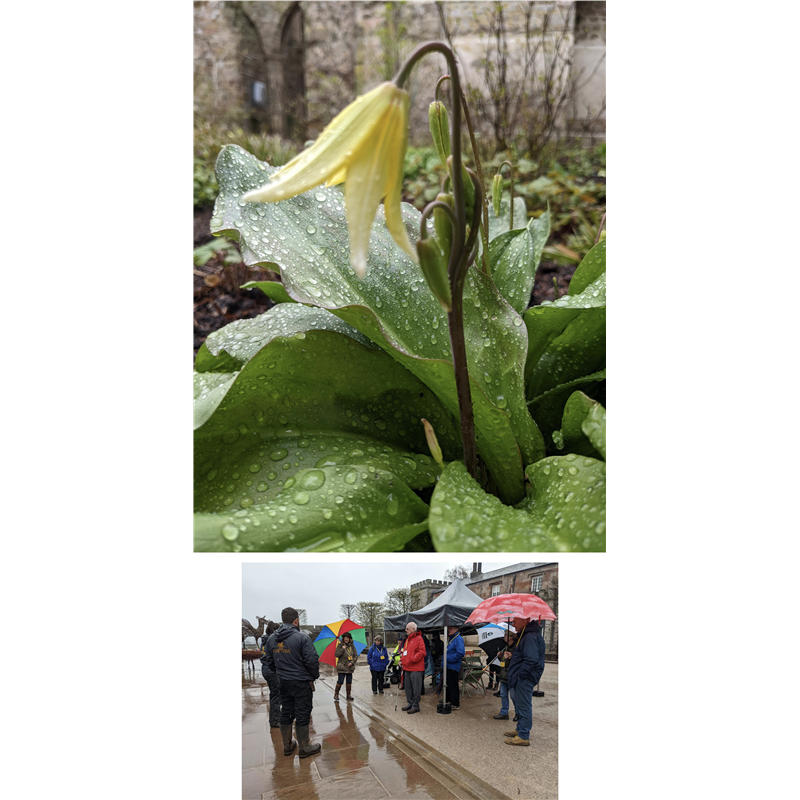 |
Lowther Castle Gardens The Gardeners of Eden visited Lowther Castle Gardens in 2016 shortly before the first daffodil bulbs were planted, so it was with some anticipation that, as we came through the main gate, eyes looked to the left and there through the drizzling rain we could see the welcoming yellow glow of 40,000 plus native daffs. However, with 132 acres to explore, our guides steered us in the opposite direction towards the Parterre, where they gave us an introduction. The castle was built in 1812, lived in for 130 years and then abandoned in 1944. In 1957 the roof was removed from the building and it lay open to the elements, crumbling and decaying, until about 10 years ago when plans were made to turn the castle itself into a garden and open the grounds to the public. Dan Pearson was chosen to design a unique garden that would flow from the derelict buildings into and around the grounds and would acknowledge the grand past, preserve some of the history of Lowther’s abandoned years, bring life back to the ‘lost’ garden rooms and be easy enough for 7 full-and part-time gardeners to maintain with the help of volunteers. Our first stop was near the Tapestry Parterre, where yew hedges are laid out to make small rooms decorated with white and purple perennials – thalictrum and asters – which reflect the tapestries that once adorned the castle walls. As we passed through a tall archway, we found ourselves inside the castle, gazing up at crumbled walls pierced by soaring openings where windows would once have been. The walls which were partly clothed in wild roses and vines, surrounded beds of woodland perennials that included Erythronium ‘Pagoda’ (Dog’s Tooth Violet), Meconopsis lingholm (Himalayan Blue Poppy), Tiarellas, Hellebores, Pulmonaria, paeony and ferns. A sudden chill wind inspired a question about the survival rate of several specimen trees and we were told that, yes, they had been replaced with a more wind- resistant selection recently. Much of the area behind the castle was concreted over and used by an Army Tank unit during WWll, and then later turned over to a commercial poultry operation. Lately the concrete has been removed and the area is now known as the South Lawn – a long sweep of green grass leading away towards a woodland. We headed to the western side of the lawn and stopped near a huge Roman Bath to learn about the historic Yew Avenue plantation where the original topiary shapes are now indistinguishable. However, the trees have been left to grow into wonderful, grotesque shapes as they wish. The naturally occurring clay soil has been acidified over many years, by the spruce plantation that was put in after the War and the gardeners are hoping that this mixture will benefit a planned Hydrangea Walk that will run parallel to the Avenue, towards the Rose Garden. Lowthers’ gardens were formally laid out in the 17th century by the first Viscount, Sir John Lowther, who as a committed vegetarian and enthusiastically built extensive kitchen gardens near the castle. These gardens are gone but through the misty rain we could see the Orchard where heritage apple trees have been planted as standards, espalier and stepovers. Seeds have been collected locally and three Lowther varieties are under development, namely Wicked Jimmy, Yellow Earl and The Countess. A short stroll took us to The Rock Garden where the plan is to keep a rock-garden feel, but use a mixture of native and unusual plants that will be less labour intensive in future. Trilliums, Shuttlecock ferns and cardamon are some of the things replacing the swathes of comfrey and spruce that volunteers have been tackling. Next, we passed the Japanese Garden, in which the Yellow Earl had originally tried to keep up with the latest fashions by collecting plants and design ideas from Asia. Now it will be home to hellebores, Astrantia, Tellima Grandiflora, Luzula Sylvatia, Polystichum, Polyblepharum, Trachystemon orientalis and Viola odorata. Our path went past 14 young Cercidiphyllum japonicum 'Katsura’ – also called the Toffee Apple Tree - which will provide an upper story to replace that formerly afforded by the old spruce trees. One day, they will provide a blaze of colour and wonderful autumn scent. Across the way, we noticed a large barrel tied high up on a sturdy tree. This turned out to be one of 5 wild beehives that have been installed in the grounds. Our final stop was at the Rose Garden, inspired by the Sleeping Beauty myth and furnished with an impressive, thorny black superstructure and several benches with giant thorns for legs, further ringed with hedges of wild brambles. Beds laid out to form the shape of an Old English Rose are planted with 3500 David Austin roses that were chosen to reflect colours of the Burne-Jones romantic painting, ‘Council Room’. At this point our guides left us to explore the rest of the area ourselves and so as the clouds began to thin out, some headed ‘Into The Woods‘ and to the ‘Western Terrace’ to view the Lowther Valley. Others climbed up to ‘Jack Croft’s Pond’ and the’ Wild Flower Meadows’ along the hillside of daffodils, and one or two returned to ‘The Orchard’. Back in the castle, the museum was full of information about the development of Lowther Estate, which, with a cup of tea and huge flapjack, rounded out a successful day. |
|
| Tuesday, 01 March 2022 |
| The Royal Chelsea Flower Show – Behind the Scenes with a Camera |
| Val Reynolds |
 |
Val’s path to the Royal Chelsea Garden Show began when as editor of In Balance, a health and lifestyle magazine in the Hertfordshire area, she began producing and hosting a live radio show at Spectrum Radio, London. Her work was noticed and she was invited to work in the press area at the Queen’s Golden Jubilee. Val borrowed her husband’s camera, took some successful shots, decided to learn more about photography and then was given the opportunity to cover The RHS Chelsea Flower Show from 2003 to 2005. Her talk today was therefore, ‘historical’ and so she started at the beginning in 1766. This is the year that Joseph Banks began his life as a plant collector on an expedition to Newfoundland and Labrador. Two years later he joined Captain James Cook's first great voyage, ostensibly to record the passage of Venus over the sun in Tahiti. However, he expended more effort collecting plants and seeds from New Zealand and Australia and donated them to Kew Gardens upon his return. This impressed King George III who invited him to become the royal botanical advisor. Eventually many plants were named in his honour and under ‘Banksia’, 80 species of plants bear his name. Banks and his friends, including Wedgwood, Greville, Wm Townsend Forsyth, Wm Aubon and Salisbury, formed the influential London Horticultural Society, later named the Royal Horticulture Society, which supported other botanists to travel the world to collect plants and eventually made Kew the world's leading botanical gardens. The Royal Horticultural Society initially put on its Great Spring Show in an RHS garden in Kensington. The popularity of the displays increased and in 1888, the show was moved to Temple Gardens on the banks of the Thames. This new more central location proved a great success and soon visitors and exhibitors outgrew the space. In 1912 an International Horticultural Exhibition was held in the grounds of the Royal Hospital, Chelsea. It was so successful that a decision was made to permanently relocate the Great Spring Show to Chelsea and so began the Royal Chelsea Flower Show that we know today. The show is still held in the grounds of the Royal Chelsea Hospital, on the banks of the Thames in London. Preparations begin years in advance as exhibitors submit their proposals, which are then reviewed. They are notified of their success with 15 months left to start preparations. Twenty-five days before the show, they can begin their set up on site. It takes 8,000 people to put the show on. And when it is all over, there is a two-week time slot to clear the debris away. A press release is sent out in March, naming the exhibit categories and giving a list of participants. The flurry of activity ramps up as trailers full of display materials – plants, sculptures, building materials, etc are brought on site. Then seven major Show Gardens, designed by well-known garden designers and a number of smaller gardens by amateurs and professionals, are put together. The Sunday before Chelsea Week is when the TV crews bring in their equipment and the place is a tangle of wires for a day. Monday is Press Day with judges completing their work mid-morning and the coveted award cards placed on exhibits. Eventually members and the public have their turn and on the last day the most coveted medal, called The People’s Choice, is decided by the public in the final hours of the event. An exciting aspect of being a press photographer at the RHS Chelsea Flower Show, is the opportunity to capture famous faces. Besides Carol Klein, Titchmarsh and Monty, Val also had shots of Brian May, Kim Wilde, Ainsley Herriot, Charlie Dimmock, Terence Conran and Fellows of the RHS the Duchess of Bedford and Lady Salisbury. She was pleased to meet Anna Pavord, author of ‘ The Tulip: The story of a Flower that has Made Men Mad’, and Jekka McVicar who is known for her large collection of culinary herbs. She found David Austin handing out samples of his roses and James Wong, happy to pair up in a selfie. Getting the perfect picture takes effort from gardeners as well as photographers, be it delicately removing covers from buds and then teasing them open with a hairdryer just before the judges arrive; dropping to your knees or lugging around a step ladder to gain that perfect angle, or growing a wisteria vine on a special form to wrap perfectly around a display device. Early morning shots capture the magic of a scene, as will backlighting or side lighting through seed heads, delicate blossoms and new leaves. Looking for either striking colour contrasts – such as an acid green wall and silver-grey sculpture combined with brilliantly coloured flowers – or pleasing colour complements such as wide green/red striped Canna leaves near a rusty iron wall with maroon Astrantia, ensure variety in a portfolio. But some of Val’s favourite scenes were of stark white birch tree trunks against strongly coloured walls, the delicate white of gypsophila softening a red/white/blue scheme, and the freshness of the white variegated Wedding Cake Tree known as Cornus controversa 'Variegata'. We are pleased that Val is a member of Gardeners of Eden, and thank her for a slideshow that beautifully illustrated these points. In 2022, the RHS Chelsea Flower Show will run from 24-28 May and will focus on wild plants and naturalistic designs. |
|
| Tuesday, 01 February 2022 |
| Vertical Gardening |
| Maureen Flett |
 |
As part of her goal to promote the health benefits of gardening and to help people garden for longer, Maureen Flett explained the concept of Vertical Gardening to us. Vertical Gardening includes the use of raised beds, training plants up wall and fences or over supports such as pergolas, arches and obelisks, use of special modules with pockets hung on walls and trailing them from raised pots and window boxes. Vertical gardening has many advantages. Where space is limited, growing upwards increases the yield per square metre since the roots take up a small patch of earth. Vertical gardening helps plants avoid pests, for example strawberries can dangle from a pot where slugs cannot reach them and they are easier to pick. Herbs and salad leaves do particularly well and can be grown in wall pockets or cheap guttering attached to walls and fences near the kitchen door. Plants that are harmful to pets, such as onions that are toxic to dogs, and plants that might harm children, such as thorny rosebushes - can be kept up out of the way of pets and children. Ugly walls and structures can be hidden with plants. A vertical planting can give structure to a flat space and a focal point to a designas they climb over an ornamental framework. For those in wheelchairs or with disabilities such as arthritis or those who want to limit strain on the back and prevent injury to aging bodies, raised beds bring the soil up to a level that is easier to manage. Often, it is also easier to net a raised bed than to attach to the ground. Where the soil is poor or unsuitable for a particular plant, the use of a raised containers allows the gardener to provide optimal conditions, such as where blueberries need acidy soil or root vegetables prefer a looser, sandier base. Robust, spreading roots can be contained in pots and baskets (e.g. nettles for making nettle tea or the strongly flavoured Moroccan Mint - which is great for drinking tea and sauces). Containers allow flexibility in garden design, such as finding the perfect location for Lilies, which like their roots to be sheltered but their heads in the sun. And tender plants in pots can be moved to sheltered spots more easily for winter. When planning a vertical garden, think about its possible location. Make the most of a particular aspect such as a southwall for sun-loving plants or use them to screen an area to add another ‘garden room’, or to shelter shade-loving plants from direct sun. Bring herbs and salads close to the kitchen door on a ladder-like frame. A successful vertical design might include climbers like peas and beans that grow up and over structures, with pots of herbs and containers for vegetables and flowers at different levels. Fruit trees and bushes can be espaliered or cordoned against a wall. Consider how to fix all of the elements securely and safely. There are now specially designed brackets to wrap around increasingly-popular concrete fence posts and to hang from window ledges. For raised be construction, if using wooden railway sleepers or scaffolding boards, that become slippery in wet weather, use wire netting where you tread on them, for safer grip. Use heavy and safe materials instead of weak bits of wood. Check brackets and fixings regularly and treat wood to prevent rotting and the danger of crashing down, especially in our area of high winds . Remember that pests will hide along walls, so consider removing the wood once the shape is established or prepare to use pesticides. Metal materials get hot and can cook plant roots, so beware. Being inventive in the use of recycled pallets and plastic containers (old hot water bottles, anyone?) or even roof guttering attached to a wall, will appeal to children and is a good way to get everyone involved. It’s important to remember that containers dry out fast and they need to be fed more regularly than natural ground, so consider pairing them with an irrigation system. Make watering simple by using pressure watering devices (not pressure washers!) and lances. Use moisture retentive crystals. Add shredded cardboard. Choose composts that are loam-based (e.g., John Innes). Normal bagged compost without soil is favoured by pests like vine weevil, so add some of your garden soil with its natural population of nematodes and other organisms, to prey on them. Refresh your container’s soil every year by replacing some of it, or topping it up with new compost to add nutrients and mitigate soil compaction due to constant watering. Try driving a tube into a large pot and removing core, then refilling it with fresh compost/earth. This will add goodness and give the roots a beneficial trim at the same time. Vertical gardening doesn’t require as many large tools as field growing. Good quality hand tools will be most useful as there’s very little digging because the soil is likely to be looser and easier to handle. If using large containers, pot lifting equipment is recommended to preventing back and muscle injury. Purpose-designed pot-movers or a parcel trolly are good for moving heavy things; smaller plants that need to be moved often can sit on wheeled plinths (dollies). Pruning is very important so reliable pruning tools are useful. It's especially important to thin out plants and ensure enough air movement around leaves and fruits in vertical gardens to prevent moulds and discourage pests. E.g., Red Spider mites and botrytis attack strawberries plants which are piled closely on top of each other. As plants begin to out-grow a pot, pruning the roots, as practiced on Bonsai, will keep them healthy for longer. Ants like to nest in the close, damp conditions under planters; from there they carefully farm aphids for their ‘milk’, increasing the number of pests rather than eating them! Enable airflow using gravel or pot feet. Cordon and Espalier training has many advantages for growing fruit bushes. A variety and rootstock designed for a small space, placed 2 feet apart and grown up a wall can be just as productive as a larger tree that takes up lots of garden space. Exact pruning is essential, to make sure the branches do not rub each other and can get full light. Such bushes will require more manuring and feeding because their roots do not spread as widely as trees, but their fruits will be much easier to pick (especially gooseberries) and the wall of fruit is more easily protected from birds by dropping a net down over it from a pole attached above. (Hint: for Gooseberry shrubs, Maureen found that flour was an effective sawfly deterrent when she didn’t have Fuller’s Earth handy to dust the pests. Please let her know if you try it! Also, she trained 4-5 second-year woody stems which are quite pliable, in an espalier shape with good success and trimmed the lower foliage at the ground level so the little blighters wouldn’t use it to climb onto the bushes). |
|
| Tuesday, 07 December 2021 |
| Christmas and Planning Party |
| All Members |
 |
We can confirm that the meeting will be at 2pm at the Methodist Chapel. An agenda has been sent to your mailbox. This will be our Annual Meeting/ Planning Party. The Agenda includes electing a Committee. Most of the current committee including two new co-opted members are willing to stand. Please come with your mask, warm clothes in case we open the windows for safe air circulation and a small plate of Christmas fare to share. |
|
| Tuesday, 02 November 2021 |
| Microgreens - More Than You Ever Wanted to Know |
| Wallace Pill |
 |
“Microgreens – More than you ever wanted to know” was presented by Wallace Pill at the Methodist Church in Kirkby Stephen on 2 November, 2021. Wally began his talk by explaining that “quick” crops can be divided into three categories: sprouts, microgreens and baby greens (baby salads). Sprouts are used as whole seedlings after a week or less. Microgreens are the shoots of seedlings harvested 1 to 3 weeks after sowing. Baby greens (baby salads) are the shoots of seedlings harvested 3 to 6 weeks after sowing. The focus of Wally’s presentation was microgreens, which are the shoots of leafy vegetables that have 1 to 3 true leaves and are about 1.5 to 3 inches (4 to 8 cm) tall. Interest in microgreens began in the 1990s and although they are very popular in the food trade, little information is available to the amateur gardener on how to produce them. The Kirkby Stephen Coop offers microgreens such as pea shoots in plastic bags and cress in plastic clamshell packs. Other popular microgreen crops include basil, cilantro, arugula (rocket), celery, beet root, red amaranth, pink or purple radishes, chives, and mixed mustards. While Microgreens are mainly gown by commercial producers they can also be grown in the hobby greenhouse or on the kitchen window sill. Their green, red, yellow and purple colours, their variety of flavours and textures and their relatively high concentration of minerals, vitamins and antioxidants make them valuable additions to salads, hors d’oeuvres and sandwiches. By adding flair to a chefs’ offerings, Microgreens can increase the value and the profit in a restaurant menu. They are also highly profitable to the grower. They are an ‘Intensive’ crop, taking only 1 to 3 weeks to produce and thus offering 17 to 26 crops per year from each square metre of greenhouse growing area. Relative to field production, capital outlay per unit of greenhouse microgreen crop produced is low. Main costs include substrate (growth medium, compost), seeds, fertiliser, packaging, and utilities (water, electricity and greenhouse heating). Using cress production as an example, and assuming a grower receives about 14p per tray (about one-half the retail price), grows 104 trays per m2 of greenhouse space, and harvests one crop per week, an income of £757 per m2 per year can be realised. Even when all costs are subtracted from this income, microgreen cress production represents a very high profit in the food production industry. Many seed companies offer a variety of microgreen seeds for sale, sometimes as mixes of spicy or mild flavours. The microgreen grower must determine the optimal seed planting density to produce the greatest mass of shoots. As a general rule, small seeds (e.g. radish) should be sown about 1/8 inch (3mm) apart and large ones (e.g. popcorn) about one-half inch (12mm apart). As seed sowing rate increases, individual plants are smaller, but there is more shoot mass per unit area. Since seeds are sold by weight, the seed cost per flat (about 11 x 22 inches; 28 x 56 cm) would depend on the weight of seed required for the flat. For convenience, however, the volume of seeds needed per flat is preferred over weight. For instance, a flat of Arugula might require 8 grammes of seeds, which equates to 10 ml or 2 teaspoons of seeds. Two growing systems are used to produce microgreens. One system uses solid growth medium (alias substrate, compost). Until recently, the “peat-lites” were the main growth medium. These were formulated from sphagnum peat moss, vermiculite and/or perlite. Now, the emphasis is on peat-free growth medium since the harvesting of peat required the draining of peatlands which speeded peat oxidation and release of carbon dioxide into the atmosphere thereby contributing to global warming. The main substitute for peat is now coir which is the ground husk of the coconut. Other growth media may be available but their suitability should be tested by trial and error. One such local growth medium would be Dalefoot Compost which is comprised of sheep wool, bracken and comfry. The growth medium is spread in a shallow (0.4 to 0.5 inch; 1 to 1.3 cm) layer in the flat or in long troughs that comprise the bench top in greenhouses. Once the seeds are sown on this surface, they are covered with a thin layer (1/8 inch or 3 mm) of the same growth medium. Ideally the growth medium is gently tamped to improve seed to growth medium contact. Then the planted flat is irrigated. Over the years, Wally conducted growing experiments with a commercial microgreen grower and with students in the USA and in Jamacia where he volunteered with a vegetable cooperative through the Farmer to Farmer Programme. The overall purpose of the research was to speed microgreen production since both time and space are important in greenhouse crop production. Any treatment that promotes growth means that production time is reduced. Results of research established that addition of calcium nitrate to the growth medium before sowing the seeds (“preplant” fertilisation of the growth medium) gave greater growth than other nitrogen carriers (e.g. ammonium nitrate or ammonium sulphate) and that a preplant concentration of 1500 mg nitrogen per litre of growth medium resulted in maximum shoot growth. Instead of preplant growth medium fertilisation, the microgreens could be fed with a solution prepared from 21-5-20 (a general purpose soluble fertiliser) at each irrigation after planting. The optimal concentration of this “post-planting constant liquid feed” was 100 mg nitrogen per litre. The grower should invest in a fertiliser injection system to supply the liquid feed. One such inexpensive system operates by siphoning a concentrated fertiliser solution into the stream of irrigation water at a fixed injection ratio (e.g. 1 part of fertiliser to 14 parts of water). Wally stressed that the microgreen grower should research to determine which fertilisation regime works best under his or her conditions. All solid growth media contain pores. Big pores (macropores) drain readily and thus provide aeration. Small pores (micropores) retain water against the force of gravity. Wally then demonstrated the effect of growth medium depth on water retention with a growth medium. A water-saturated sponge was held so that its smallest dimension was vertical….until drainage ceased. The sponge than was rotated so that the medial dimension was vertical, and more water drained out. When the sponge was rotated so that its longest dimension was vertical, even more water drained out. This demonstration revealed that the depth of the growth medium has a great effect on water and air relationship. Microgreens are typically grown on a thin layer of growth medium which tends to hold more water and less air than thicker layers. Such a growth medium for microgreens must contain micropores within the peat but also a large portion of macropores (provided by vermiculite and/or perlite) to prevent “flooding”. The low volume of water retention in the shallow layer of growth medium requires that it receive frequent irrigations. Hydroponics is the second production system for growing microgreens. The most common method, Nutrient Film Technique (NFT), involves a tilted trough containing mat upon which the microgreen is grown. A weak nutrient solution containing all mineral nutrients essential for plant growth (N, P, K, Ca, MG, S and seven elements) is pumped to the high end of the trough. The solution flows down the trough through the mat. At the low end of the trough, the solution can be collected and repumped through the trough thereby creating a closed system. Once established, the NFT production system is cheaper to operate than using solid growth medium. One area of variable cost is the mat placed trough. The purpose of the mat is to hold the seeds in place within the trough. The mat must be made of inexpensive material such as jute fabric, and ideally it must be cleanable so that it can be used for multiple cropping. In Jamaica, research to find a cheap, reusable mat continues. As an aside, Wally pointed out the he has found about a 100% increase in arugula shoot growth in NFT compared to solid growth media. The reasons for this have not been determined. Another way to increase production is pre-sowing seed germination (“pregermination”). Seeds are mixed in moistened vermiculite and stored for varying periods at a certain temperature. The seed-vermiculite mixture is held in paper bags in a temperature-controlled room. During storage, the seeds germinate. The germinated seed and vermiculite mixture is then distributed either onto the solid growth media or the NFT mat. Pregermination typically increased shoot yield by 20 to 25% indicating that production time in the greenhouse can be reduced by 20 to 25%. Many details about pregermination should be determined by experimentation. For instance germination time can vary greatly by crop with radish taking one day and table beet taking four days at 21°C. The concentration of water (weight per dry weight of vermiculite) also is critical. Microgreens growing on solid growth media can dry out very quickly so it is important to have consistent levels of irrigation. Commercial microgreen operations will use misting or sprinkler systems for overhead irrigation. Subsurface irrigation systems also can be used. With the ebb and flow system, the watertight bench surface is periodically flooded. Another system uses capillary mats which are kept wet, water rising up into flats via capillary action through the drainage holes in the bottom of the flats. Manual watering may still be required, but this is labour-intensive. Jamaica’s main source of income is tourism. Most of the hotels and resorts dot the coast of the island and they are largely foreign-owned with most of the guests arriving from the USA, Canada and Europe. The chefs at these resorts traditionally imported microgreens from the USA or Europe, at considerable cost. Over the years, my colleagues and I have worked with the Santoy Vegetable Cooperative to grow microgreens and other crops. After several years of combined effort, the Cooperative was able to produce microgreens reliably and consistently. A great deal of effort was required to arrange a meeting between a couple of chefs at resorts in the Negril area, Mr. Milton Murdock of the Santoy Vegetable Cooperative and myself and a colleague. That meeting was successful in that it was the break-through for the local grower group to supply microgreens to the resorts, at a much lower cost than the imported microgreens. Essentially, a cultural barrier preventing locals from supplying microgreens to the hotels/resorts was broken by this meeting. The Santoy Vegetable Cooperative continues to expand its microgreen sales to an increasing number of resorts/hotels. This provides increased wealth to the local economy and provides a source of employment to the youth of the country. The Santoy Vegetable Cooperative now uses mostly hydroponic systems with NTF for microgreen production. Some are still grown on solid media, but using 100% coir rather than the expensive, imported peat-lite. One very popular and recent microgreen crop in Jamaica is yellow popcorn (maize) shoots. This crop is grown in darkness to prevent the synthesis of chlorophyll and fibre. The yellow leaves are quite sweet unlike other microgreen crops which have a non-sweet, tangy taste. This crop is being grown on shelves in a shed at the Cooperative. What is the future for Microgreens? Very promising! They take up so little space and they can be grown in disused places such as abandoned tunnels. Researchers from Cambridge University are growing microgreens and baby salads in the disused Clapham North Tube Station. These crops are being grown in stacked shelves using light-emitting diode (LED) lighting, hydroponics, and root zone heating. Such “vertical farming” of both microgreens and baby greens (baby salads) will be a major source of food for future generations. Large amounts of nutritious vegetable greens can be grown on a small footprint under controlled conditions. Wally closed his talk with a few slides showing the colourful array of edible flowers which can also be used to maximize greenhouse space with hanging pots of herbs, pansy and nasturtium. Squash flowers can be used for dipping and stuffing. |
|
| Tuesday, 14 September 2021 |
| Visit to Church View, an NGS Garden in Appleby |
| Helen Holmes / Ian Huckson |
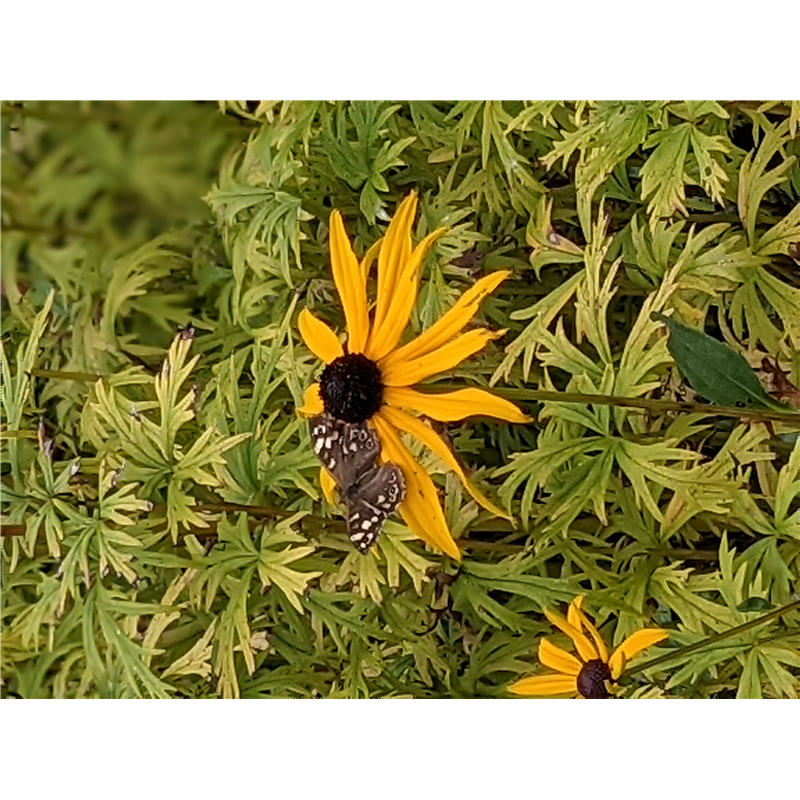 |
At Church View in Appleby, the gardeners strive to have a display of colour through to late summer and on into autumn and G of E members and friends were not disappointed. Ian explained that the original 18th century house and land have gone through several reconfigurations. The current design was planted out in 2008. |
|
| Tuesday, 17 August 2021 |
| Visit to Toaves Allotment and Jubilee Park |
| Ann Taylor and various members |
 |
After introductory talks by Vivienne, about the history of the parcel of land that now makes up Toaves Allotments and Jubilee Park, we toured the allotments and then walked over the road to the Park, where refreshments were served while Ann Taylor told us a bit about plans for rejuvenating the area to make it more useful to youg families, walkers and the rest of the community. There is no money availabe, but a plan has been drawn up and there is plenty of work to do for those of us who are interested. |
|
| Tuesday, 13 July 2021 |
| Visit to Fellside Flower Company |
| Emma Greenshaw |
 |
On the most perfect sunny afternoon of Tuesday 13th July members of Gardeners of Eden visited Fellside Flowers Company in the village of Long Marton. This being our first outdoor visit to a garden, other than to members own gardens, since the beginning of the pandemic, there was a very good attendance of 20 members and 3 guests. We were welcomed, by owner Emma Greenshaw who, along with her husband, started Fellside Flowers in 2017 when they purchased 4 acres of land in Long Marton. Previously they had grown an assortment of garden flowers to sell to friends and at farmers’ markets but soon realized there was potential in providing blooms to other local markets in a sustainable manner, by reducing journey miles considerably in comparison to imported flowers. Customers are very happy to buy in season flowers locally and as the business grows Emma supplies weddings, delivers mixed bouquets and sells at Orton Farmers Market. Although Fellside Flowers is a seasonal business, starting with spring bulbs such as tulips and daffodils, there is much planning and preparation to be done during the winter months, for example, preparing beds, seed purchase and sowing. During summer months Emma picks her flowers very early in the morning, starting at about 5.30 but not after 10a.m. The flowers are always picked straight into of fresh water buckets which have previously been disinfected. Hygiene is very important. As our group moved toward the flower field we were greeted by a delightful froth of Ammi major. Here the plots are divided by wide grass paths for ease of access and the plants are grown in individual blocks. They are protected from the westerly wind and the eastern helm wind by wire netting and very sturdy posts and with 4 inch square horizontal mesh to support them to grow in an upright manner. The jewel coloured flower patches included blue cornflowers, alstroemeria and astrantia in differing shades of pink, achillea, feathery asparagus for contrasting leaves and deep burgundy physocarpus. Beautiful transient poppies are grown for their seed heads. As a member of the national association Flowers from the Farm of which there are now over 1000 members country wide, Emma is able to discuss and exchange ideas with other associates. Through this network Emma can access other flowers if she needs to supplement her own stock. As a lock-down project, they built a grand wooden shed which will be used for a variety of activities such as flower and willow weaving demonstrations and classes. Looking forward to 2022 they intend to build a poly-tunnel in which to grow more tender plants such as roses and seedlings to help extend the seasons. Our members were treated to lovely cakes and tea prepared and baked by the Hub in Appleby. A very memorable visit. |
|
| Tuesday, 01 June 2021 |
| Members Gardens in Winton |
| With thanks to Anette and Jan |
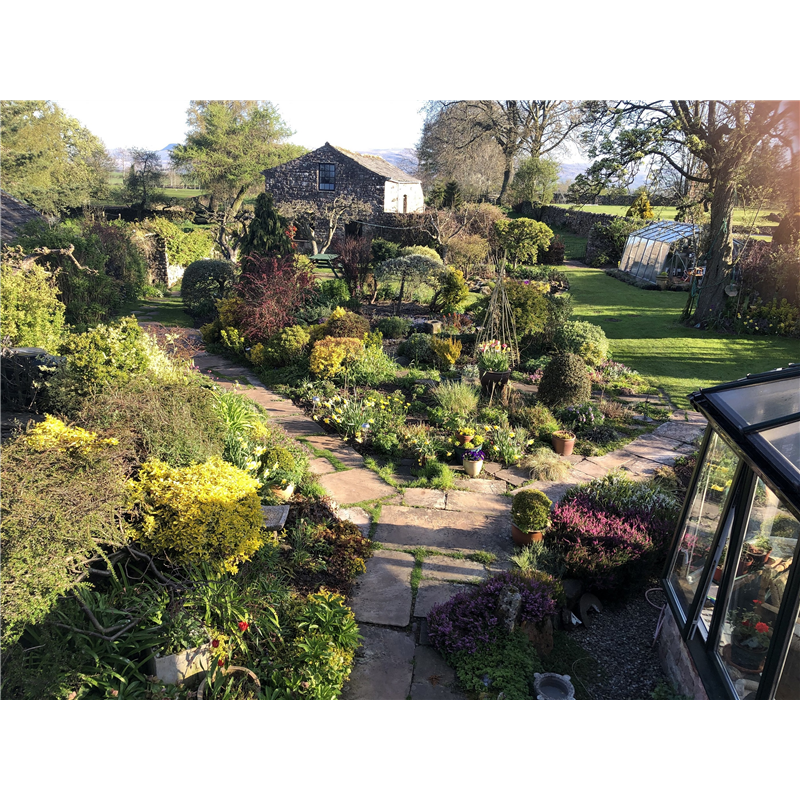 |
We will gather at 2 PM in Winton for a look around the gardens at Rostherne and Yew Tree, both on the main road through the village. Socially distancing rules will apply so you may be directed to the other garden if too many people come together. More details to follow nearer the day. |
|
| Tuesday, 11 May 2021 |
| Garden Design with Herbs |
| Jennifer Lauruol |
 |
Jennifer Lauruol is a garden designer who owns Carpe Diem Gardens in Lancaster. She started gardening in Los Angeles over 30 years ago, and has subsequently worked in many different gardens throughout the world. The focus of Jennifer’s talk was the design of herb gardens and planting of medicinal and culinary herbs which bring beauty and perfume to the garden. Jennifer cited Acorn Bank, in the Eden Valley as an inspirational herb garden. Over 250 varieties of herb are grown there. They are planted according to their plant families and their effects on different organs of the body. Across the globe, so-called Blue Zones, where people live exceptionally long lives, have been identified. Examples of such zones are Ikaria in Greece, Ogliastra in Sardinia, and Okinawa in Japan. A common feature is the prominent use of herbs in the local diet. This would seem to be compelling evidence of the health-promoting properties of herbs. With reference to the medicinal use of herbs, Jennifer talked about different herbal traditions. She stressed that herbs may be used as supplements but certainly not as substitutes for conventional medicines; to illustrate, drinking dandelion tea may promote a healthy liver whilst receiving a course a conventional medicine. In Ayurvedic medicine, which was developed in India some 3000 years ago and is still practised today, medicinal herbs are used in the belief that health and wellness depend on a delicate balance between the mind, body, and spirit. For example, roots of Turmeric and Ginger known for their culinary use, contain high levels of antioxidants that may have a role in helping to prevent heart disease and cancer. In the UK, both Turmeric and Ginger root can be grown successfully indoors and although an organic source would preferable, roots bought from supermarkets can also be planted. The mood-enhancing properties of essential oils extracted from herbs are very well known for providing a feeling of calmness and wellbeing. Lavender of course has a very rich scent in addition to the antibacterial and wound healing properties of its essential oils. Jennifer urged us to visit the spectacular Lavender fields of Provence to experience this. Herb gardens are often planned according to traditional designs. In Mediaeval times, monasteries were centres of learning and medicine. The monks developed and administered medicinal herbal remedies to the local people. Herbs were often grown in enclosed, peaceful and sheltered cloisters. In Tudor times knot gardens, such as Shakespeare’s Knot Garden in Stratford, consisted of more formal patterns of aromatic herbs or shrubs laid out within a rectangular frame. Sections were often enclosed with low hedging such as the traditional Box. Traditional circular gardens from the East, called Mandala gardens are planned in a geometric shape that symbolises the Universe. Such gardens usually contain starburst, floral, wheel or spiral patterns. Modern day herb gardens build on these old designs and borrow ideas from around the world. For example, lavender and rosemary or woven hazel branches may be used to frame individual beds of an overall looser planting scheme. Jennifer believes that circular gardens create a very interesting space: from the centre, the whole design can be appreciated at the once. She showed us a modern circular garden, in which different Thymes were growing in the centre and the herbs were augmented by espaliered fruit trees set against the wall of the garden. Herbs and fruit trees are often grown together with good effect. Herbs don’t necessarily have to be grown in a formal setting. For example, in Jennifer’s own garden she grows “a few vegetables along with the herbs”. Rosebay willowherb sits next to fruit bushes, and yellow Marigolds brightening up a patch of cabbages. Vegetables with interesting foliage or colours, such as Rainbow Chard, sit well in a flower bed. Wild herbs grow in a range of different habitats. When growing herbs in the damp, windy climate of the northwest of England, it’s important to think about where to plant them so that they can thrive. Most herbs prefer sun, so if you have already found a sunny spot where you have placed a garden seat, that would be an excellent place to locate sweet smelling herbs. Some herbs, for example the Mint and Nettle families, are happy in shade. Hosta, which can also be grown in the shade, is eaten as a vegetable in Japan. Garden edges can be useful places for growing herbs. Lining a lawn, patio or path with herbs of a pretty colour theme, can be very effective. Using Monet’s garden at Giverny in France, Jennifer showed us how plants bordering paths can be used in layers of graduating heights, such as a striking example of blue Catmint growing around a bed of Roses. Two layers of herbs bordering roses could be even more effective. Choose from Nepeta, Alliums such as chives, mint or Ajuga. A changing mix of annuals set amongst a framework of perennials insures interest all the year round. Where there is no room in the garden, window sills, both inside and out can be used. The calming benefit of a monastic cloistered herb garden can be suggested by unifying the display with repetition, e.g., using same-coloured pots. Outside, planting in pots also gives the advantage of allowing herbs to be moved about, to follow the sun, for example. A wooden pallet set vertically against a wall is creative solution for planting herbs in a small garden. Creating a mini meadow in a lawn is another way for growing herbs. Jennifer suggested mowing around the edges of the meadow to indicate an intentional design and so mollify the neighbours! Include wild herbs such as Bellis perennis - the humble daisy that grows in lawns and has been used to make salve for bruises, is also ideal for transplanting between cracks in pavement for a pretty effect. The leaves of Plumbago - narrow or broad-leafed Plantain and a common weed in some lawns, can be eaten like spinach and its seeds are good for digestion, wound salves and against nettle stings. Stellaria media or chickweed can be added to a pretty spring salad along with Forsythia blossoms. The petals of common Dandelion, whose leaves add a bitter touch to salads, give a special flavour to a Blossom Jelly or a cordial and may be added to ice cubes as can borage, rose petals or daisies. Its root can be dried for a coffee substitute and even chopped up into soup. Nettles are very useful: the seeds are highly nutritious, the leaves can be cooked alone or mixed spinach in Eggs Florentine, or with wild garlic for a pesto- and they attract butterflies. Elder berries and Hawthorn berries can both be made into delicious winter brandy with the addition of brown sugar, spices and other blackberries or crab apples. We were treated to some beautiful photographs of herbs and herb gardens, and given many ideas for making a new herb garden or developing the one we already have. Jennifer concluded by saying that the selection of herbs to cultivate is an individual choice. Many sources of information exist on which herbs to grow, under what conditions and which part of the plant to use for medicinal or culinary use. There are many reasons to cultivate both the familiar culinary and the native wild herbs. There is more information about Jennifer on her website: http://www.carpediemgardens.co.uk |
|
| Tuesday, 06 April 2021 |
| A Taste of Colorado - Zoom Webinar |
| Frank Hoyle |
 |
Frank Hoyle, a member of the Lancashire Alpine Society, began his talk on Alpines by explaining how his interest in gardening, which began with growing dahlias and vegetables for show, was changed when he and his wife went walking in the Pyrenes. The array of plants they found in the harsh mountain conditions there inspired him to take up the challenge of adapting his own gardening methods in the mild climate of Lancashire, to specialize in Alpines. On a research holiday to Colorado, Frank and Barbara explored the valleys and peaks of North America’s Continental Divide. Starting near Estes Park, they climbed up a hot, dry valley past cacti and thistles, which provide nectar for butterflies, Carduus mutans and Monarda fistulosa menthiiflorum (Horsemint). Then, near the fringes of a cool pine forest, they saw Eriogonum umbellatum, a highly adaptable plant found in mountains of 7-9,000 ft. as well as in Lancashire. They passed a shallow lake where a family of moose grazed on waterlilies and further up along a stream, Primula parryi (a pink primrose) mingled with the 2-inch white flowers of bog-loving Anemone narcissi flora. This magnificent area featured ravines and valleys, enriched with the soil and dead, dry plant material that had been washed down from higher slopes by melting snow and summer thunder storms. The ravines are also fertilized by small animals such as chipmunks and plants grow taller here as they compete with one another for light. Further upstream, where the forest opened out, Colochortus gunnisonii grew, named after one of many US army surveyor-turned-botanists. Each white flower held a beetle wriggling in the protein-rich pollen. A rare Cyprepedium fascioiatum was spotted as well as the more ubiquitous Viola aduca (Dog-toothed Violet). Above the protective forested habitat, they emerged onto the tundra zone where the soil is thin and icy, strong winds often blow. Up here the growing season may be as short as 12 weeks. Plants adapt by growing in low, streamlined cushion-shapes which retain a protective mulch of old leaves through the winter and have deep, moisture-seeking roots. They take many years to mature, living as long as 100 years. The slower they grow, the harder their cushion becomes. For example, the white blooms of Arenaria obtusiloba eventually form into rock-hard green rosettes. It was found sharing space with the delicate bluish Phlox pulvinate and the dangerously poisonous Amerosedum lanceolatum, which has a symbiotic relationship with the Parnassiius smintheus moth. As the caterpillars feed, the plant’s poisonous sap is intensified. Nearby grew Hymenoxis acaulis, a small yellow daisy-like alpine that grows even better in Lancashire. At this altitude, frequent freeze-thaw events substantially lift and shift the rocks and in time hollows and depressions are formed which afford some shelter. Dead plant material gathers and small animals such as pikas also fertilize the sparse soil. Pockets of snow melt provide moisture. Generally, the plants growing in these depressions are noticeably different to those growing out on the open tundra. They are taller, they die down in autumn and re-grow from a bud just below ground level in spring, whereas on the open tundra plants generally grow as tight, hard cushions. At 11,000 ft., in protected hollows, where the microclimate is more humid and the soil enriched by animal droppings, the travellers found Polemonium vicosum (Skunkweed) - a stunning blue plant, Aquilegia caerulea – the Colorado state flower and Phaecelia sericea with its purple spikes and moisture-attracting hairy sepals. Later, on the drier eastern side of the Divide, they followed the ancient Ute Trail through a more prolifically flowering landscape. They encountered 8-petalled white flowers of Dryas octopetala, a shrub found blooming in Scotland in late April. Silene acaulis, a tiny mauve plant seen all across the northern hemisphere, flowered beautifully in the ultraviolet rays of this higher altitude. On a higher plateau that caught the rain, they found greener, forested, boggy areas that support a minute form of willow, Salix nivalis, whose buds provide a protein source for Ptarmigan. Pedicularis graenlandia, with flowers resembling the head, ears and dangling trunk of an elephant grows alongside the succulent Lewisia pigmaea, with its tiny purple flowers. Their next area of exploration was around Twin Lakes. At 10,000ft, amidst a field of sage, shone a patch of Lupinus argentius, its leaves covered in silvery hairs. A few miles away, along Independence Pass, in a valley that caught the rain, they found a chest-high sunflower, Helianthella quinquenervis, as well as Geum trifloral, Delphinium and Frasera speciosa, which may take 20 years to mature before bursting into a tall spike of prolific flowers. Prolific flowering – sometimes as many as 2-3,000 blooms on one plant, is one method that alpines use to survive in severe conditions. As they drove higher, they noticed, in the rough roadside gravel, Penstemon, Erigeron sp. and Lupin lepidus, with 3” high flowers protected below its stand of leaves. Higher still, Ranunculus adoneus pushed out large, yellow buttercup blooms through the snow patches, and nearby, Caltha leptosepola which flowers and sets seed within a couple of weeks of snowmelt. Frank enjoyed a solo climb up to see Hymenoxis grandiflora, which always faces away from the wind to protect its sunny yellow-petalled flowers, and scented Geums, alpine Bistorta and Polymonium viscosum. Cupped between vertical slabs of granite, hid cushion plants such as Paronychia pulvinate. On to Loveland Pass where they saw taller flowers such as Castilleja occidentalis -whose variously coloured sepals, rather than its insignificant flowers, attract insects, and an unusual Gentiana algidia, with black-spotted white petals, and a hairy Oxytropis. Finally, driving up the 14.000 ft. Mt Evans, they found a stand of weather beaten, Bristle-cone pines, Pinus aristate, that included both saplings and 2000-year-old specimens. On Mt Evans Frank and Barbara discovered a great variety of alpines including: Claytonia megarhiza with white star-shaped flowers on a palm-sized leaf base that can send a root down 6 ft.; Silene uralensis, a self-pollinator whose pod-shaped striped flowers remain closed; and finally, rare white and blue-flowered Eritrichium nanums, the ‘holy grail’ of alpines growing impossibly slowly in granite cracks, hairy leaves capturing moisture from the air, and found next to a common Mountain sorrel. As a conclusion, Frank offered tips for growing Alpines, such as using polystyrene boxes painted with masonry paint mixed with sharp sand to give the appearance of rock - very light to move about the garden. Small rocks can be shaped from thermalite blocks and painted with yogurt or milk on which moss will grow to appear as natural stone. The boxes can then be filled with a mixture of half John Innes no.2 or no.3 and half grit. Once the boxes or troughs are planted the surface benefits from a 2inche covering of grit. Do not over-feed. Most alpines prefer to grow on north-facing sites that are shaded from the midday sun. https://www.alpinegardensociety.net/ was recommended to learn more about alpines, how to obtain specialist seeds and for information about joining a local society. The Club enjoyed a very well-presented zoom talk with attractive photography of both flowering plants and the wonderful scenery of the Rocky Mountains. |
|
| Tuesday, 09 March 2021 |
| Standing up for Trees |
| Paul Littlewood |
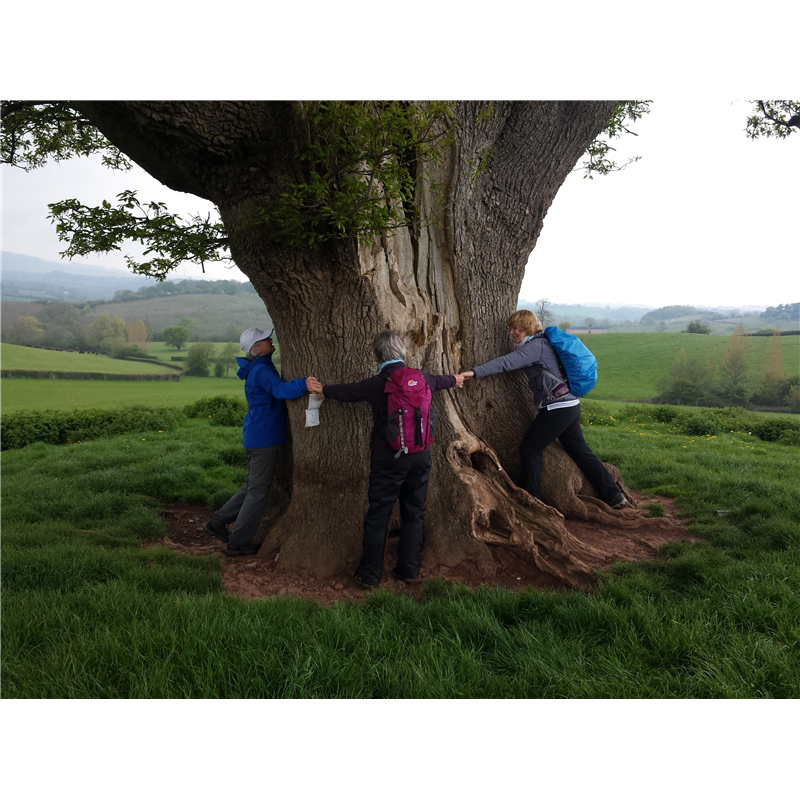 |
Sarah welcomed our Zoom speaker, Paul Littlewood, and he delivered an enjoyable and informative talk about the Woodland Trust and his involvement as a volunteer with the charity for over 20 years. The Woodland Trust was founded in 1972 in Devon and is now the largest woodland conservation charity in the UK, covering some 22,500 hectares for wildlife to thrive and people to enjoy. All the sites belong to the WT. There are no private ownerships and they are free to visit. The Trust has 3000 volunteers and depends solely on donations and membership fees from individuals and firms, and from legacies and deeds. The Trust receives no government support. Volunteers are involved with many things, like planting and maintenance of trees, taking photos and measurements of ancient trees to be protected, checking local papers for planning applications to help protect woodlands, hedgerows and individual trees, speaking to school children and groups like ours and help with community projects to create woods and plant trees. Trees and their habitats are essential for wildlife and our health and wellbeing. They clean the air, purify water and provide shelter and recreational spaces for us to enjoy. In comparison with an average forested area of 40% across the EU, Britain has only 13% tree cover. And our ancient woods account for only 20% of this total. Ancient woodlands are irreplaceable and most were unprotected until 2018, when they finally got ‘listed buildings’ status. Sadly, half of them have been lost since the 1930s. Ancient woodlands are also under threat from climate change, pests and diseases such as acute oak decline, ash dieback and Dutch elm disease, intensive farming and now the H2S high speed railway project. The WT helps to protect woodlands by negotiating to stop damaging developments such as the proposed SSI Betws-y-Coed valley dam and a hydroelectric scheme in Snowdonia, both successfully stopped. The largest ancient wood is Lock Arkaig, and the largest ancient Scotch pine wood is Ben Shieldaig, both in Scotland. Ben Shieldaig is currently being restored. Restoration in woods is increasingly done gently, using draught horses which drag out the trunks. Their light trampling is less damaging to the undergrowth thus helping native tree species to germinate. Huge plantations of conifers were planted after the war for timber and these are now slowly being replaced by native trees. The WT no longer imports stock from abroad because of disease. It procures British-grown trees from nurseries in Scotland and Ireland. Individuals can order direct from recommended nurseries like Alba Tree Nurseries near Edinburgh. The WT’s mission is to plant new, protect existing and restore old woods. One current project is the ‘The Northern Partners Project’ running coast to coast from Liverpool to Hull along the M61 route. Some 50.000 trees were planted over 3-4000 acres at Bolton, all by volunteers. Sadly, during the hot summer 3-4 years ago a huge area was burnt over by fire. It’s now being restored. Locally in Cumbria large areas have been planted in Mallerstang with 25.000 trees and on the west side of the Howgills, 37.000 acres were planted with over 1 ½ million - all with native trees, using volunteers led by Pete Leeson. Another project was a huge wood in Hampshire which had a large electrical substation placed in the middle of the wood. Paul encouraged us to use the WT website to find information about local woods here, or when we are on holiday. By entering the post code, you can locate them, and find out where to park and what to see. Nearest to us is Dufton Ghyll, and also an area of previous MOD land at Warcop (check for non-firing days for safe access). https://www.woodlandtrust.org.uk/visiting-woods/find-woods/ Sarah thanked Paul for his excellent talk which was much enjoyed by our members who were able to take part on Zoom. |
|
| Tuesday, 02 February 2021 |
| Gardening for Health |
| Maureen Flett |
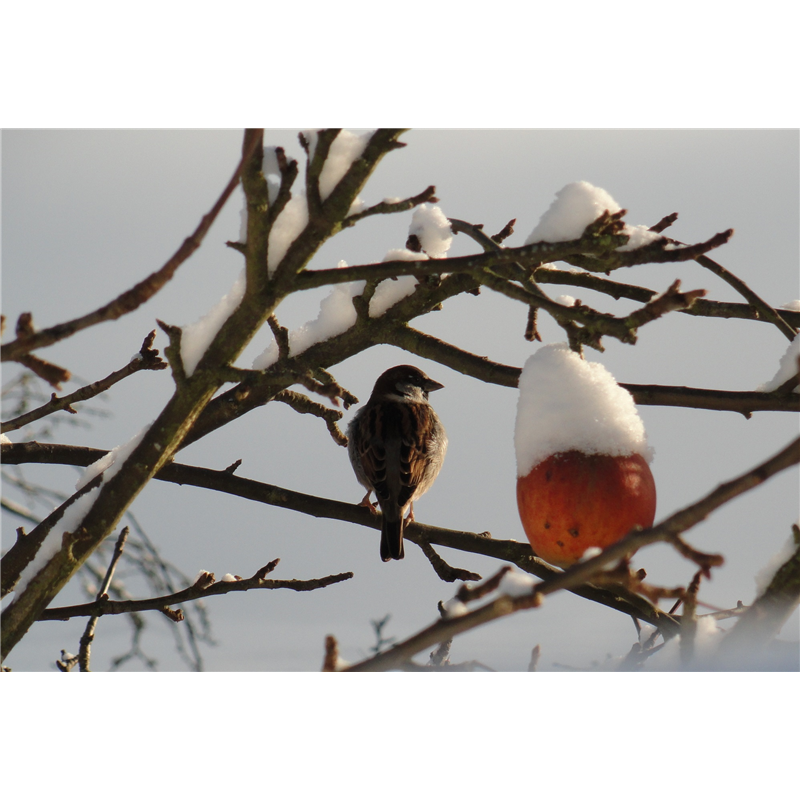 |
Nineteen members logged onto a Zoom Meeting at 2pm on Tuesday 2nd February to see a presentation by Maureen Flett (of GARDENINGFORHEALTH.COM), entitled “Gardening for Health”.
Maureen is a Sports Therapist, who has combined her interest in sports therapy and gardening, to talk about the health benefits of gardening and, importantly, how to prevent injury in the garden.
Maureen started by reminding us that plants are vital to life. For thousands of years, plants have been a source of fuel, clothing, building materials, medicine, dyes and food. Today our physical and mental wellbeing, particularly during the Covid-19 pandemic, are enhanced by gardening.
Just being outside in the sunshine is important for the synthesis of Vitamin D, an essential vitamin for maintenance of bones, teeth, and importantly, helping to strengthen the immune system. Furthermore, when we work in the garden, we are using calories, exercising different muscles and stimulating bone growth. In fact, recent studies have shown that there can be an increase in the bone density of the elderly, as a result of gardening.
Having identified all the health benefits, Maureen focussed on how to look after ourselves and be safe in the garden. Upwards of 80.000 accidents per year can be attributed to gardening, mostly through carelessness with tools, eye injuries, slips and falls, and poisoning.
Maureen herself avoids the use of toxic chemicals in her garden, but points out that danger exists regardless, since some plants can be poisonous. Seeds of the benign looking Sweet Pea are a case in point, as are the flowers, fruit and leaves of the lily. As an aside, we need to be aware for the safety of our pets. Lilies for example, are extremely poisonous to cats; onions, garlic, chives and potatoes are toxic to dogs. Legionnaires disease has been linked to bags of compost, which are now ventilated with small holes. Another example of a soil borne parasite is the causal agent for tetanus.
Wearing the correct clothes and using the correct tools are considerations for safe gardening. Wearing gloves to protect hands and adequate footwear to prevent damage to feet are important. She has seen many problems stemming from poorly supportive welly boots.
Gardening tools should be selected carefully to minimise the potential for injury; poorly designed pruners and trowels can cause muscle strain or lead to over-use injury such as carpel tunnel syndrome. Even so-called ergonomic handles need to be evaluated for comfort.
As for back problems, prevention is always, better than cure. Maureen is an advocate for the use of mulching in place of digging, and for allowing the soil “biome”, that is the community of organisms in the soil, to do the rest of the work. (Reference: Charles Dowding for books and courses on No Dig Gardening.)
Clearly, lifting heavy pots should be avoided, as far as possible by placing empty pots where they are going to be filled.
Should the worst happen, and we need to rectify aches and pains, Maureen was very clear in recommending rest and the warmth of a hot bath or heat pad, to help the affected muscles repair after a workout, while reserving ice for trauma where bleed and bruising occur. If in doubt, leave ice out. To rest a tired back, adopting the child’s pose in yoga, is useful. And if you’ve pulled your back, resting on your side with legs bent to release strain on the back muscles, may help to stave off sciatica.
In conclusion to quote Alan Titchmarsh:
“A garden should be a labour of love not a love of labour.”
We should adopt five golden rules to stay fit.
1. Listen to your body and accept its limitations
2. Wear appropriate clothes
3. Use appropriate tools
4. Consider more compact shrubs
5. Don’t take risks |
|
| Tuesday, 01 December 2020 |
| Christmas Meeting and AGM |
| The Committee |
 |
Our usual Christmas meeting is cancelled due to Covid. The committee will decide on how to proceed withan AGM and infor members as soon as possible. |
|
| Tuesday, 03 November 2020 |
| Meeting cancelled |
|
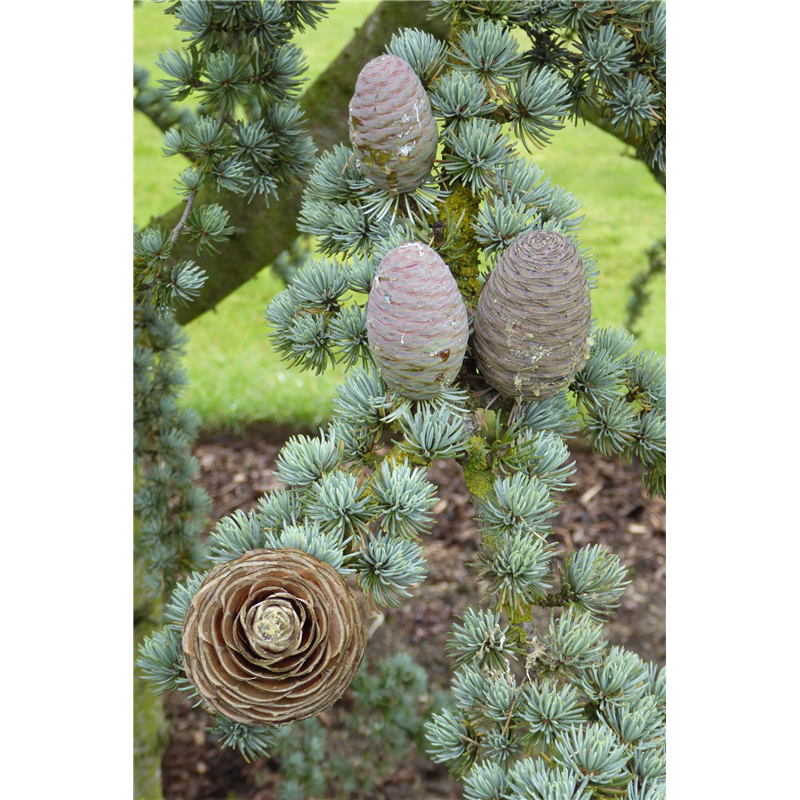 |
Our regular meetings at The Friend's Meeting House are cancelled because of Covid. However, the committee is considering if virtual presentations using Zoom, or a similar technology, would be suitable, and we will let members know as soon as possible. If you have any suggestions, please let the committee know. |
|
| Tuesday, 20 October 2020 |
| My Gardening Life |
| Ester Sloggett |
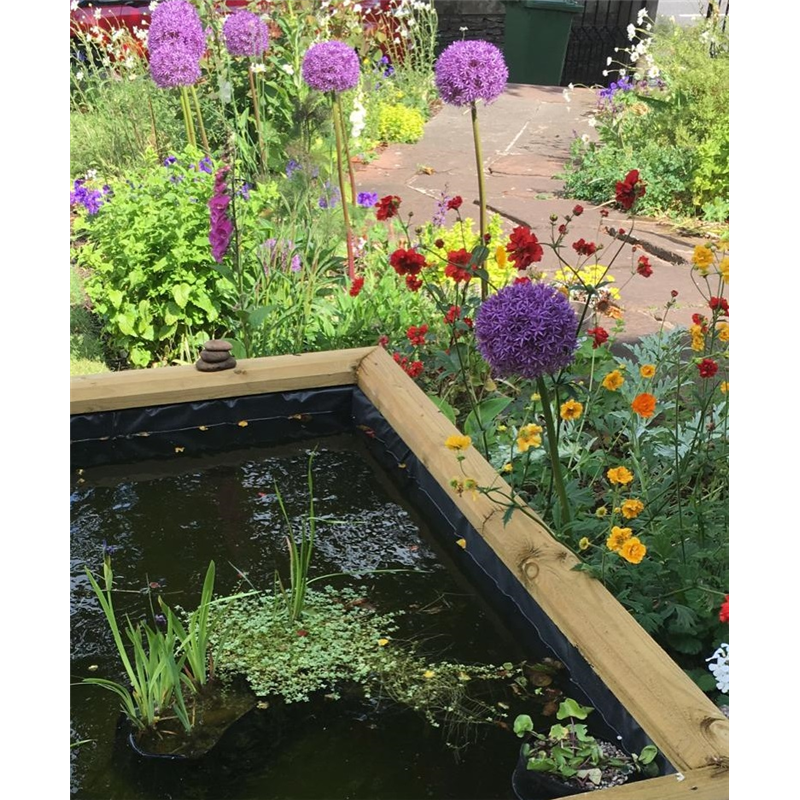 |
Ester Sloggett, one of our G of E members, presented our first G of E talk using Zoom. Entitled " My Gardening Life", she described a journey that she began at the tender age of seven years old with the encouragement of her family. After moving house several times and gardening in a variety of soils and conditions, Ester took an RHS diploma which she also found useful while she volunteered at a National Trust property. Today she and John have turned a simple grass-and-path patch in Kirkby Stephen into a more naturalistic garden that flows from their doorway, past a raised pond which quickly attracted wildlife, through plantings of experimental perennials and annuals and on to a tiny woodland area near their gate. A lovely journey! |
|
| Tuesday, 01 September 2020 |
| Gardeners of Eden Question Time at Church Brough |
| Members sharing |
 |
Our September meeting was held in Val’s garden at The Coach House, Church Brough. Lawn chairs on the lower lawn provided a venue for a Q & A discussion that was followed by tea and three wonderful cakes on the top terrace. A perfect, warm afternoon enjoyed by all.
Following are the questions and some of the suggestions given:
Q1. Cosmos seeds sold as a ‘dwarf’ variety have grown to over 5 feet in a pot of Dalesfoot compost. What happened?! Should I have pinched out the top shoots to keep them shorter? Answers: Dwarf cosmos are usually 2-4 feet tall. The seeds must have been mis-labelled. (A discussion about Dalesfoot compost revealed that 2 people were very satisfied with results, one person was not convinced that there was any difference between Dalesfoot and other good composts and another member pointed out that at the bulk price given to our Club made it very competitive.)
2Q. What Varieties of the following, have members found successful in our area of the UK.?
Answers: Tomatoes - Gardener’s Delight, Sungold, Honeycomb (a grafted, orange, very sweet variety)
Potatoes – Charlotte (also successful with no-dig method), and Fir Apple (an added bonus is that it is not sold in shops. Dwarf French Beans – Cobra (a runner bean that grows up a support and is a prolific producer of tasty beans), and Borlotti (excellent taste as fresh young pods, cooked pods and mature bean. Also harvesting is easier because of the coloured bean pods.) Onions - Shallots make good ‘spring’ onions as well as regular us; Kelsay onions are huge; Eskimo Leeks. In any case, onion seed has a low success rate; sets are more successful.
Pumpkins – Patti Pan, Squash Crown Prince (blue skin, tasty and keeps well) and Evergold, which is pictured here next to this report.
Q3. Can builder’s sand be used in the garden in place of horticultural sand? Answer: Not advised because it may have chemicals added for construction purposes that are harmful to children and probably plants. (Google research reveals: if you do use it, sprinkle it thinly or wash it first to get rid of clay particles.)
Q4. What can I grow on a wall, to would compliment a deep burgundy-coloured shrub in front of it? Answers: Cotinus coggygria Golden Spirit, Actinia passiflora vine, Golden Hop vine, Euphorbia, Chinese privet, Elaeagnus ebbingei 'Limelight'. These plants offer a choice of bright green, yellow or yellow/green varigation.
Q5. Has anyone had success eradicating Gooseberry sawfly? Tips? Answer: Pick off by hand. Use nematodes. The larvae, which cause the damage, are usually found low down in the middle of the bush. A friend has had success in growing gooseberry bushes as standards, which raises the larvae-attracting leaves well off the ground.
Q6. Any tips for persuading mice and voles to go somewhere else to eat seedlings? Answer: Traps; Cats; Dont feed birds nearby as dropped seed may attract rodents; Note: mice and voles may be tolerated as wildlife, but it is best to poison rats which should not be tolerated.
Q7. What do members do to reduce garden chores? Answers: Mulch, mulch, mulch! (eg. Grass clipping on top of horse manure will help to keep the weeds from the manure in check.) No-dig gardening. Use tarps to catch hedge cuttings. Battery operated ‘Stihl’ hedge cutters are Val’s favourite and can be used for other jobs as well. Bosch battery operated strimmer works well with a shoulder strap. A Bosch shredder – to make mulch material, etc. Compost bins – from Eden Council and a HotBin are very useful for getting rid of vegetation and creating mulch. Aldi has had excellent, cheap gardener’s gloves and also ratchetted secateurs in the spring. Buy several if you find yourself wasting time by misplacing them.
Q8. Tips for growing parsnips, please. Answers: Buy fresh seed, plant when the soil has warmed. Fleece covering the seeded area will help warm the soil/prevent drying out/ prevent rain washing them away. Plant where they are to grow because they don’t transplant successfully.
Q9. What’s the problem with my onions? (See photo in the Gallery) Answer: It looks like the fungus, Onion White Root Rot ( Sclerotium cepivorum). Infected plants must not be composted; bag/burn instead and disinfect tools. The surrounding soil should not be used for onions for some (8) years, although other crops can be put there without harm. The fungus can come in on a set, or even in onions from grocers, so some gardeners grow from seed for that reason, and they never compost onion debris, even from the kitchen.
Q 10. What are the beasties in my water butt? Answer: Primordial Soup! Which is to say, no-one knows.
Q 11. What is wrong with the leaves of my cucumber plants? (See photo in Gallery) Answer: Your reporter missed the answer....anyone? Mineral deficiency?
Q12. How do I refresh large tubs of perennial shrubs over the seasons? Answers: Use liquid feed while they are growing. Once in awhile repot them by lifting, trimming some of their roots away and adding some fresh compost. Between times, scrape 2 cm from the soil surface and replace with fresh compost.
Q13. What wool can be used to deter slugs? Answers: Any wool – knitted or found in the field; it’s the roughness of the texture that deters slugs. Also, copper bands and nematodes work well against slugs.
Q14. How should climbing roses and rambling roses be pruned? Answers: We should know this from our visit to David Austen...
For established Climbers, pruning is done to create good structure and encourage new growth, so cut back previous season’s flowering shoots to 2” – 4” from the main stem. 2. Cut out dead, dying, diseased and damaged stems. 3. For roses over 5 years old, remove some oldest stems from base to reduce overcrowding. 4. Remove any remaining foliage; tie in new stems to give pleasing shape.
For established Ramblers, thin out shoots as necessary to keep desired shape and size and after 5 years, remove some old stems to reduce overcrowding. Other steps (2 – 4) above are optional.
Q15. Suggestions, please, for shrubs to be planted in troughs for use as a screen in a city garden. Answers: Bamboos, sculpted fir trees, a pillar of yew. |
|
| Tuesday, 04 August 2020 |
| Members' Gardens in Kirkby Stephen |
| Jim, Janice, Vivienne |
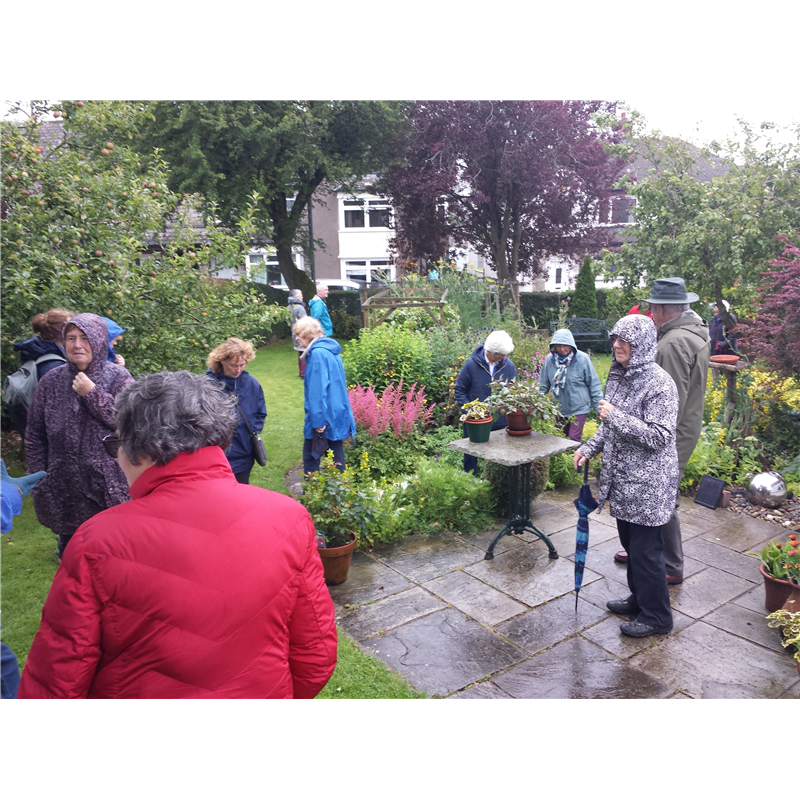 |
In the mizzle of a Kirkby Stephen afternoon, our group of determined and enthusiastic G of E members strolled around three very different gardens: Field Head, with its upper seating area offering welcoming views down towards a conservatory/kitchen, fruit garden and intriguing rooms of flowering beds; Dawn Brig, with it's backdrop of pastureland and the numerous microclimates of a garden that encircles a house; and Rancroft, with its, generous open-bordered front lawn and bountiful rear vegetable garden where tea and cakes were set out to enjoy. Field Head Garden - by J. Poulson We moved into Field Head in March 2007. We viewed in Nov 2006 when the pyracantha around the front door was in full berry – that helped to sell it to us! The single storey extension was built on the site of a shrubbery whilst the top patio is on the base of a greenhouse, the glass panes of which were regularly broken by falling apples! The compost/log store corner was established early as were the trellis, herbaceous bed and herb border at the top of the garden. The garden was in general good order, being, in the main, shrubs and bushes and apparently unused vegetable beds. These have been replaced, over the years - to no overall plan - with herbaceous beds and borders, black and red currant bushes, gooseberries and strawberries. The raspberry bed was also established although crops have been disappointing: the brambles are naturally seeded! The apple and plum trees were already established. The shrubbery at the front of the house, known as the jungle, is in the course of being trimmed back and opened up to allow light in. The rockery was again already established, the only changes being the replacement of the tiny lawn by the current roses and replacement of plants that disappear. For the future, the bottom part of the longer lawn is little used so it is intended that a wild flower area be set up, perhaps incorporating the raspberry bed – depending on this year's crop! The rhubarb plants in the blackcurrant bushes will be moved to along the compost to benefit from the run off. There will also be the normal movement of plants that are in the wrong place. Dawn Brig - by J Shaw As you walk up the drive towards Dawn Brig, the garden is revealed gradually. A lacey, mauve thalictrum delavayi greets you and introduces a surrounding carpet of ferns, hosta and primula. In the background lurks a twisting Corylus avellane ‘Corkscrew Hazel’ and nearby is the little Acer ‘Boo Hoo’ which will glow like a campfire, over the winter months. Beyond is an open green slope with several flowerbeds that catch the morning sun, and have a variety of plants including a Hydrangea with cream coloured flowers interspersed with feathered grass and purple knobs of Drumstick Allium. To the left of the drive is a stepover apple hedge with Discoveries and Sunsets, due to be underplanted with wild strawberry in future. Behind the apple stands a white barked birch tree with hosta and fern – the beginnings of a woodland bed, that sits next to a patch of unmown white clover – the smallest ‘meadow’ on Rowgate. A corner of drystone wall, topped with sempervivum and thyme, encloses a patch of camomile lawn, that in turn overlooks an experimental flower bed with a struggling border of golden marjoram and chives. Bronze Fennel, Iris, Borage, Strawberries, lavender, Jostaberry and Blackcurrent suggest a potage garden is being attempted. The boughs of the Purple Beech tree shade a stump garden of small roots, dug up around the property and planted with ferns and hostas. This planting continues along a north-facing sloped area where hellibores,, and hosta give way to an area of grasses – mostly bought at the annual G of E May Day plant sales. Near the base of a tall Ash tree there is a useful stand of Phyllostachys nigra ‘Black Bamboo’. Past the Aricula Theatres- waiting for their actors to arrive - and on into the back yard where a pallet workbench and chopping log are surrounded by rose bushes, Alchemilla mollis, bay tree, unruly loganberry, herb garden and piles of stones, all guarded by a hollyhock of strikingly raggedy appearance. On the horizon stands a tombstone fence made from Dawn Brig’s old stone roof slabs and then a ‘wavy’ fence, copied from a garden club trip to Pontiland, which leads down a narrow path flanked by pink Centranthrus ruber ‘Red Valerian’. Along the north side of the house, a grass path leads us by a progression of alchemilla mollis/ Brunnera ‘Jack Frost’/ Crocosmia on the right, and to the left, a confused jumble of plants-on-trial, backed by a wall of Sweetpeas, Golden Hop, Buddleia, Physocarpus opilofolius and Cotoneaster horizontalis. Finally, in the front garden there stand a Honey Locust, a Sambucus racemose ‘Sutherland Gold’, a dying Cherry tree hung with bird feeders, a flourishing Clematis ‘Polish Spirit’, and a 5-foot standing stone mounted in a bed of heather. Dawn Brig’s garden is a challenge to a novice gardener with its openness to the winds and fields and it’s variety of microclimates, but there is often pleasant work to do and always something new to observe. Rancroft - by Vivienne Rancroft garden was first laid out 39 years ago when the house was built. Subsequent alterations were made when the house was extended. A terrace was added to the front of the house and patio to the rear connected by a flight of easy steps giving all round access. This garden is generally best in springtime with fresh greens and flowering bulbs and shrubs. Sloping gently from west to east, it is laid out round the drive and the house in a manner that allows most of it to catch the sun for the greater part of the day. Mature trees along the southern boundary provide varying degrees of shade. Views, over a large lawn, east to the fells above Hartley can be appreciated from the front of the house. A shrubbery on the east side of the drive has been replaced gradually with an herbaceous border. The planting here has grown well this year probably due to the wet winter and the lovely warm spring. Many plants such as Echinops, Thalicium, Verbena Bonsoriaris and herbaceous Clematis, as well as white Leucanthemum, are at present the stars of this border and in full flower throughout August, almost dwarfing the other lower-growing plants. A rose arch is clothed in ‘Etoile de Hollande’ - a dark red rose which this year has been blighted by black spot. Although treated earlier in the season most of the plant leaves have dropped. Around the corner from the patio, along the west wall, there is little colour in August although white and pink Astrantia and pink Geranium show above the green foliage of Irises and hostas. Directly opposite, growing on the south wall of the house, a prolific perfumed rose ‘Gardeners Delight’ flowers alongside a lovely, dark claret Hollyhock. Looking westward over a drystone wall boundary, a borrowed landscape of trees rises from the grounds of the Health Centre. This is the background for a vegetable plot. Here, plants have grown well this season partly due to weather conditions and a thorough mulching of both Dalefoot and garden compost. The vegetable plants were put in earlier than usual due to our March restrictions, which kept me very busy and gave more purpose to this time. Alongside the usual beetroot, sprouts, broad and runner beans, lettuce and strawberries, two new varieties were introduced; Kale ‘Nero Di Toscana’, and heritage peas ‘Alderman’ are growing well - especially the peas. A Victoria plum tree and 2 small apple trees are espaliered next to autumn raspberries. The apples are both heritage varieties. One is ‘Lemon Square’ and the other, nameless, has been grafted from a tree found in the Maulds Meaburn mill yard. With the varieties of the plants too numerous to mention from local nurseries, plant sales and many G of E trips, the garden at Rancroft keeps us happily occupied - and our bees busy and productive. |
|
| Tuesday, 07 July 2020 |
| Member's Garden Visit to Church Brough |
| Val Reynolds, The Coach House |
 |
As we walked across the gravelled driveway towards The Coach House, Church Brough, our attention was caught by groups of red geraniums skirting the windows and doorway. Then, looking up at the drizzling sky, someone noticed a row of eight swift nesting boxes tucked under nearby eaves. We took in the towering beech trees and red sandstone cliff that sheltered the north side of the property while Val welcomed and guided us through a wooden gate into a kitchen garden surrounded on two sides by a stone wall. Thus, began an enjoyable visit to a true gardener’s garden, filled with a variety of experiments, microclimates and landscapes which included a pumped stream, orchard, woodland, steep grassy bank and a terrace with a long, borrowed view of farmland falling towards the South. Of the four different gooseberry bushes just inside the kitchen garden, Val explained that the one originating from a Penrith friend was her most successful. And her best raspberry bush had a parent in Brough. First tip, locally sourced plants offer a good chance of success. To test the theory, several of our group asked for cuttings from her best dessert gooseberry bush! With our backs to the wisteria (that has not flowered in 7 years, mmm...) we listened to her plans for a new row of biennial kale and discussed the pruning of two bushy stepover apple trees. Val admitted to having little success growing onions from seed; but she has a bountiful crop of Kelsae onions, a strain usually raised for show, which have grown from plugs in her no-dig patch. Here, cardboard had been laid over the ground, and then covered with compost and a mulch of prickly beech casings donated by nearby trees. Nearby a broccoli plant is covered with Ultra Fine Insect Mesh Netting, very pliable and excellent for protecting against the white cabbage butterfly. A stately artichoke stands in one corner and the soft feathery foliage of a five-year-old bronze fennel sits near the path where it’s texture and fragrance can be appreciated. The cold frame was filled with seedlings in styrofoam cups; other recycled plastic yogurt pots had been turned upside down, large holes made in the bottom and the sides banded with copper, to deter slugs as the brassicas grew through them. But it was Val’s successful use of sheeps’ wool, tucked around stems, that especially appealed to the walkers among us, as an excuse to do some wool-gathering Exiting the kitchen garden, we passed two HotBins, all-food composters that reach 40-60 degrees C and are raised on stands to make it easy to collect the rich ‘tea’ and the mulch/compost after 30/90 days. Opposite the bins, on the wall of the workshop, Val is growing a Czar Plum tree, now 8’ tall, that will soon be pruned to retain its espaliered form. Next, we walked on to the ‘floriferous’ gravel garden where we paused to take in the view of undulating farm fields sweeping down through the hidden valley. At our feet we counted at least six strains of hardy geranium, a rosemary bush, Mexican fleabane Erigeron karvinskianus, clematis hedging, a mixture of hostas and hellebores – plus many more! We continued along the front of the shippon, past yet another prolific raspberry plant, small troughs and hollowed bricks filled with houseleeks, an acer and climbing melons peering out from the conservatory window and stopped to admire a lush plantain originating from a G of E visit to Poke Barn in Barbon 2 years ago. There was a pretty grouping of Ammi majus, Oxalis triangular purpurea and deppi ‘Iron Cross’ and Senecio ‘Angel Wings’. Behind them was a problem: two very high climbing roses -one white, one red Adelaide d’Orleans - both with blackspot. Turning again to the view, Val pointed out a strip of orchard trees on the lowest terrace underplanted with scabious, pink and mauve volunteer oriental poppies and other native scabious flowers. Here she plans to replace the wild daisies with Ammi plugs, since seed has not yet been successful. An arch in the middle of the line of apple trees, is flanked by two Clematis - a mauve Prince Charles and a white Prince George. Nearby, a generous pond, full of white and pink water lilies, sports a frill of Harlow Carr primulas, iris, foxgloves and pots of reeds ready for planting out. We were curious about the rotating summerhouse and so walked down to it via the stream-side path, bordered with a mix of Primula florindae Himalayan cowslip and P. Bulleyana the candelabra primula, pink foxgloves and more hardy geraniums. Later we made our way back by walking along the foot of the garden, near a boundary hedge comprised of various trees that offer protection to wildlife, and a deep border with a great variety of plants including the fabulous Selinum wallichianum Wallich milk parsley and other umbellifers, valerian, dogwood, white veronica, angelica, white willow herb, opium poppies, plantains and daisies. We stopped to examine a stretch of grasses, destined to become a small wild flower meadow, and found Yorkshire Fog, Bents, Rye and Fescue. After passing under two graceful birch trees underplanted with woodland greenery, we started up the final border, lush with deep blue larkspur, delphiniums, a tepee of sweet peas and a tower of ‘Amazing’ Clematis - Rome, Oslo and London, which have been cultivated to give long-stemmed, non-twining flowers with long vase life. There were white, pink and red Japanese anemones, pink and purple hardy geranium, antirrhinums, the thuggish shaggy double daisies that are doomed to be uprooted soon, Geranium psilostemon Dragon Heart, asters, perennial wallflowers, verbascum – and more! This brought us back to the Czar plum tree and the final gate. Val’s garden certainly is a wonderful place in which to explore, discuss and photograph. We thoroughly enjoyed spending an educational couple of hours with her. We thank her for sharing her dreams and experiments with us all.
|
|
| Tuesday, 07 July 2020 |
| Visit to British Flower Grower in Long Marton was cancelled. |
| Emma Grimshaw |
 |
Unfortunately our visit to Fellside Flowers in Long Marton has had to be cancelled. Although Emma's business is, thankfully, surviving with online orders of fresh flowers delivered across our area, there are too many gates and not enough sanitary facilites to make public visiting feasible under the current guidelines. However, you can still visit the website at : https://thefellsideflowercompany.co.uk/ UPDATE: One of our members has agreed to have an open afternoon for our group on 7 July. As this is a private viewing, please look for details in your email Inbox/29 June. |
|
| Tuesday, 02 June 2020 |
| Visit to Lower Rowell Farm in Milnthorpe |
|
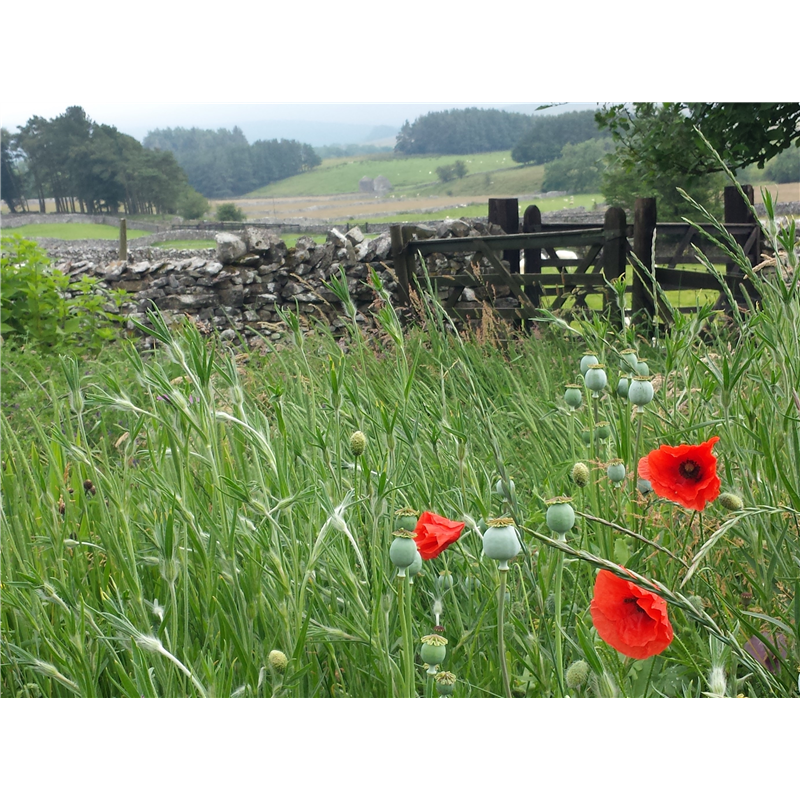 |
This visit is cancelled because of the Lockdown. But while you are here, have a look at The Gallery - Members' Gardens. We plan to add photos from your gardens over the summer, so please send one or two photos to shaw.janice@gmail.com if you'd like to share them. The scene to the right was taken last summer, in Ravenstonedale. Thank you, Ian T. |
|
| Friday, 08 May 2020 |
| G of E Annual Spring Excursion to Malvern, Stratford and Arley Hall |
|
 |
The following visit has been cancelled due to the pandemic. Titterington's will have been in touch with those who signed up, to arrange cancellation details. RHS MALVERN FLOWER SHOW on the 8th May - 10th May 2020 with STRATFORD ON AVON on the way out and ARLEY HALL GARDENS on the way home. Admission to the full day flower show and the entrance to Arley are included in the trip. |
|
| Tuesday, 05 May 2020 |
| Visit to Windy Hall, Crook Road in Windermere |
|
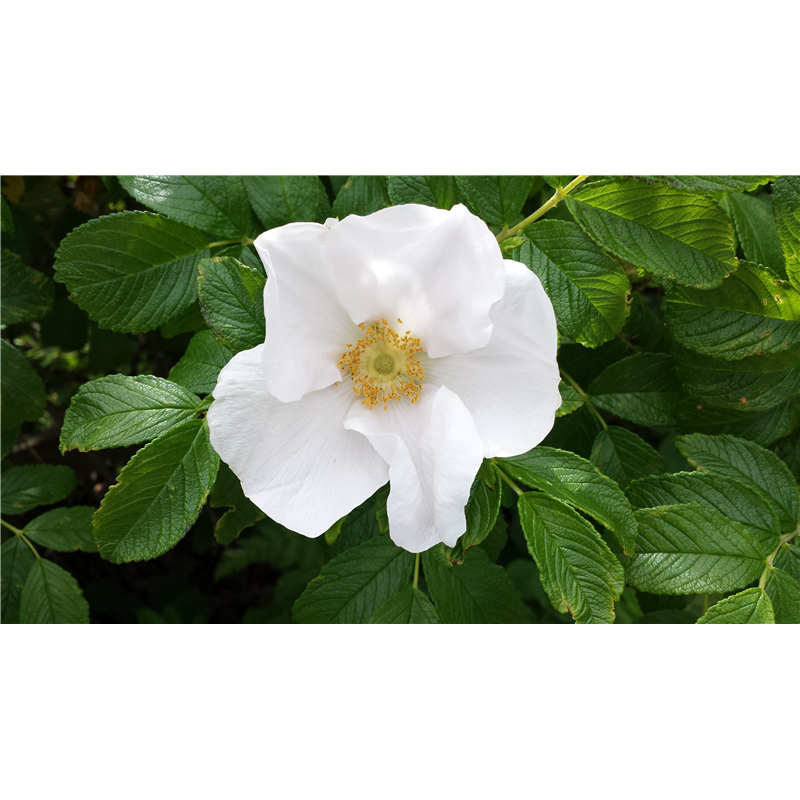 |
The following visit is cancelled due to the pandemic. However your committee will endeavour to rearrange it at another date: 2 people, 4-acres, 6 feet of rain and 30+ years of hard work! Come and see what the results are. The garden consists of Fellside woodland with rhododendrons, camellias, magnolias. There are also a pond, kitchen, 'privy' and 'Best' gardens and Japanese-influenced quarry garden. Discover the Waterfowl Garden with stewartias and large gunneras and Alpine area with very small gunneras. Moss path & wildflower meadow. Abundant wildlife with many native birds nesting in the garden. Rare Breed Sheep. There are also National Collections of Aruncus & Filipendula. |
|
| Tuesday, 07 April 2020 |
| An Introduction to Alpines |
| Frank Hoyle |
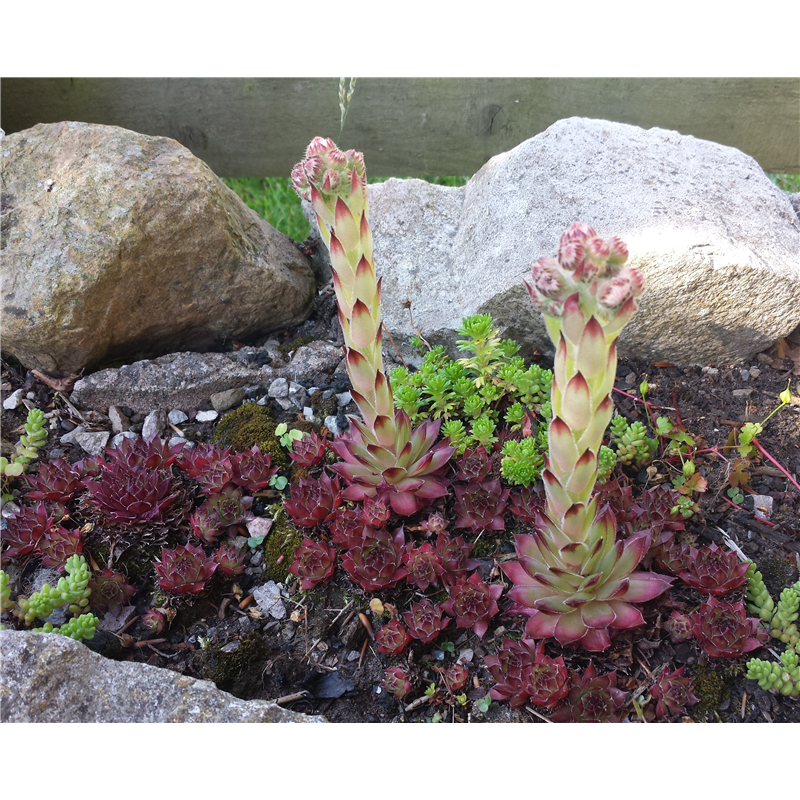 |
This meeting has been cancelled due to the pandemic. Hopefully we will be able to visit in the future! |
|
| Tuesday, 17 March 2020 |
| Cancellation of Visit to National Collection Of Hepaticas |
| Glenn Shapiro and North Cumbria Rock Garden Group |
 |
The following visit has been cancelled because the early spring means that the Hepaticas will be past their best by mid-March. However, your Committee is hoping to plan a visit there next year, and so we are thankful to The North Cumbria Rock GardenGroup for bringing Silverdale to our attention. Silverdale, in North Lancashire, holds The National Collection of Hepaticas. Hepaticas have a cult following in Japan where some beautiful and very expensive plants originate. Details of the collection, held by Glenn Shapiro, can be found at www.hazelwoodfarm.co.uk. . |
|
| Tuesday, 03 March 2020 |
| The Life Cycle of Honey Bees - a Talk |
| David Leathes |
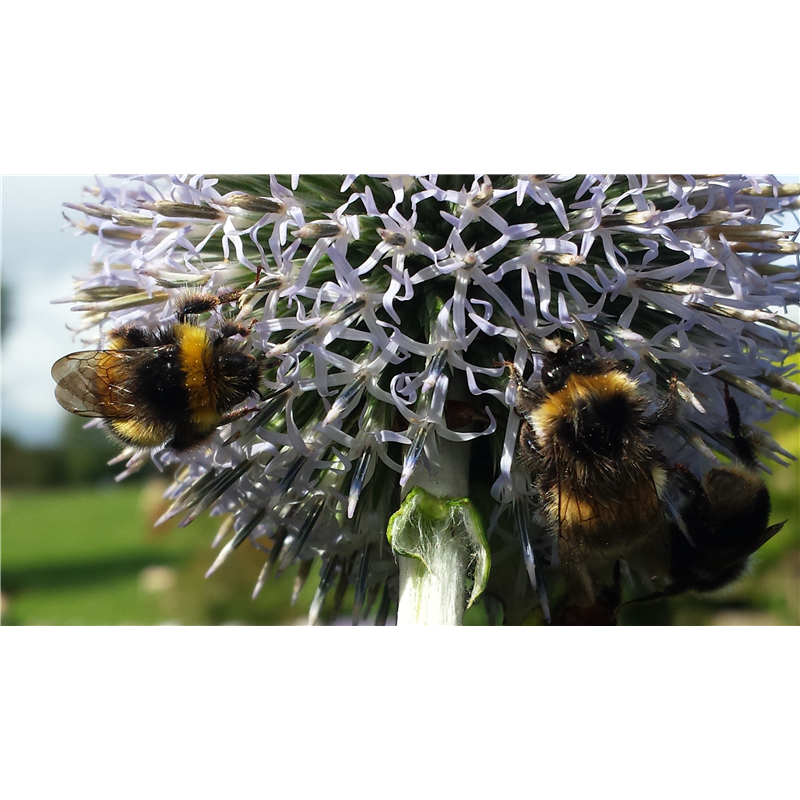 |
David Leathes, a local curate, gardener and beekeeper came to talk to the Gardeners of Eden about domestic, or honey bees. He began by reminding us that bees appear in so many aspects of our lives - in our culture, our mythology, our poetry and our verbal expressions. Shakespeare makes many mentions of the bee or bees. But if you are going to keep bees, first of all you need some protective equipment. David has a boiler suit and a veil that covers his head and neck completely, some leather gauntlets, a smoker and a hive tool. Generally speaking honey bees are fairly docile and only sting in self defence. The smoker helps to keep them in the hive and out of the way while the beekeeper does what he needs to do at the hive. It only needs a little fuel, some wood shavings or some corrugated cardboard to give enough smoke. The hive tool is useful to assist in lifting the layers of the hive and for scraping away debris. David uses a modified national hive which is comprised of several layers assembled in order. At the bottom is the brood chamber where the queen lives. About 10 honey combs are provided there for her to lay her eggs in. On top of this is a thin layer of mesh. It is used to prevent the queen from getting into the rest of the hive, the mesh being of a size too small for her but big enough to allow the workers in and out. Then above this are the ‘supers’, a variable number of layers containing frames of combs for the storage of honey. Above these are the crown board and the roof. An additional layer can be used during winter to feed the bees. This has a circular hole in it, covered with a mesh to allow the bees’ tongues to access the sugar candy you have provided above. There are different races of bees. Italian bees are a yellowish insect and very prolific, perhaps not so well suited to our northern climate. Caucasian bees make a lot of propolis which makes for a very sticky, gluey hive. Brother Adam of Buckfast Abbey, well known in bee-keeping circles, developed a strain of bees - the Buckfast bee - but when David tried it, it didn't seem suitable for the cooler climate of Scotland. He has what he calls ‘mongrel’ bees! David spoke to us about the life cycle of the bee and the work of the beekeeper, season by season. In autumn it is time to harvest the honey, remove the supers (with the honey) and prepare for winter. A good fertile queen is needed and the hive should be checked for varroa, the parasitic disease that has decimated bee numbers globally in recent years. There are now some preparations that help control the parasite. For a hive to survive, a community of 15-20,000 bees is needed. And the hive must be left with enough stores, a surplus of about 40 pounds is needed for the colony to survive through the winter. It is possible to give a syrup feed until they have gathered up enough stores. Then the hive must be made mouse proof, hornet and wasp proof too. all these creatures are scavenging for food thorough the winter and will steal from the bees. Hornets eat bees, picking them off in mid-air. There is warmth in a hive, as well as food, a perfect place to make your nest if you are a mouse! Winter is a quieter time - time to bottle the honey! It is wise to check that the bees aren’t hungry, giving some candy cake if necessary. In a severe winter when the temperature is below freezing for long periods, the bees can be wiped out. They need some periods when the temperature rises to 10 degrees Centigrade to be able to fly out on a ‘relieving flight’ and then returning to the hive to keep warm. Occasionally, but not usually in northern England, green woodpeckers can cause a problem by boring holes through the wood of the hive and eating the bees! Special wire mesh cages are needed if these birds are a problem. Once spring arrives the bees venture out on short flights, the journeys out getting longer as the temperature rises. It needs to be 12 degrees C for them to recognise spring. Pussy willow is a good early source of nectar, so is the flowering currant in April. Now is the time to check the hive and see that the queen is fit and healthy. She will lay an egg in each cell in the brood chamber, up to a thousand a day! The eggs hatch in three days, they remain as larvae for six days. The cells are sealed with propolis by the worker bees and in three weeks the bees hatch. The worker bees have particular duties to perform. They lean the cells prior to egg laying, feed the larvae, seal the maturing cells and guard the entrance to the hive to protect the colony from intruders. Later they will be out foraging. This is when they will useful to us again as pollinators of our soft fruits. Hives are often positioned in orchards for this very purpose, owners of hives sometimes paying for the privilege. Lime and sycamore , dandelions and late willow are good natural sources of nectar in May. This is when swarming occurs, it is nature’s way of creating new colonies. About a third of the bees in a hive fly off with the queen, there can be thousands of bees in a swarm. Scout bees fly separately looking for a new home for the new colony, and fly back to the swarm to take them to the new found site. Swarms hanging in trees are waiting for the scout bees to return with news of a suitable place. Queen cells will have been left in the old hive, each one containing a virgin queen. These cells take 16 days to mature, and one of these queens may fly away from the hive and take another cast of bees with her. Another of the new queens will take over the original hive, possibly after a fight with the other new queens. The new queens will fly off with the drones and be mated, then return to their hives where they will remain - in the brood chamber. The beekeeper can intervene in this process by killing excess queen cells before they mature and also in this way, prevent swarming. The beekeeper needs to check for queen cells every nine days so that he can successfully interrupt the development of queens. Hives can also be artificially divided early to control swarming. in July, the bees will make lots of honey. There is a plentiful supply of nectar from such plants as lime trees and willow herb at this time, so there is a surge in production. Whenever a plant comes to its maturity and produces its nectar, the bees ’make a bee-line’ for these plants during these so-called ‘nectar flows’. The nectar flows of heather occur in mid-August and it is not unusual to see bee hives nestling amongst the heather on the moors at this time. The average yield per hive is about 30 pounds per year in this country, more in hotter climates. Bees can inform their hive-mates of the position of good sources of nectar that they have discovered. Bees dance - a special waggle dance that gives indicators to the others of the position and distance of the new source. A queen can live for five years, but is usually changed after two or three. Her fertility drops after this time and the hive will be less productive. Worker bees born in the autumn will live for about 6-8 months, workers born in April will have a life of only about five weeks, working harder for a shorter period. Drones emerge in May, their sole purpose to mate with the queen. They live in the hive but are later driven out by the workers and will die. If a colony is particularly vicious or bad tempered, it is a good to change the queen. Introducing different genetic material in this way can have a beneficial effect on the character of the bees. There are beekeeper associations in Penrith and Sedbergh, for anyone interested in keeping bees. For Further Information:
1. See websites ** bibba.com/huw-evans and arnia.co.uk : Huw Evans, who has a 1st class honours engineering and PhD in microwave engineering, is co-founder of a company called ARNIA . He lectures on electronic monitoring as a tool for better beekeeping and queen breeding. He has a passion for finding out what bees do while undisturbed.(**BIBBA is the Bee Improvement and Bee Breeders Association).
2. There is also a good article the https://www.theguardian.com/environment/2019/jan/14/city-bees-allotments-gardens-help-arrest-decline-study. It’s about allotments and gardening for bees and arresting the decline.
|
|
| Tuesday, 04 February 2020 |
| Annual Dinner |
|
 |
The Annual Lunch is to be at The Bay Horse again this year, on Tuesday 4th February, 12.30 for 1.00pm. The cost will be £22.00 for 3 courses or £18.00 for 2 per person. Please indicate your choice from the email recently sent and let Jim know, at phone to 017683 71653. Deadline is 28 January 2020. |
|
| Wednesday, 01 January 2020 |
| Coach Trip to Durham University Botanical Garden and Nursery |
|
 |
Details of the time and cost to be announced later. |
|
| Tuesday, 10 December 2019 |
| Annual General Meeting and Christmas Party |
|
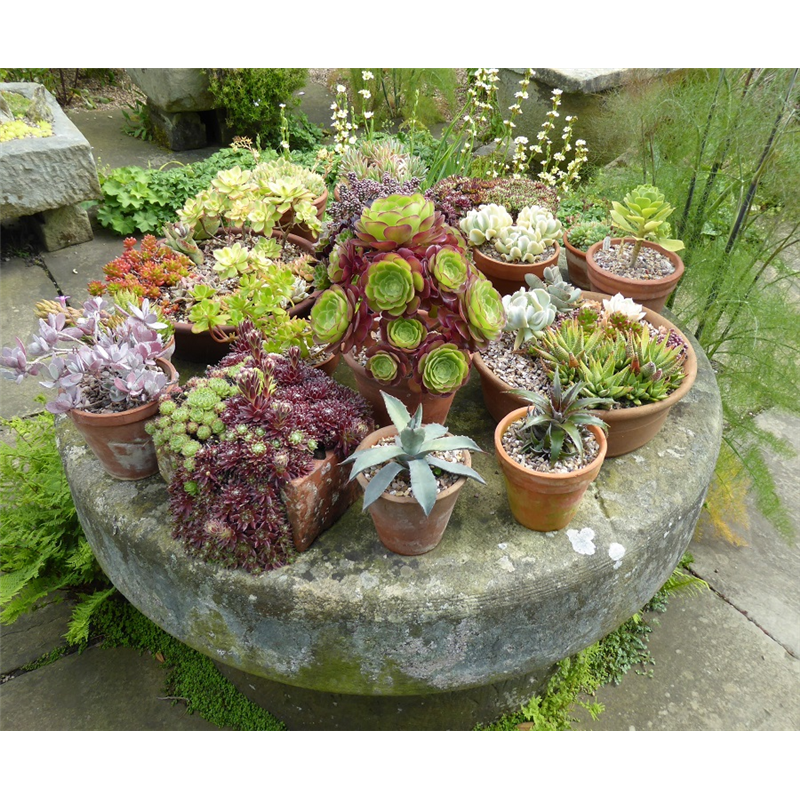 |
Gardner’s of Eden Chairman’s Annual Report 2019 2019 has been my first year as Chairman, and it has been a very enjoyable year. In February we had our annual lunch at the Bay Horse at Winton, which was a great success. The plant sale at the end of May, was very successful, with members bringing a vast selection of plants from their gardens. As you are probably aware, in addition to plants from people’s gardens, we grow on plug plants for sale. This year we needed green house space for plugs, so thanks to all who helped us with that. We have visited a great variety of gardens over the year. If you haven’t already done so you should read Sue Bradley’s fantastic reports which are on the website. Together with the committee I have put together some brief recollections of our gardening year. The first visit was in March to Dalefoot Composts. The day was cold and windy so a good day to visit hot compost! Dalefoot produce peat free compost based on bracken and sheep wool, they also restore peat bogs, so addressing disappearing peat from both angles. In April we visited 3 gardens in South Lakeland. Firstly, Haverthwaite Lodge, a terraced garden in three tiers sloping down to the River Leven. Highlights were deep red camellias in huge planters by the door of the house and further into the garden a fantastic show of Magnolias. After Haverthwaite we went to the Lakeside Hotel, at the south end of Windermere, where we were shown the carefully designed planting combinations which perfectly offset the water’s edge location. After tea, we visited, a very unusual garden made on a rocky tiered and terraced garden landscape. In May we visited Winderwath, Temple Sowerby. The privately owned 5 acre garden boasts a number of mature trees including Wellingtonia, Cut Leaf Beech and Cedar, with a huge collection of Salvias some of which appeared on the sales table In early June Members enjoyed a fine afternoon at Deer Rudding near Wigton. The 8 acre site had originally been farmland and since 2006 the garden had been developed with the use of traditional stone walling to create different “rooms”. The original farm house and barn had been left as a ruin and incorporated into the garden, the area had largely been left to self-seed, and consequently had a lovely natural look about it. Dramatic were squares of uncut grassland which are being managed to create flower meadows Later in June, twenty one members joined the 3 day trip to Yorkshire, six gardens were visited in and around York. These were Helmsley Walled garden, Scampston Walled garden, Breezy Knees, Burnby Hall, Goddards and York Gate In July we visited Pear Tree Cottage near Burton in Kendal, 1/3 acre cottage garden with the most dramatic rambling rector rose growing up through a very tall pine tree Later in July, member Ian Torkington kindly allowed us to visit his garden in Ravenstonedale. With a gorgeous outlook, over the Howgills, his lovely natural garden was an absolute pleasure to visit, furthermore Ian showed us his allotment which was also amazing. Our thanks to Ian for opening his garden. In August the venue was Eggleston a beautiful garden and a great opportunity for retail therapy. In September we visited Parcevall Hall Gardens, 24acres of formal and woodland, Arts and Crafts style of garden in the heart of Wharfedale. In October we had a talk from Dianne Nichol Brown who talked about Cottage Gardens which was very much enjoyed. In November Emma Greenshaw talked about the revival of British Flowers. Emma has developed a business called The Fellside Flower Company at her home and is enthusiastically growing native British flowers that can be delivered with no air miles and are as fresh as it is possible to have a cut flower. So that was our Gardening Year, I would like to say a big thank you to the committee for all their fantastic work on behalf of the Membership.
|
|
| Tuesday, 05 November 2019 |
| The British Flower Story (Talk) |
| Emma Greenshaw |
 |
Emma Greenshaw has developed a business called The Fellside Flower Company at her home in Long Marton. She is enthusiastically growing native British flowers for the floristry trade, for brides and their weddings and for everyone who wants to send flowers that have no air miles and are as fresh as it is possible to have a cut flower. Her flowers have not been grown under enhanced conditions and have not been treated with any chemicals, they are hardy and grown slowly in their native conditions without any shelter. They are picked early in the day or later in the evening before or after the heat of the day, and plunged into deep water overnight. Only then, in the morning after this conditioning, will they be sent out to florists or made in to bouquets to order. One of Emma’s enduring memories is that every time she visited her grandmother, they would always pick a posy of flowers from the garden. And she remembers receiving one hundred daffodils from a boyfriend. These memories have stuck in her mind, and she is aware of the pleasure that flowers bring. Living outside London in the 1970’s, she can recall all the small nurseries and flower markets that abounded at that time. It seems they are on the up again and small businesses are springing up everywhere. To deliver cut flowers in peak condition, the distance to travel needs to be quite small, up to 30 miles. The British cut flower industry as a whole is worth £2.2 billion pounds a year, we were told. British flowers account for only 10% of that figure. There are very many Dutch companies supplying us here. They are big businesses, very efficient and mechanised, on robotic farms using chemicals - herbicides, fertilisers and preservers. Silver nitrate is used to ‘kill’ the flower, to put it into a state of stasis, once picked. Who has not received flowers that never open, that may remain in that state for a fortnight and then suddenly flop and die? The carbon footprint of such a bunch of flowers is ten times what a locally grown bunch would be. From the earliest beginnings when Emma made her vegetable garden into flower beds, the business has grown. At first she grew cosmos, cornflowers and ammi. When the family moved in 2016, the new property had a field and this was to become the flower farm. Jill Hodgson started Flowers from the Farm in 2011, a network of growers all over the UK, including Emma. The members support each other, learn from each other, and when flowers are finished in the north for example, the southern members are willing to help supply the northern growers. This network now has over 700 members, all flower farmers. There are 7 flower farms in Cumbria, and Frances Rawson at Clodhoppers Blooms is our own local flower farm just north of Kirkby Stephen. Emma attended a course in Berwick in 2016 at Millpond Flower Farm, and learned a great deal, she said. Around the same time, the family moved a short distance to Long Marton, and work on the ‘farm’ began. Fences were repaired, hedgerows checked, and at first just a small patch was dug out from the grassland. Demand has grown and more beds have been dug out and extended. Almost no herbicides are used. Occasionally the leaves of a particularly difficult weed are painted, nothing is allowed to spray onto adjacent plants. The birds have returned and so have the bees. Bees are kept at the adjacent property and so the flower farm has plenty of pollinators and the bees make lots of honey for the neighbours. In the summer, the eryngiums are buzzing with bees. Everyone is a winner. Flowers are picked in bud, so there is still growing to do in the vase. Popular and hardy varieties are grown, such as anemone, sweet William, nigella, sweet peas and snapdragons. Seeds are sown in October and in January. Everything is grown outside and includes perennials such as astrantia, dahlia and ranunculus, larkspur and a few delphiniums. The flowers are not grown as a garden, but for efficiency. The beds are one metre wide, so that Emma can easily reach to the middle from either side, and 10 metres long, usually with three rows in each bed. The edges have a wooden planking to make mowing the grass pathways easier, and the 10 metre length makes calculations easy. The farm is 4 acres and Emma’s husband has his own walling and hedging business. He has been able to put up permanent posts of various heights in the flower farm so that Emma can fix horizontal netting for supports as the plants grow. This is sufficient to protect the growing plants from the storms and winds that we experience in this northern part of the world. There is no poly tunnel and no greenhouse. Everything is grown outside. There are tall beds and shorter ones, and rotation of planting is employed. Emma grows two beds of sweet peas, partly because they are very popular, but by having two beds, they can be planted at intervals, one bed six to eight weeks earlier than the second to give succession through the season. Flowers from the Farm had a stand at Chelsea in May 2018. With their wonderful display of a horse and cart full and overflowing with flowers from much of the membership, they won a gold medal. They had no sponsors and this success has put flower farms on the map in Britain. A quick look at the growers year would find Emma up at between 5 and 6 am on a summers morning picking bucketfuls of flowers from her farmland to supply florists and other customers. The picking must be done before there is any heat in the sun and the flowers must be kept cool. Supplies for weddings are picked in the previous 24 hours. Emma does not use ’plant food’ as such but uses sugar and lemon juice on occasion when necessary. In an evening, once it is cool again, Emma will be in the fields again picking any further supplies she may need to make ordered bouquets. In September, things slow down, it starts to get dark early and anything considered a little tender will be wrapped in fleece. Once the temperatures fall to 4 degrees, the dahlias will be over. Emma loves dahlias and finds them very useful. She doesn’t lift the tubers, but covers the dahlia beds with a deep mulch of straw over a layer of Mipex. Ranunculus, a member of the buttercup family likes the cold and flowers early in May. Their corms can be set in trays of damp vermiculite in September and are available from suppliers such as Sarah Raven. Tulips are also planted now and treated as annuals. In winter the farm rests under snow and there are three main jobs to be done at this time. Fencing to stock proof, green meshing for windproofing and more robust netting dug into the ground for rabbit-proofing. Mipex is used as a weed suppressant and generally a no-dig strategy is employed. Recently a wet one acre area was planted with native woodland trees, including willow so that Emma can employ other of her skills in making wreaths for Christmas. Included in the native mix are chestnut, oak, dogwood and hazel. The talk was very informative and delivered with great enthusiasm. We hope to be able to visit the farm in the future. |
|
| Tuesday, 01 October 2019 |
| Cottage Gardens (Talk) |
| Dianne Nichol-Brown BSc |
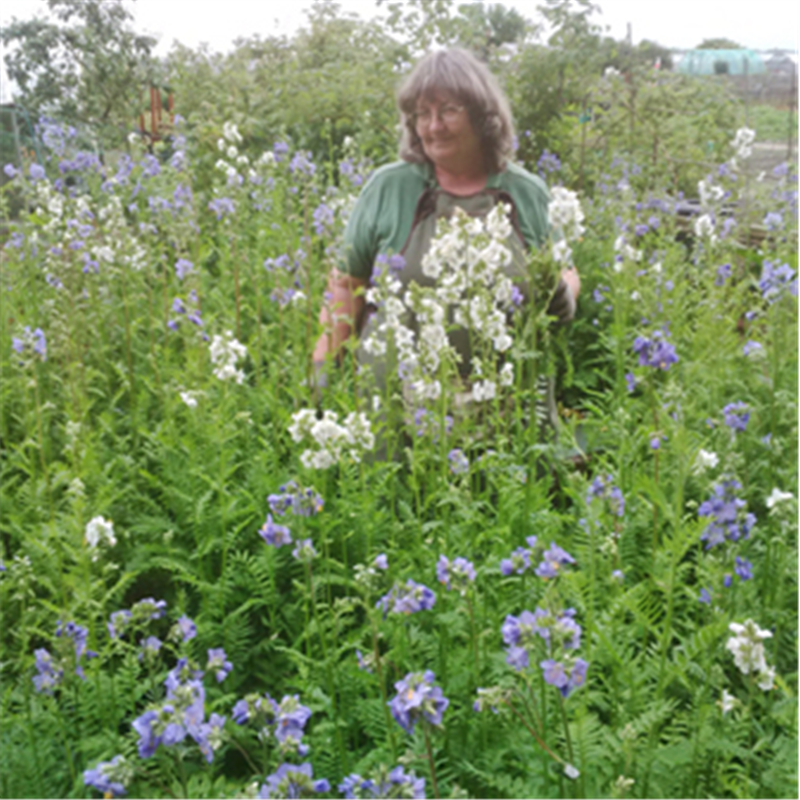 |
Gardeners of Eden meeting October 2019 Members gathered at the Friends Meeting House to listen to a talk given by Dianne Nichol-Brown. Dianne is a conservation ecologist and plant biologist who runs an organic plant nursery in County Durham. She has vast experience in horticulture and is joint holder of 3 National Plant Collections of Polemoniaceae. She also runs her own organic nursery and a bed and breakfast business. Her illustrated talk today was about Cottage Gardens. Dianne started by telling us there have been cottage gardens since Medieval times, these were usually associated with abbeys and monasteries and always grew useful plants such as herbs, vegetables and medicinal plants. There would always have been a fish pond - for fish on Fridays. There were always pathways to give access to all the parts of the garden, and a shed for the required tools. There were never any lawns. These were a seventeenth century invention of the upper classes, for taking the air and admiring their grounds. From here, Dianne gave all sorts of examples of the sorts of designs that can be employed in a cottage garden. A pretty shed is better than an ugly one or a plain one. Climbers can be used to give a vertical dimension and extend the space available in a small garden. Hops were always grown for brewing beer - it was better than the water in the old days. Ornamentation is a creative idea, and painting a trellis in a bright colour can be a lovely foil for the floral characters. A bright blue trellis brings out the softness of pink roses, and the delicate mauve of wisteria. If using paint, it is advisable to keep to one colour. This gives cohesion to the plan, so bright blue pots would be a great choice to add to the scheme. A different colour scheme could be terracotta pots with wooden pergolas. Every garden needs somewhere to sit in the sun. A couple of wooden benches might suit, made from recycled planking, or a small rustic table and chairs would be ideal on a small patio. Another bench under trees provides some shady seating too. It is the habit of cottage gardeners to use whatever is to hand, and to re-cycle. Left-over bricks can be used to make a pathway, or an arch which could be clothed with climbers and herbaceous perennials. It is good to make a path that winds and disappears, even in a small garden. It draws the observer into the garden to wander around the corner to see what is there. Herbaceous planting along the path can include favourites such as primula, polyanthus and allium - and polemonium which are Dianne’s favourite. Digitalis comes unbidden and makes itself at home, and is always welcome to scatter its purple spires. A wood pile is a must, not only does it provide fuel for the fire indoors, it also provides shelter and habitat for insects and small creatures, all of whom have their uses in the garden as pollinators and pest controllers. A backyard can be made into a delightful space with the use perhaps of a willow arch. A few pots of cheerful calendula will soon brighten up a dark spot. Calendula is edible and can be used to colour rice! Useful and much cheaper than saffron! Lavender is happy in poor gritty soil and is an essential in a cottage garden. Planted in a sunny spot, the perfume will be released in the sunshine. Use can be made of golden-leaved varieties of such things as marjoram. Planted in full sun they can be used to edge a border or to light up a dark area. Hostas do well in pots if the tough-leaved varieties are chosen, and the top of the pot dressed with grit or crushed eggshells. Slugs don’t like walking over sharp objects! Even coffee grounds are apparently a no-go area for them. Sempervivums are low maintenance and easy to look after, they only need a very well drained gritty medium. All the daisies and the dianthus family are very established cottage garden plants. A new variety of aster is Aster ‘Pink Beauty’. No staking is needed, she holds herself up nicely, and is a good cut flower. Another pretty combination is the stripey grass ‘Gardeners Garters’ with white Dicentra spectabilis. No cottage garden would be complete without a compost bin or two. There are ways of hiding them behind trellis and climbers, or at the back of borders with a few paving slabs to give access. Herbaceous perennials and shrubs can be used to conceal them. A willow screen can be used until the plants are tall enough. Dianne spoke about cottage garden plants as food. Garlic chives (Allium tuberosum) are really pretty with edible white flowers later in the season, well after the flowers of chives have finished. Primula vulgaris, and the white tulip Purity are edible too. They look so good in the garden with white Philadephus and white variegated honesty. Alpines work well too, the scale of them very fitting in a small space. Lemon-scented thyme is almost as important as lavender, and has a further advantage, it is variegated. Dianne holds a National Collection of Polemonium. In her quest to find a blue one, she kept on buying different varieties, and kept being disappointed, until at last, she found she had a blue one. By this time, she had so many it was a Collection! She told us that the Polemoniums are plants of the northern hemisphere. She also has a National Collection of Fragaria Vespa (alpine strawberries) which are very interesting, and can be served to her guests at breakfast time. Her garden also has two pear trees and two apple trees, two of each for pollination. She says a Russet is a must as the fruits keep till Christmas. It was an interesting talk with illustrations from Hampton Court Flower Show and Dianne’s own cottage garden. |
|
| Tuesday, 10 September 2019 |
| Coach Trip to Parcevall Hall in Appletreewick near Warfdale |
| Phil, Head Gardener |
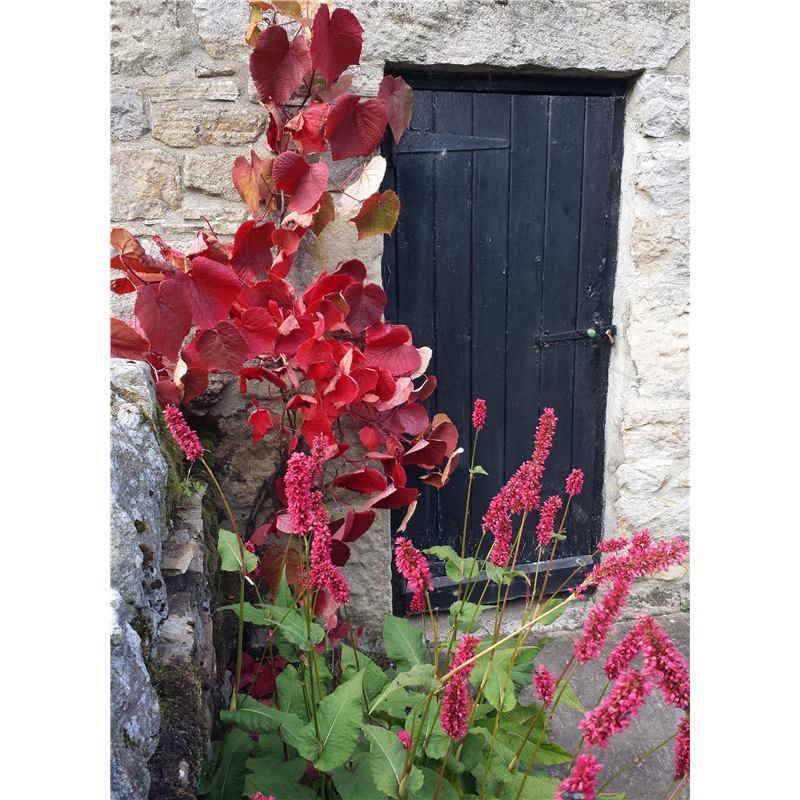 |
A large group of the Gardeners travelled by coach to Parcevall Hall in Wharfedale to visit the gardens there. The gardens were laid out first in 1927 by Sir William Milner. He bought the house when it was a farm with 16 acres and 8 acres of woodland. The gardens are situated south to south-east facing on a slope at the end of the Craven fault. The top end of the site is limestone and the lower end is gritstone. Sir William died in 1960 and left the house and garden in trust to a Church of England charity. While the house was made into a rural retreat and conference centre, the garden fell into neglect. Later the directors of the trust employed Josephine Makin to oversee the restoration of the grounds. She has made a good job and head gardener Phil and his small team continue to maintain the gardens in the Arts and Crafts style. Phil was very kind and took us round the garden and woods, explaining as we went how the place works. The woods are kept open and the understorey is strimmed once a year to take out seedling ash and alder. Ferns are left. This job takes about a week! Pockets of larger works are undertaken separately. Now there is room and light for masses of snowdrops and bluebells. Azaleas and Rhododendrons have been planted - but no R. ponticum! As we progressed uphill, we came to the pond. It looks natural, but a concrete dam has been built under our feet. It couldn’t be seen as the top is grassed over and there is a natural edge planting of wild damp-loving plants, including Primula florindii just giving its last blooms of the year. Water drains from the beck higher up, and a header tank has been installed lower down the hill. The needs of the garden are all served from this tank. The pond is deep and difficult to enter for maintenance and the surface pond weed is becoming somewhat overgrown. But it is a very pretty sight and a wildlife haven. As we continued through the woodland, it began to open out and shrubs became more noticeable. A new hedge of Vibernum opulus has been planted on the boundary. A magnificent specimen of V. opulus ’Xanthocarpum’ was spotted in the woodland edge. It has open clusters of white flowers in the spring but today it was in ‘full berry’, these are a gorgeous buttery yellow and held in clusters all over the bush. A wide grassy area separates the garden from the woodland, and in spring it becomes a carpet of blue camassia. It must be stunning. Now we were to see the formal gardens. These were designed by Sir William in the shape of the Cross. The long leg of the Cross is on the long axis of the garden and we saw this from the bottom end. It has a wide grass pathway through the centre, and on either side are two herbaceous borders stocked with red-flowered and red-leaved plants. This design feature is always maintained as the colour represents ‘the blood at the foot of the cross’. The ‘walls’ backing this area are hedged with Thuya plicata, a slow growing and reliable plant. On either side of this herbaceous garden are two orchards planted with old varieties of apples. Some new planting has taken place recently, but old varieties are again replaced. As we walked through the herbaceous garden we noticed red plants everywhere. There was tall Lobelia splendens, and Amaranthus hypochondriacus with Miscanthus sinensis ‘Little Fountain’. There was red Hesperantha and Geum with Eupatorium behind attracting Red Admirals. Kniphofia (red hot poker) was also abundant. At the top of this garden we came to the first of three terraces that make up the arms of the cross. This lowest one is modern and made of concrete. It is decorated with yellow Buddleja x weyeriana ’Sungold’ and long drifts of Agapanthus. There is a lovely purple Clematis over the centre arch and Nerines are just coming into bloom now on the other side. We walked along and out onto the drive to access the rose garden, passing lots of healthy and robust Hydrangeas, Meconopsis newly planted for next year and camellia and hosta in the shady borders under the trees. The rose garden is uphill to a summer house over a new lawn with roses either side. Looking down from the summer house we could see a magnificent and mature Magnolia. What a sight it will be in springtime. It is a M. Cambellii alba, known to be one of the best magnolias. Phil said it needs to be 30 years old to flower! There have been several replantings of the rose garden because of the difficult site. It slopes in both directions. Shrub roses were tried, and a prostrate rose called White Partridge in the small front borders, both failed; English roses failed. A combination of roses with other mixed shrubs and nepeta in the front borders is working now, and it all looks lovely. Yew hedges enclosing the garden were planted 20 years ago. Through the back door in the summer house we made our way further uphill to the top of the garden, then through another apple orchard flanked by mature Scots pine to our right and Chameacyparis pisifera, an interesting cypress with red flowers, to our left on the far side. We learnt that the apples are used in the house, are mostly for cooking, and are sent also for cider making and for apple juicing. In spring the orchard is covered in daffodils. The valley away to our left is said to be haunted by a spectral hound and to be the inspiration to Conan Doyle for his Hound of the Baskervilles! Now we had access to the rock garden, a very special place, the only rock garden on bedrock in UK, possibly in all of Europe, we were told. No stone has been brought in. There were many interesting plants thriving here, including Morina longifolia and willow gentian. Morina is an unusual plant, the bruised foliage smells of tangerine. It appears to be a prickly plant but only the older foliage gets prickly. Young seedlings could be taken for thistles, so beware when weeding. The tall flower spike has pink and white flowers simultaneously, this is a clever device to indicate to the pollinators that the darker flowers have already been fertilised! Willow gentian (Gentiana asclepiadea) is a hardy perennial with arching stems flowering with many vivid blue flowers in September. Also in the rock garden are several specimens of Picea albertina, a dwarf conifer that grows only very slowly, and doesn’t need trimming, the perfect little tree! The Chapel garden is a very tranquil place attached to a small chapel. Here there are lots of foliage plants and a gentle cascade. It is enclosed by a beech hedge and has an elegant goldy pink Japanese maple as a centrepiece. Here there is Acanthus, sedum and hosta. From the top terrace accessed through an arch off the front courtyard, is a stunning view of Simon’s Seat across the valley. As we emerged, the view was famed by the tall herbaceous planting. Fuschia and blue salvia, helenium and rudbeckia predominated here. On the second terrace there is much mixed planting and lawn, with hedging breaking up the width across the house. The central section has a pretty stone circular reflective pool, and adds to the wonderfully peaceful scene all around. |
|
| Tuesday, 13 August 2019 |
| Visit to Eggleston Gardens |
|
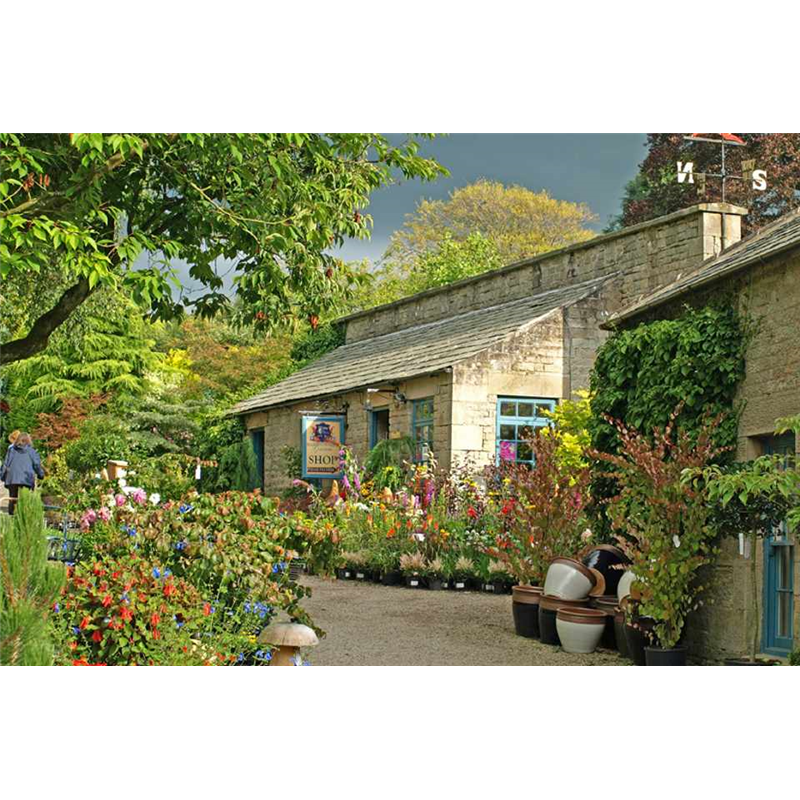 |
After many very wet days, the Gardeners of Eden were so lucky to have a dry afternoon to enjoy a visit to Eggleston Hall Gardens. We had an unescorted visit to the garden as the owner had been called away, so we were free to wander in the garden to make our own discoveries. The garden is laid out with lawned areas and many beautiful specimen trees. There are herbaceous borders and woodland walks connecting the areas to each other. The garden includes a ruined chapel and graveyard which has been used to showcase some wonderful trees. The borders contain many varieties of Campanula, Eryngium, Lysimachia, Helenium, Roses, Coreopsis, Phlox and hardy geranium. There are plants with interesting names - for example Eupatorium purpureaum (Joe Pye weed) and Phytolacca americana (Pokeweed). Another novelty was the wisteria with a plaited stem. The acanthus was spectacular with tall architectural spires of white flowers under purple bracts, and Macleaya cordata (Plume Poppy) was also very tall with spires of frothy petal-less flowers. A handsome beauty is the poisonous Veratrum album (Indian poke) with tall green flower spikes and extraordinary pleated leaves. The trees and shrubs in the garden are very special. Many are given good space in the graveyard. There is a Cytisus battandieri (Pineapple Broom, so named for the look and smell of the flowers) against a wall. It has beautiful smooth silvery foliage. There is a Heptacodium with leaves that hang in a semicircular form and is yet to flower this year. Chionanthus virginicus has finished flowering and would have been an amazing sight earlier on. It has white flowers with long slender petals that look like fringing! The Parrotia is just beginning to show its autumn colour. There is an amazing spruce (Picea breweriana) which has straight branches with vertical downward-growing branchlets that create a stunning curtain-like effect throughout the tree. There is a huge ‘tree’ Hydrangea, H. aspera ‘Hot Chocolate’ which is just about to burst in to flower. It is beautiful now and will be spectacular. Within the ruined chapel are mature trees with ivy clothing their trunks, the roots pushing the paving upwards, a vivid bright green Acer, and a tall Mahonia. In another part of the chapel there are straggly roses giving a wonderful air of comfortable abandonment. In other parts of the garden are more beautiful specimen trees. In the woodland walk there is Liriodendron tulipifera, a large tree with those interesting tulip-y shaped leaves. There is Cornus controverta Variegata (the wedding cake tree) too, and Syringa emodi Aureovariegata. This shrub has very eye-catching foliage. The leaves are large and oval with a dark green splash in the centre of otherwise pale green wide borders. Along the main walk is Corylus avellana Contorta (the contorted Hazel) and numbers of Acers with different coloured leaves. A young blue Cedar stands in the lawn, with Callicarpa ‘Profusion’ nearby.This is a most unusual shrub clothed in purple bead-like berries in autumn. At the other end of the lawn is a pair of mature Chamaecyperus trees, C. fletcheri, (Lawson Cyprus Fletcheri) and the most magnificent Fagus sylvatica f. Purpurea (Copper Beech) It is majestic in its size and spread, with a broad and gnarled trunk. It looks like it belongs in a Tolkien story, or that it might speak to you in the night! The rest of our afternoon was given to retail therapy in the nursery. It is a lovely nursery, everything is well kept, and the variety is extensive. Many a car boot travelled home rather full. |
|
| Wednesday, 10 July 2019 |
| Visit to a Members Garden in Ravenstonedale |
| Ian Torkington |
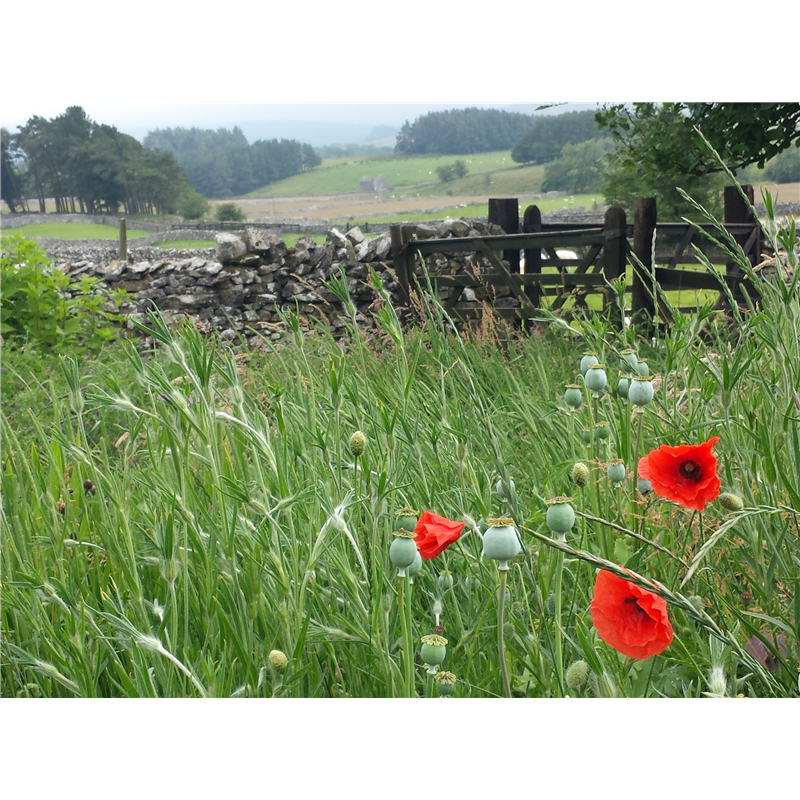 |
Thank you to Ian for opening his garden to our members on a beautiful sunny day in July. It was an educational and fascinating stroll around the vegetable garden with a variety of raised beds, past the geodesic dome greenhouse, along paths cut through tall stands of poppies and teasles to the original and quirky outdoor dining room, past a developing hay meadow and then through the village to Ian's amazing allotment. Check out the Gallery / 2018-19 Members Gardens. |
|
| Tuesday, 09 July 2019 |
| Visit to Pear Tree Cottage in Dalton, near Burton-in-Kendal |
| Linda and Alec Greening |
 |
As we arrived at Pear Tree Cottage, the first thing to greet our eyes was a very tall tree almost completely covered in white flowers. This proved to be the well-known long-legged rambling rose, Rambling Rector. This rose has a mass of single small white flowers with a little boss of yellow stamens in the centre of each, a magnificent sight not seen every day! Then, apart from the plants offered for sale, which was exciting, the next captivating plant was another rose, Rosa Crown Princess Margareta, a beautiful and fragrant apricot-flowered arching shrub established on a screen at the entrance to the garden. It was in full bloom and spectacular. As we entered the garden there was a lovely vista across well-kept lawns. Shelter at the back was provided with trees, including some interesting specimens. There is a Metasequoia glyptostroboides amongst them, planted about 14 years ago. In the centre of a new border, and of a similar age is a golden form, M. glyptostroboides ‘Gold Rush’. It makes a wonderful centre piece to the garden. To the right in a shady border is another sequoia, a dwarf variety which is dense with dark foliage (causing the shade!) and cannot really be described as ‘dwarf’! There is Acer palmatum and Cercidiphyllum japonicum, both interesting trees with special attraction in autumn. Cercis canadensis (Eastern Redwood) is very ornamental, has showy red heart-shaped leaves, and flowers on bare wood in the spring before the leaves emerge. Up on the left is a beautiful Liriodendron tulipifera (Tulip tree) which has amazing tulip-like flowers early on and good yellow and coppery autumn colour. In the shade under the beautifully shaped ‘dwarf’ sequoia is an interesting hardy geranium, G. palmatum, a relative of the Madeira geranium, G. maderense. It is a bit hardier, and we were told that it comes easily from seed, and so it is worth allowing the plant to set and drop its seed. The plant has a big rosette of lovely fern-like leaves with long stalks holding the deep pink flowers aloft. Also, in this bed was Amsonia ciliata, a rare plant difficult to propagate, and another variety A. tabernaemontana which is similar. Both are hardy perennial plants which grow to a loose mound of lax foliage which waves in the breeze, and in June is covered in small pale blue starry flowers, very special. A plant seen all over the garden was Francoa. There are several varieties here, including F. Culme View Lilac, an example with densely mauve spires of flower. Other ones tend to have pink and white flowers, all are lovely. A sheltered spot in semi-shade is needed in Cumbria. Another popular plant here is Thalictrum. T. delavyi, and T. rochebrauianum are both in this garden, both are tall, airy and willowy, blowing gently in any breeze. They seed themselves nicely around. The flowers are tufty, with mauve, or white sepals on stems up to four feet tall. Holodiscus discolor (Ironwood) is a large deciduous shrub, and bears large drooping clusters of tiny white flowers. It was at its best this week, very eye-catching with cascades of white frothy blooms. The plant is from the American west coast and renews from the ground after fire! It is a surprise to find it in a northern English garden! There were several Eryngium, in particular a very blue cultivar called E. ‘Blue Boy’ and E. “MIss Wilmott’s Ghost’ - a very pale almost white version. They were planted in a very gravelly bed with ornamental grasses, Mollinia carrulea ‘Transparent’ (strappy leaves with the flower heads just beginning to grow up above the foliage to become light and airy) and Amenanthele lessoniana from New Zealand which has long thin leaves in colour varying from green through to red. This grass is sometimes known as Pheasant Tail. Also, in this stony border was Anthericum lilago, a flowering plant from the asparagus family. It stands two to three feet tall with fine linear foliage and delicate white flowers along the length of the stems. The herbaceous borders overflow with roses, and astrantia, astilbe and hardy geranium, delphinium and Japanese anemone, campanula, knautia, clematis and verbascum. There were alliums in the spring, pulmonaria and hellebore too. There is a lot of shade in this garden, to enable the enthusiasm for ferns. There are many beautiful specimens and some are very large. Dryopteris erythrosera is a large evergreen fern with fronds up to 2 feet tall. The young fronds are a remarkable rosy red which green up as they mature during the summer. Blechnum chilense from Chile, is another that produces young red fronds. It is also a large fern given the right conditions of moisture, shade and relatively poor soil. Woodwardia radicans is a fern from Southern Europe but seems to do well in this Cumbrian garden. It is often grown in conservatories. There is great variety here, with many forms of Asplenium scolopendrium. (Hart’s Tongue) and Adiantum (Maidenhair) and Cyrtomium (Holly fern). This is from the dense shady forests of Japan and hardly looks like a fern at all, bearing entire and uncut pinnae in pale green. Osmunda regalis is resident by the pond at the bottom of the garden and stands tall with its fruiting fronds erect above all. We were pleased to support the NGS with our purchases from the home-grown choices, and came away having had a very pleasant and interesting afternoon, which included tea and cake! |
|
| Wednesday, 03 July 2019 |
| Kilpin Hall, Richmond |
|
 |
A large group of the Gardeners of Eden arrived at Kiplin Hall in bright sunshine. A tour of the gardens had been arranged and we met Malcolm on the front drive.
Although the house is no longer lived in, it has a huge history attached to it from almost 400 years ago until 1971 when the last member of the four families linked with Kipliin Hall died.
Fortunately a trust had been set up, and through many struggles, the restored hall and gardens are now a place of interest to visit. The history is fascinating and is linked with Maryland USA and the city of Baltimore, and four particular families who are also all linked in some way.
The garden is still a work in progress.. Before 2009 it was a sheep pasture, but a decision to restore the gardens to their original as nearly as possible was taken by the trustees, and a head gardener employed. Historically, the records show that much of the garden was enclosed with tall yew hedges, with a lime avenue lining the carriage drive, and this had been restored or reinstated.
We entered The White Garden through a tiny gap in the yew hedge. This garden is to be restored as a Victorian garden, and work is ongoing to bring it back to this idea. The garden is quartered, and a Crambe cordifolia is the centrepiece in each section. The high and frothy white cloud of blossom was just over, but would have been stunning. White penstemon, lupins and achillea look lovely with hostas, Solomon’s seal and Sisyrichium striatum, together with cool green ground cover.
The Rose Garden is a rectangular space against the house with a central path, enlarged at the centre to accommodate a beautiful stone urn with an enormous Aloe and Sempervivums in flower. The roses were in bloom and beautiful, but struggling in the heat of the last few weeks. Lavender is a delightful foil for the roses.
There has been a sunken tennis court at Kiplin, surrounded by high yew hedges. These hedges obscured the view across the countryside from the library windows, so a radical decision has been taken, not to remove them, but to cut them right back to about 3 feet. The hedges will take some time to recover, and it will be interesting to see them in a few years’ time.
There are some beautifully mature trees in the garden. A beech that has lost two of its major trunks may have been bundle planted. A majestic oak nearby is in a precarious state and a protective tape enclosure has been put in place to keep people away from it. It is known as Christopher Crowe’s Oak and features in a painting in the house.
The west view from the house was of a serpentine lake that was used for boating and curling. The RAF requisitioned the area during the war and used it for storing bombs in the woods, and during this time, the lake became silted up.
The trustees were becoming seriously worried about how to manage the estate with so little funds, when in 1996, a gravel company came to the rescue. This company wanted to extract gravel from the silted-up lake and the River Swale nearby. It has been the saving of Kiplin, and Kiplin has gone from strength to strength since then. The money paid for the gravel went into restoring the house. This restoration was completed in 2002. The gravel pit was landscaped by the company to create a new lake, and the house was opened to the public. In front of the lake is a pasture, and a low yew hedge was established as a boundary. Within is a narrow strip of wild flower meadow, then a strip of lawn, recreated exactly as it was before. It is the perfect place to sit with a cup of tea or an elderflower presse, in the sunshine. A small knot garden has been made beside the house, and although this was not part of the original plan, it fits in perfectly.
We were shown the Sensory Garden. A tunnel of Stipa gigantea is very sensory to walk through, and we came to a simple stone pedestal with a sundial on the top, surrounded by camomile. A row of pleached lime on one side and of hornbeam on the other show where the servants’ quarters once stood. These buildings were demolished in the 1970’s, and the Sensory Garden is a tribute to those days.
There has been a lot of herbaceous planting in the last 12 years, and the laburnum arch was established 7 years ago. In the nineteenth century a conservatory was built against the garden wall with a south facing aspect. It is hoped that in the future, something will be done to restore or use the area in a similar way.
We continued into the Parkland, with the Lime avenue on our right. A strip of woodland was planted to shield the estate from the main road. Specimen trees continue to be planted, the latest is a Wellingtonia planted for the Queen’s diamond jubilee. Groups from Maryland come to Kiplin to study, and they planted an oak in 2001. As we walked on into the woods, we came to a beautiful sunlit oasis with a lily pond. It was originally two ponds and these were made to give fishing for the gentlemen of the house and their guests. Now it is a haven for wildlife. There is evidence of another garden which has now been planted as an orchard with help from the Maryland connection. The apple trees chosen are species that were grown in the 19th century. There are tufa stones in the garden that may have been used as apple presses, and there are gardeners bothys where temporary staff would have stayed at cider making time.
The records show that there were hot houses for vines, and peaches and nectarines. Because books have been found in the library about pineapple culture, there is a suggestion that the family may have also tried growing these fruits too. Malcolm took us into The Slip Garden, which is well on the way to a full recovery. Fruit bushes have been reinstated and are fruiting well. Raspberries, loganberries, and all sorts of currants are thriving. The strawberry beds have been replaced by a new herb garden laid out in a formal design in front of the greenhouse. A variety of vegetables is being grown, including asparagus and there are espaliered apple trees against the walls. A cutting garden is also established in linear beds with lawned pathways in between, giving easy access for anyone planning flower arrangements for the house. Our trip was nicely finished off with afternoon tea on the terrace in front of the lake. |
|
| Tuesday, 18 June 2019 |
| Gardeners of Eden visit Yorkshire 18 - 20 June 2019 |
| Photos of the gardens are in GALLERY under '2019 Summer Excursion to Yorkshire' |
 |
Our annual bus trip took us to the six wonderful gardens described below. These were: Tuesday - Helmsley Walled Garden (am) and Scampston (pm) Wednesday - Breezy Knees Garden and Nursery (am) and Burnby Hall, Pocklington (pm) Thursday - Goddard's (am) and York Gate (pm). Helmsley Walled Garden (Tuesday, 18 June) This garden wars first built in 1759 to provide fruit, flowers and vegetables for Dunscombe Park. It sits comfortably under the watchful ruins of Helmsley Castle. In its heyday, before WW1 it was tended by 20 full time gardeners. There was and still is a vine and salad house. The store rooms for winter roots, apples and for forcing rhubarb are now small retail outlets. An orchid house provided cut flowers for the house. After WW2 the family moved back to London, and the garden which had been used as a market garden during the “Dig for Victory’ campaign, became overgrown and neglected, and eventually abandoned. But in the 1990s a local lady thought it should be restored and that it could be a voluntary project and provide therapeutic horticulture to aid the healing process for people with such needs. Her sudden death just a short time later galvanised the community, and 21 years later the garden is thriving and still developing. The current intention is to benefit everyone. The garden is divided into a series of linked ‘rooms’, each with a different ‘feel’ and purpose. We saw plans for a memory garden for older people, where the principal use of cottage garden plants will provide a nostalgic experience. An Alphabet Garden is being created for young people, the gardeners of the future, where there will an emphasis on plants starting with every letter of the alphabet. There are two areas of meadow. The aim here is to educate and promote the restoration of meadowland. The perennial meadow has such plants as rattle, ox-eye daisy and knapweed. Planting rattle in a meadow weakens the dominant grasses and makes it possible for other plants to colonise over the years, creating a rich and healthy variety. The cornfield is an annual meadow, and is replanted every year. Here we found corncockle, poppy, camomile and teasel. We were shown the wonderfully wide double herbaceous border, not yet in full bloom, but given a week of two, it will be a riot of colour. It is backed by a deep red beech hedge on both sides, giving it a splendid contrast even now, to all the fresh green foliage emerging. There are tall verbascum, delphinium and allium, cirsium rivulare, salvia and lupin all out now. To come are dahlia, rudbeckia gigantea and gallardia. Heuchera grace the front of the borders. In the ‘Theatre Room’ there were lawns surrounded by beds of tall Cephalaria, and Penstemon in rich purples and orange. There was a Mediterranean garden by the wall, featuring espaliered apricot, greengage and Cydonia (Quince) Notable trees in the garden are a 10-year-old Snake Bark Maple, a Prunus serrula, and Aralia elata which is deciduous, spiny and can have enormous leaves and flowers in panicles rather like meadow sweet. As we walked along the borders, we noticed peonies at their best at the moment, the heads of Allium Christophii and A. gigantea. Tall creamy yellow Sisyrinchium is happy here, and there were several specimens of Buddlaea alternifolia in full flower, the bows weighed down with the weight of flowers. There is a productive fruit border with gooseberry and redcurrant bushes and rhubarb. There is also a double herb border, and a collection of Yorkshire varieties of apples. Young grafted trees are heeled in in rows to await their final planting space. A row of cordoned local apple varieties have mixed fortunes this year but are well displayed and labelled. A variety called Nancy Jackson will keep from November till May! There are productive allotments here too, and someone is growing some spectacular cardoons! Decorative use of fruit trees in an avenue is enhanced by an under planting of Geranium ‘Johnson’s Blue’. Planted en masse like this all down the avenue it is stunning. Moving away from here we came to a low hedge of rugosa roses. The variety used is Roseraie de l’Hay which has a magnificent perfume and masses of strong rich purple-red blooms. There is room at Helmsley for so many ideas. There is a Garden of Contemplation with a central quiet water feature in a circular stone basin, a comfortable bench and enclosed by tranquil planting and a tall wicket fence. There is a Medicinal Garden, and a Laburnum Walk underplanted with tall purple allium and Alchemilla mollis. Amongst the shrubs edging the outdoor cafe seating area were the high arching stems of Rosa moyseii with the most vibrant single deep scarlet blooms, and at her feet, Phuopsis stylosa which was attracting numbers of Painted Lady butterflies. It was quite a sight. Scampston Walled Garden (Tuesday 18 June) This contemporary garden is famous for being created by Piet Oudolf, the highly-regarded Dutch garden designer. He is known especially for his ‘prairie planting’ schemes. There are ten ‘rooms’ in this garden, each one completely different - there is a grass garden, a silent garden, a spring garden, a summer garden and a Katsura Grove. Around two sides of all these rooms is the Plantsman’s Border with an amazing variety of unusual plants. I will mention six plants - but there were so many that a visit is the most fascinating way to enjoy such a collection. 1) Kirehgeshoma palmata is a small hardy shrub requiring a shady location. It has palmate and lobed leaves and pale-yellow waxy bell-shaped flowers late in the season. 2)Liquidambar styraciflua (Sweet Gum) is also hardy. It is an ornamental tree that colours well in autumn. It comes from north and central America and was first named by Linnaeus. 3)Romneya coulterii (Tree Poppy) is an outstanding plant but needs the winter protection of a deep dry mulch. It has terminal poppy-like flowers, starkly white with a big central boss of golden stamens and can grow to 8 feet. 4)Clethra barbinervis is a hardy upright shrub growing to 10 feet. It comes from China and japan. It has bell-shaped white flowers on arching terminal racemes from late summer into autumn and has good autumn leaf colour too. 5)Drimys winteri is from South America and tender. It has long dark green leathery leaves and beautiful creamy-white scented flowers in large umbels in early summer. 6) Tetrapanax papyrifa is a huge evergreen tree or shrub from Taiwan. The deeply lobed leaves can be twenty inches across, there are small white flowers in terminal panicles in autumn. It is evergreen in the south but deciduous in colder areas of the UK. Within these borders are the 10 rooms, the first we saw was the Grass Garden. This area is planted up in wavy borders of one grass, Molinia Poul Petersen. Mid-August is the time to see it when the tall flower spikes wave in the breeze creating an amazing sense of movement. The shrub borders are maturing and will eventually enclose the area. The Silent Garden is tucked in a corner next door to the Grass Garden. It is another very tranquil area, perfect for quiet contemplation. It is planted symmetrically with 24 round columns of yew within a lawn. They have been allowed to grow to three metres before being levelled off. There is an elegant oblong pool where the columns are reflected in the water. The Cut Flower Garden has circular beds and is a very relaxing garden space. Some of these beds are being tended by local schools and volunteers as part of a lottery funded project. Here we found lots of peonies, and veronicas, nepeta, astrantia, euphorbia and roses, sweet rocket and cephalaria, salvias and aquilegia. The Vegetable Garden, using raised beds, supplies the house and the cafe with fresh produce. The Perennial Meadow is a very interesting place, filled with perennials so closely planted that no staking is required, they all support each other and wave calmly in any breeze. There are four enclosures within the formal plan of the garden where visitors can almost disappear amongst the planting. Here we found huge purple allium and Cirsium rivulare, Phlomis russeliana, Knautia macedonica and Amsonia orientalis, tall hardy geraniums in mauve and white and vivid cerise Dianthus carthusianorum. The garden backing the Meadow is the Katsura Grove. It is planted with many Katsura trees. When the leaves fall in autumn, the area will smell tantalisingly of toffee! The grove is underplanted with grass (Molinia ‘Transparent’) and Monarda ‘Pawnee’, both of which seem to do well in the shade. When we were there the underplanting included a tall cerise hardy geranium, and a deep red astrantia, most effective together and happy in the light shade. The Serpentine garden is a topiary garden, using clipped yew, curved in both the vertical and the horizontal dimensions, and surrounding a central circle of clipped yew. Opposite this topiary garden is The Mount, an orchard of Yoshino cherry trees enclosing the mount. The mount has a staircase and from the top the whole garden can be viewed. The cherry orchard is underplanted with leucojums and camassia for late spring, lilacs and scabious for the summer. The blossom on the trees in April will be spectacular though short-lived. Finally, we took a walk outside the garden, around the parkland which was laid out by ‘Capability’ Brown in the 1770s. The landscape was meticulously planned, every tree in the right place so as not to obstruct the view from the house, and each with enough space to breathe and be itself. The Spanish Chestnut which stands sentinel in the middle of the park is a magnificent specimen and dates back to the 1700s. The Palladian bridge is a dam, having purpose as well as decorative function. The recently restored Ice House used to be where ice for the house was stored. The multi-layered walls provided sufficient insulation until it was needed. It is thought that this building was used as a bunker during WW2. The nearby cascade is a replacement for the original Brown cascade which was destroyed when a dam burst its banks further upstream in the 1950s. Breezy Knees Gardens and Nursery (Wednesday 19 June) Marylen and Colin Parker bought 80 acres of land, part of a tenanted farm that came up for sale in 1998. The land spans the boundary between Ryedale and York councils and was a very windy site, hence the name ‘Breezy Knees’. At that time there was a clear view to York Minster, 5 miles away. Having 80 acres has meant that the best land could be chosen for the garden, and Colin and Marylen set about planting shelter belts and trees. They chose a ‘squelchy’ area for a pond where the water levels built up in the winter. Eight years later they began planting the herbaceous plants. There is a long walk to the garden which has been called the Rabbit Bank. It must have been a warren when the couple arrived, but Colin has laid netting down through which plants can grow. Those planted here are rabbit resistant, he said, not rabbit-proof! We saw Kniphofia and Iris sibirica. There was Euphorbia, Veronica and Nepeta and hardy geranium, such variety. The main garden has been planned to give interest throughout all seasons. As we entered the garden proper, there was an amazing green stream winding through a linear woodland. The planting of the ‘stream’ was a well-behaved euphorbia and the banks were a swathe of a lovely wide-margined variegated hosta, most effective. We passed the September garden which was looking very healthy and very green. Flowering in this area is not scheduled until September. The next area was called ‘Stonehedge’! It really is self-explanatory - a veritable Stonehenge in green, using hornbeam. The area floods apparently, and neither yew nor beech would survive, but hornbeam can cope with the level of inundation. The June Garden was a riot, a jumble of everything that flowers in June. It was a magnificent picture in vibrant colours. There were cerise blousy peonies standing with strong yellow, blue and white lupins, and Allium christophii, nepeta and blue knapweed nearby. There was a neat border of Brunnera macrophylla and vivid Veronica with a lovely pink Salvia, backed by taller Polemonium caeruleum and a lovely two-toned yellow/cream Aquelegia. Within the garden there were oriental poppies, and peonies in all shades of pink from vivid and bright to the palest china pink. There were Kniphofia in reds and yellows, and Aconitum ‘Ivorine’. The day lilies were just coming, and there were dark-leaved Heuchera with mauve centaurea. There were blue hardy geranium together with lemon helianthemum (rock rose). Then by a little link path with a huge tangerine geum displayed beside it, we entered the Peony and Daylily Garden. This was a large and formal square area, with lawns between the beds, and the plants displayed for viewing. Peonies and daylilies were the main attraction with companion planting of Heuchera and alpine campanula, Sedum Arizona ‘Euphorbiodes’, an interesting clump-forming variety. The whole garden was backed by Calamagrostis x acutiflora ‘Karl Foerster’, a tall elegant grass with even taller blue flower spikes. Next we found the Shrub Garden full of interesting specimens such as Philodelphus and Physocarpus opulifolius ‘Diabolo’. Cornus kousa contrasted well with a red berberis and a yellow broom was tucked in nearby. The Conifer Garden was a delight with lawns and ornamental grasses to maintain the green theme. Use was made of blue and golden forms of conifer to create a most restful area, calm and tranquil. We were a bit early for the Double Border, but there were lupins, Euphorbia, Rosa glauca and a pink delphinium, Crocosmia ‘Lucifer’ coming later, Gerianium ‘Johnsons Blue’ with a white peony, a stunning combination. There was a huge clump of Veronica austriaca which looked wonderful, it has such a strength of colour. Lychnis yunnanensis was showing its cerise flowers, also a strong colour. Allium cernuum has cerise flowers also, borne on long stems in nodding umbels. The Rock Garden was another large area with winding pathways through rocky displays of low-growing alpines. Notable were Geranium macrorrhizum, G. soboliferum, G. renardii, the wonderful daisy-like Erigeron karvinskianus, acid yellow Sedum, white and red Saxifrage and vivid blue Veronica all set amongst dwarf conifer and with a backdrop of white Philadelphus. The Raised Beds were a pleasure to walk through with the planting raised up for ease of cultivation, but also ease of viewing. Here we had Dianthus and Peony, Salvia and hardy geranium, Erodium manescaui, Nepeta and white Achillea. The gardens have a sandy soil which is enriched with copious amounts of bark. This helps retain moisture as well as helping to keep the weeds controlled. There is only the equivalent of two full time gardeners at Breezy Knees, quite amazing. There is a formal fountain and a Rogues gallery where all the thugs can be found. They are planted in big cattle troughs to keep these wonderfully exuberant specimens effectively contained! Examples are the grass Phalaria arundinacea, some of the Persicarias, Saponaria officinalis rubra and Aster radula, all of which are very invasive. Burnby Hall, Pocklington (Wednesday 19 June) Burnby Hall is well known for having 100 varieties of hardy water lily. But work done to the banks of the lake recently has knocked the lilies back. They will be better next year. But this garden has so much other interest, that we couldn’t be disappointed. Burnby Hall has had a chequered history and in 1962 the estate was bequeathed to Pocklington trustees. A recent lottery grant has enabled much improvement to the gardens including the repairs to the banks of the lake. The Upper Lake was created in 1904 for fishing parties and is stocked with carp and roach.The water lilies were introduced in 1935. The recent replanting was hampered by weather conditions for the work and has failed because the best time for planting was missed. In the Aviary Garden is an Edwardian summerhouse and a later aviary. The summer house has been refurbished and the garden is laid to summer bedding enclosed with neat box hedging in a formal arrangement. Tulips are used in the spring and the bulbs given away afterwards. The Victorian Garden was originally an orchard, and then later a rose garden. There are plans now to create an Arts and Crafts Garden. Change is necessary to keep the public interest and at the moment there is a lovely lavender walk with clematis to cover the pergola. Behind this garden is a utility area with a delightfully recreated Victorian potting shed. Tanks for propagating water lilies are newly installed so that the estate will be able to offer water lilies for sale in the future. The Rock Garden is huge and was refurbished last year. Backhouse’s of York were commissioned to do the work, and they have installed massive rocks to create a wonderful display. New planting is fresh and exciting. There were delicate epimediums and tiny hostas. There was a beautiful feathery blue Corydalis and the tall, elegant, cerise Dianthus carthusianorum. There was thrift, and neat little hardy geraniums, dark red Helianthemum and Lewisia ‘Brynnhyfryd’ hybrids. Also prominent was the Campanula family. C. glomerata and C. punctata and C. carpatica were all spotted in different parts of the rockery. Libertia was doing well in the gravel, Phlox divaricata ‘Chattahoochee’ was in full bloom cascading over the nearest rocks, and white Allium and Primula drummondii were also present. The Lower Lake was dug in 1920 to five feet, again for fishing. Lilies were also planted here and there was a nice show of them here. There are moorhen living here, and kingfisher too. In all, 28 varieties of birds have been spotted in the gardens. Not surprisingly, the herons visit too. We walked to the end of the garden and away from the lakes which dominate, to the stumpery. This is an interesting woodland space, shady, where amongst the magnificent stumps, the ferns grow well. There are crested and frilly ferns including Athyrium felix-femina (the tatting fern) and wavy-edged Asplenium scolopendrium (Hart’s Tongue). There is a ‘Hobbit’ house with a dense fern roof of Matteuccia struthiopteris. Also, happy here are other shade-lovers such as Hellebore and Pulmonaria and damp-lovers like Rogersia and Filipendula. Beautiful carvings and wire sculptures compliment the scene and sometimes surprise! There are natural forms and mythical characters in the sculptings, creating an intriguing atmosphere. In future plans, the house may become a heritage centre. The Stewart Museum is established containing artefacts collected by Major Percy Stewart during his eight world tours undertaken between 1901 and 1962. He had no family, but always maintained that he would return his estate to the people, which he has done, handsomely. Goddards (Thursday, 20 June) Goddards is the house and garden in York that was the home of Noel and Kathleen Terry, the well-known chocolate manufacturing family. It was all designed in the Arts and Crafts style, and the garden reflects the ideas of the time, with a formal garden near the house and less formally planted ‘rooms’ further away. The house is situated beside the York racecourse within walking distance to the Terry factory on the other side. From the garden it was always possible to see the clock tower of the factory, until recently, as trees in the garden have matured and it has become necessary to go to the boundary fence to see it. After Noel died in 1980, the National Trust paid the market price for the house with a view to using it as offices, but they soon realised that it was worthy of opening to the public. The garden was opened in 2006, the house in 2012. Nearest to the house is the terrace, edged with a thick planting of lavender. Later we were to sit here with our tea cups in very pleasant comfort, the heat from the warm brick of the house reflecting down in the sunshine. Part of the wall of the house is festooned with a wisteria, which had finished flowering but still looked amazing with the flower stems hanging bare. Below the wisteria at the base of the wall was a neat bed of very pretty pink Allium cernuum. Below the terrace is the formal garden. The central feature in a wide lawn is the lily pond. Edged in stone in a cruciform shape, it’s surface was covered with white water lilies and in the middle, a cherub was drinking from a cornucopia held aloft. To the left was a snug ‘room’ planted with herbaceous perennials on opposite sides of a central wide lawn. Here were delphinium, Phlomis russeliana, penstemon, veronicastrum, oriental poppies, day lilies, hardy geranium, Lychnis chalcedonica (Maltese Cross) and lupin all well set off by a tall neat hedge that created shelter as well as a dense backdrop for display. Beyond is an orchard/meadow, looking newly planted. Alongside the walk to the greenhouse and the potting shed, the border was filled with shrubs and taller perennials and biennials. Philodendron filled the air with scent, there were roses and masses of spires of Digitalis, white astrantia and Persicaria runcinata. We saw white Silene fimbriata, another stunning plant when in flower, as it was here. The potting shed was well stocked with neatly stacked pots, and the greenhouse was home to tender ferns and exotic Aeonium, beautifully arranged on a gravel bedded trestle. In the rock garden we delighted in finding Polemonium pauciflorum with its pale lemon trumpet flowers tinged with red. By the pond was a new planting of Gunnera magellanica, with small hostas and Primula vialii and further round was Carex pendula (pendulous sedge) and Rogersia with yellow flag iris and Darmera. Big blue Hostas were eye-catching amongst all the greens. Was it Big Daddy? Persicaria and Alchemilla filled the gaps without demanding the limelight and water lilies occupied the pond. Amongst the trees that have matured in the garden, between the rock garden and the formal garden, are two enormous Ginkgo biloba, a rare and magnificent sight. York Gate (Thursday, 20 June) This garden is only one acre, created from farmland over a 30-year period by the Spenser family. The charity Perennial now have the care of this garden and try to keep it in the spirit the Spenser’s intended. It is designed in ‘rooms’ all connected to each other in clever ways, almost seamlessly. No space is wasted and the impression is of a compact garden full of interest. On the front drive is a labyrinth made of re-claimed materials. The Spencer father and son were both chartered surveyors and knew where and how to source and use recycled and pre-used stone and artefacts. The Arbor between the Orchard and the Pinetum is made of beams saved from a church in Arnley, Leeds that was severely damaged by fire. They loved curves and circles and made use of millstones and clipped yew balls to create curves everywhere. The Orchard has been converted into a lawned garden with a pond. There are plenty of sheltering trees on the south west boundary and the garden is cool and shady. There is a stunning stand or Arum lilies in a planter in the pond. A complimentary stand of white iris can be seen on the southern bank, both are so effective, like light bulbs shining in the dark. Through the Arbor is the Pinetum, a very shady area with found pebbles used very effectively to cover the ground around the trees. In the Dell, another shady area, we found ferns including the Japanese painted fern (Athyrium niponicum), Martagon lilies in bud and Solomon’s seal (Polygonatum) with Arisaema (Pitcher plant), Persicaria, Trillium and the last of the candelabra primulas. Sybil’s Garden occupies a sloping site and the hard landscaping here has provided a sloping and spiral walk around a circular garden to a bench at the top. Surrounded by borders of tall plants such as Cephalaria gigantea and Thalictrum flavum, it is an ideal spot from which to view the whole garden. There is a curved lawn and the lower border has oriental poppies, and veronicastrum creating a lacy screen. It is a cool, predominantly green garden and includes a shallow low bowl for the birds to bathe in. Looking further across to the Canal Garden there is another border full of purple Allium, purple Salvia, deep pink Astrantia and deep maroon lupins set off by orange Geum and white Queen Anne’s Lace. In the background to give some height was white and pink Thalictrum. The access pathways amongst these borders are edged with Ophiopogon, a pretty black grass which underlines the border neatly. In the Paved Garden the whole theme was succulents. They were everywhere, in the ground and in multiple tubs and pots. All were arranged like small gardens in their own right. Sedums in acid greens and reds were mixed with Sermpervivum arachnoidium. In the ground were tall leggy and stunning Aeonium arboreum atropurpureum. These have rosettes of black fleshy leaves held up to 8 feet in the air on a tall bare stem. They have to be lifted in the autumn and kept in a protective environment. Whispy fennel (Foeniculum vulgate) and Sisyrinchium striatum were planted as good companions to the succulents with yellow climbing roses as a backdrop. Dichelostemma volubile is a surprising plant and has to be mentioned. It grows on long bare red and twining stems to produce an inflorescence of bright pink tubular flowers. It grows wild in the hills of California and is known as the wild hyacinth. The White Garden is another delightful surprise. It is approached from behind a very high dense beech hedge, and suddenly one is confronted with flowers in whites and creams in a double border either side of a central footpath. It is cool and tranquil and full of floral frothiness. Here there are white foxglove, white hardy geranium, white borage, and white astrantia, Silene fimbriata, Crambe, creamy Filipendula, cream Peony, and silver leaved Cardoon. The orientation to the house is such that it can be seen from the kitchen sink! Who would not mind washing up? There is a Vegetable Garden and a Fern Border. The Herb Garden is ornamental, is a very green and enclosed space. Much use has been made of topiary, the paving has a mill wheel laid into it and there is a pretty summer house at the far end. Every aspect, every detail at York Gate has been carefully planned and is worthy of our attention. This visit made a perfect ending to our three days away in Yorkshire.
|
|
| Tuesday, 11 June 2019 |
| Visit to Deer Rudding in Wigton |
| Lynne Caruthers, Gardener |
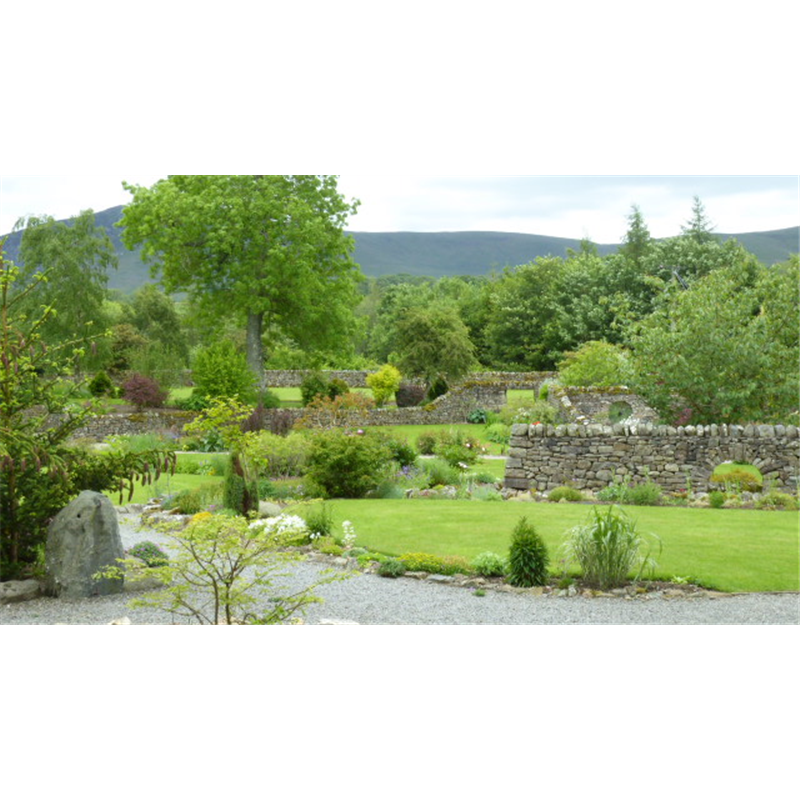 |
. The Gardeners of Eden meeting 11th June 2019 - a visit to Deer Rudding, Wigton Lots of members gathered at Deer Rudding near Wigton to enjoy a fine afternoon looking at the garden here. Lynne, the owner and lead gardener was on hand to answer questions. First of all she welcomed us with a short introduction, telling us that the land had originally been a farm, that there might have been a small area near the house that was gardened, and perhaps an orchard. Lynne has been here since 2006 and the hard landscaping had been done. There is much new natural stone walling with a couple of revealing ‘windows’ set in to give views to other areas of the garden. This work was done by a well-known Cumbrian waller - Steve Allen. The garden extends to eight acres and there are many gates in and out of the various ‘rooms’ in the garden. These are much to do with maintaining some sort of control over the ubiquitous rabbit! Lynne has been here since 2006 and has spent her time building the planting schemes. Now she feels the job is done, and her role is more to do with maintaining the garden. Lynne took some of us on an informative walk around the garden, mostly outside the formal gardens, where meadows are being encouraged. As we first approached the garden, car parking was provided on lush grassland, and some of this has been left to naturalise. Six great squares of land at the lower end have been left uncut, and the areas around mown to give access, interest and structure. Last year the new meadow pieces were scarified and rattle seed planted. Rattle is parasitic and helps to reduce the vigour of the natural grasses. This makes way for other plants to find their way in, and over the years the variety in the meadow will increase naturally. Our walk around the boundary was on grassy paths cut for walking, and on each side were mature shrub borders of mixed plantings. Previous owners had put in hazel and mixed natives, Philadephus, Cornus Kousa and Cotoneaster but also decorative shrubs such as viburnum, roses and weigela, all to attract insect pollinators and increase diversity. Now these borders are well established and cow parsley and hedgerow plants are filling in for ground cover. The River Caldew runs through the bottom of the property and here there are drifts of pink campion and white bladder campion. In the area at the furthest and lowest point, land drains have been put in. A wild flower seed mix has been sown and rattle has been sown again to add to the self-sown seeding of last year. Camassia, daffodils and fritilaria have also been added for diversity and interest under the trees. During the development of the garden, any plants not required there, have been transplanted into these wilder areas outside the formal garden, nothing has been wasted or thrown out. The soil is mostly around neutral except around the remaining ruined farm buildings where it is alkaline. We approached the garden from the rear driveway. Lynne said she had wanted to keep this area simple, and it is indeed very effective with symmetrical but various topiary yew shapes lining the drive. There were three mature beech trees near the boundary wall, but in winds last year, one came down and had to be removed. The stump remains, and so does another from a previous fall which lies attractively on its side beside some golden conifers nearby. The gravel drive is edged with two rows of setts 0n each side and looks very attractive. The setts give way on the left to raised beds where winter heathers (Erica darlyensis and E. carnea) have been given a space all of their own. Another similar bed further along is all for sedums and Primula villi. The flowering in summer will transform the currently very green bed into pinks and yellows. Behind is a well kept lawn to the boundary wall. We came round by the house to enter the first garden, called the walled garden. This was a cosy enclosed space with a lawn and beds surrounding it, and leading to a patio of stone flags. The planting in the wide borders was very varied with lovely colour combinations. Purple lupin was matched with pale pink aquilegia. At the back of the border were orange azalea, and tall teasel yet to flower, and pieris with the new foliage red at the tips. A big statement at one end of the border was a mature weeping willow-leaved pear, always lovely to see with its silver foliage. Lower level planting included epimedium, Dicentra spectabilis Alba, Podophyllum ‘Spotty Dotty’ and trillium under the tree enjoying the shade, and pulmonaria and hardy geranium. Between the tall and short were astrantia, astilbe and delphinium just coming up. Across by the patio was a drier border with a strong Salvia Hot Lips taking centre stage with a creamy-yellow azalea and Stipa gigantea forming a backdrop. At ground level was rock phlox and low-growing hardy geranium. Behind, by the house was a marvellous multi-trucked Prunus serrula with Nepeta, and Pulmonaria ‘Diane Clare’ tangled with aquilegia and Geranium phaeum at its feet. On entering the main garden we were met with hostas and rhododendrons, azaleas and robust Aconitum ‘Ivorine’ in flower looking splendid. An interesting mixed planting by the house wall included Nectaroscordum, Peony, Thalictrum, Knautia and Oenothera. Blue tits were very busy coming in and out of a hole in the house wall, and were disconcerted by our presence, so we moved away. In another area of this enormous and beautiful garden was a healthy rose border, just showing petal colours. In this area but not in the same bed as the roses were Alchemilla and Trollius varieties, sweet rocket, and acid yellow euphorbia, salvia and candelabra Primula, Rogersia, Ligularia and Sanguisorba. Another patio was delicately decorated with lovely clumps of Erigeron karvinskianus, the little daisy-like flowers in pinks and white. They look frothy, softening the hard landscaping of the stone paving. Now we came to the gently sloping south-facing rockery, a quite extensive area, which Lynne told us is her favourite part of the garden. It is full of small varieties of hardy geranium, Veronica, Phuopsis, creeping thyme, Phlox subulata (creeping phlox), and Helianthumum (rock rose), tall but wind-blown vivid purple verbascum, and heuchera flowering in a vibrant coral colour, very special. There are lavender and saxigrage too. Conifers in interesting shapes and colours have been used as a foil to this planting, also a Cornus controversa (the wedding cake tree). There are numerous gravel pathways in between the beds to enable access and enjoyment. Behind this long rockery are the ruins mentioned earlier. They collapsed in the 1930’s and have since been stabilised. Lynne has allowed these areas of old floors, paving and stone walls to self-seed and the effect is pleasing, loose and wild. Even so, the walls are home to a wisteria, and there are two Phormium which will flower later. Lilac and Buddleia have made themselves at home behind the ruins, and yellow poppies and aquilegia have colonised too. One wall has been made into a tiered display for alpines and succulents in terracotta pots, a huge fern at the base and saxifrage and foxglove finding a foothold on the wall, together making another interesting arrangement. The Gardeners of Eden had another most enjoyable afternoon in a local garden with so much interest, where attention to detail at the same time as an awareness of the environment, and the need for habitat creation and preservation are all so very evident. |
|
| Monday, 27 May 2019 |
| May Plant Sale |
| For public and members |
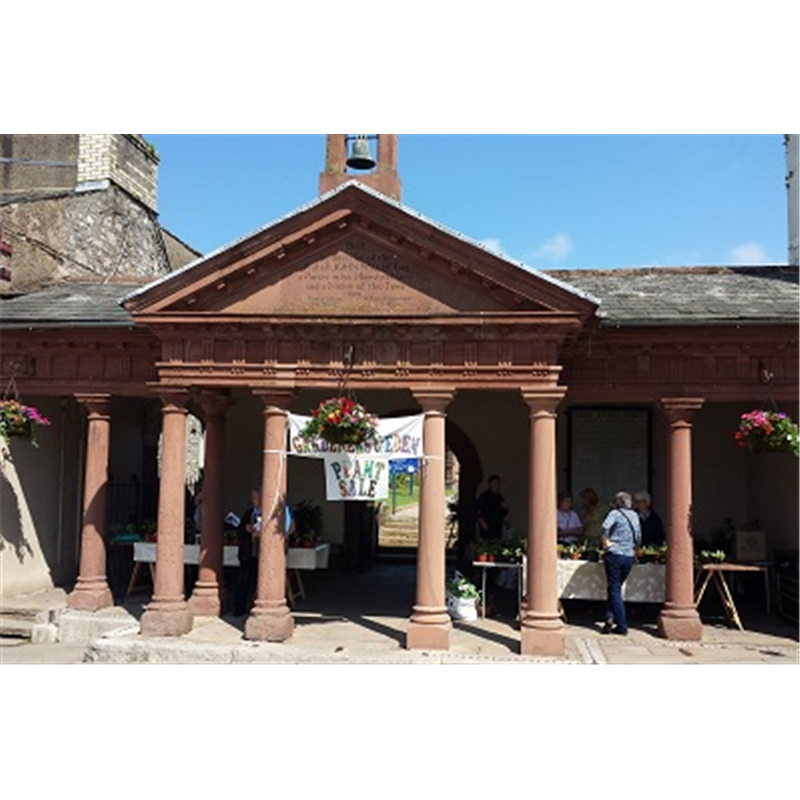 |
The Annual Gardeners of Eden Plant Sale A livley team of club members had tables set up in The Cloisters by 8:30 and plants available for sale shortly afterwards. It was a chilly morning but business was steady and coffee from the Newsagent kept us warm. Many regular customers from past years dropped by with tips and questions, making the morning both informative and friendly. Thank you to all who helped: the Parish Church who provided tables, those who stopped by for a look and a chat, and those members who took away the left-overs to care for until next year!
|
|
| Tuesday, 14 May 2019 |
| Visit to Winderwath near Temple Sowerby |
| Jane Pollock and gardener, Ron Davis |
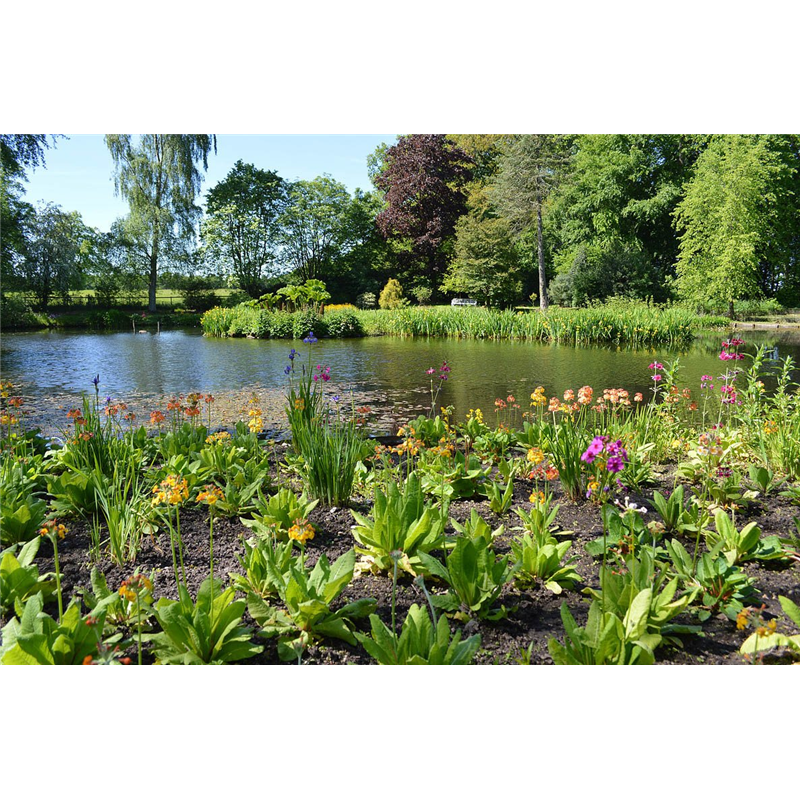 |
Winderwath Garden, Winderwath House A large group of members gathered in the yard at Winderwath to be greeted by Miss Pollock, the owner. She gave us an introduction to the garden and told us a little about the history of the house. She told us that she has lived here since 1945. The house was owned by the Clifford family in the sixteenth century and the coat of arms still resides over the front door. A most impressive Actinidia kolomicta has made itself at home on the wall of the barn, where visitors can make themselves known by pulling the rope attached to a huge bell hung high above the barn door. As we entered the front garden from the yard, we saw mature shrubs and climbers. The camassia were nearly finished, but the aquilegia were taking over and were lovely in various colours. Overhanging the footpath was an exuberant variegated Euphorbia. There was a huge Vibernum macrocephalum in full bloom with pale lemon pom-poms of flower and a Wisteria chinensis against the adjacent wall just coming into bloom. Against the white house wall was a beautiful pink Clematis montana gleaming in the sunshine. At the base of the house wall was a bed of bluebells, white honesty, rosemary and french lavender. The back garden opens out into a wide area, with tree peonies, more wisteria, and clematis scrambling through the conifers. There are some wonderfully mature trees, including a beautiful cut-leaf beech, a couple of Wellingtonias, a Cedar of Lebanon, several cherries and a Golden Hornet crab apple. Some very choice Magnolias are planted here too, including M. sinensis with a large soft white waxy flower and M. liliiflora which has a spectacular large deep red flower with long petals. In front of the wisteria hanging in long and fragrant racemes were several Echiums. Lovely spires of purple close-packed flowers were displayed in the warmth of the sunny border, and another, even taller at over six foot, had deep pink flowers. In contrast to these giants is a new rockery half way down the garden which has the most delightful array of miniature plants on display. Amongst the delights are Aronaria montana with low-growing bluish green foliage supporting large numbers of small white flowers. It’s name in English is mountain sandwort and it comes from the mountains of Spain and Portugal. Another little beauty is Phlox douglasii, this example is in crimson on a tight mound of dark evergreen foliage. Other favourites present were Corydalis lutea (yellow fumitory), and magenta aubretia. At the bottom of the garden is a huge pool. Beside it stands a beautiful contorted willow, a splendid copper beech, rhododendrons, limes, and Cercis chinensis. There are bluebells and wild garlic around the feet of the trees where the grass has not been cut. A stand of candelabra Primula beside the water are striking amongst all the greens, shining out in their lovely pinks and oranges. There is also Darmera peltata, a showy waterside plant with tall stems of saxifrage-like pink flowers in spring before the large cup-shaped leaves, again on tall stems, appear in June. Members had a good deal of retail therapy at the sales table, and brought home some choice goodies, including some salvias. The garden is known for its collection of salvias, which are at their best in August. Another visit may be necessary! |
|
| Tuesday, 09 April 2019 |
| Visit to Haverthwaite Lodge and Lakeview Hotel, Newby Bridge. |
| Philomena Taylor and Roger Thresher |
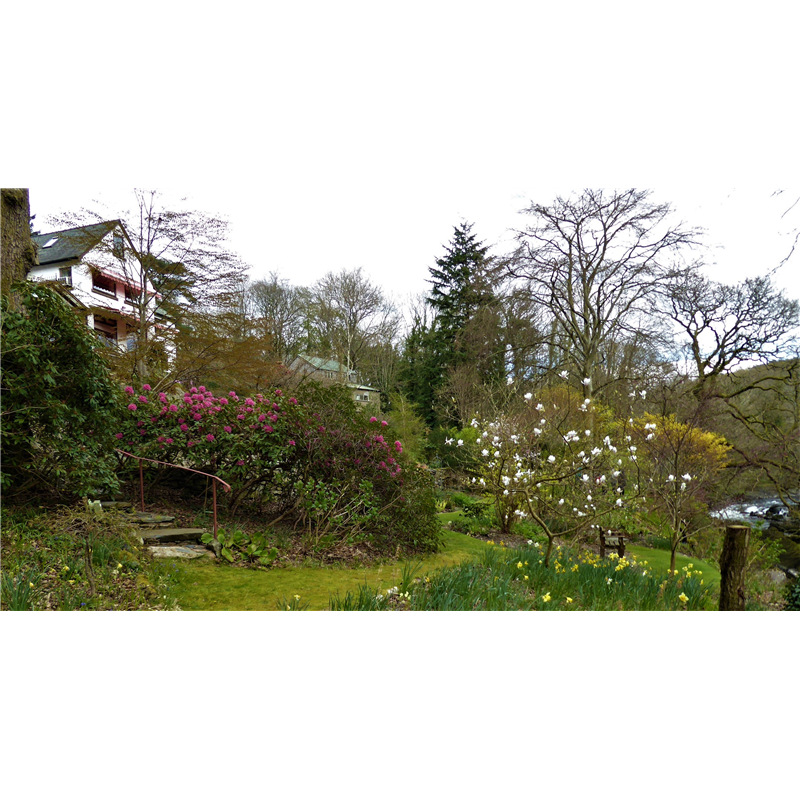 |
Haverthwaite Lodge is in the south of the Lake District and sits on acid soil. Plants loving an ericaceous soil thrive here, and as soon as we arrived this was evident. Along the frontage of the house, in huge planters there where enormous camellias taller than the doorway, with beautiful deep red blooms shining out in all their glory. There was not a blemish anywhere. As we strolled into the garden the mature Magnolias were immediately obvious, in full flower, and undamaged by frost. They were mixed with Peiris, also in full flower. Large clusters of palest green bell-shaped flowers festooned the shrubs, with a small hint of the fiery reds of the new leaf growth just showing at the extremities of the branches. Magnolia soulangiana and M stellata were magnificent, and one would wish for spring to stand still for this display to remain. Companion planting of bamboo was very effective with their fresh bright leaves, and Photinia fraseri ‘Red Robin’ which also shows new leaves in red. The garden slopes away from the house in three tiers down to the River Leven. Across the river the land rises steeply again. The river tumbles around a bend and along the boundary of the garden bringing a feel of the wild countryside along with it. There are mature and gnarled oak and a copper beech along the river bank and in the woodland further down the garden there are more mature trees giving a shady high canopy for woodland flowers. There are Rhododendrons and Azeleas too, some already in flower. There is a weeping variety of Cercidiphyllum japonica (Katsura). This tree will have bronze leaves when they are young, maturing to a bluish green and then yellow, purple and red in autumn. Fallen leaves smell of toffee! There are two specimens of another unusual small tree - Myrtle. This is a pretty tree with small dark green leaves and a trunk that is striking in that it is patchy white and cinnamon coloured. This garden must be very sheltered as this is not a particularly hardy plant. A huge Daphne was still in bloom, the mauve flowers still full of fragrance, and a sight to behold. Close by in a pot was an unusual and attractive Fuschia, F. microfolia, as the name suggests, it has tiny leaves. On the flat level near the river there is a lawned area, a lovely place to stroll along by the river and notice the smaller plants. Here there were Crown Imperial in both red and yellow, a profusion of brilliant blue Scilla, mixed with native narcissi and drumhead Primula, all under a Forsythia so mature one would say it is a tree! It was beautiful, in full flower, and so providing a huge airy yellow canopy. Further round the garden, there was a drift of yellow dead nettle, very effective in the shade; and masses of hellebores, singles and doubles, also enjoying the dappled shade. A patch of Cyclamen coum was there too, giving the promise of flowers later. There was a place for an array of Astilbe, also to come into flower later, but the new sprouting leaves looking good and healthy. As we walked through here, the fragrance of the white narcissi was intoxicating. Here too, in this much shadier area was an unusual camellia with small white flowers. It is called Camellia transnokoensis, it is a small elegant and fragrant upright shrub, and flowers in the winter before the new spring growth. The cutting garden was not on show when we visited, but in the summer season it supplies floral material to the Lakeside Hotel, where we were headed to next for a look at their garden and a cream tea. The garden at the Lakeside Hotel runs along the side of Lake Windermere in front of the hotel. Urns have been used to give height to the design without obscuring the view out across the water. These have Bellis perennis and tulip planted in them at present. A landscape designer has been employed to design the gardens to be attractive at all seasons, and not to be tall, so that again, the view has been considered. Cleverly the gardens have been made to give a pleasing vista from all angles and from the windows of the hotel. Pittosporum and euphorias grace the beds beside the hotel, under the windows. Where possible the gardener, Roger who very kindly showed us the gardens, likes to recycle what he can and make use of everything, so bulbs from the house go into the gardens and prunings from the hazel bushes are used for plant supports. Spring displays of wallflowers are coming on, so are nectaroscordum, and Geranium psilostemon. Walking to the outer edges of the grounds and away from the more formal terrace, we found several young ‘fedges’. Here Roger has used the cuttings from willow to make attractive living screens. The winter dogwoods have been pruned right back to bring on new growth which will give the bright greens and reds of the young stems. Planted beside the drive is a most arresting shrub - from Australia. It has dark green long slender leathery leaves and is covered in big clusters of flowers; the buds were a deep pink and when open revealed small creamy yellow orchid-like fragrant flowers. This is Drimys lanceolata, a real exotic. Local regional apples and pears are espaliered around a square lawned area to the side of the hotel. Examples are Keswick Codlin from Lancashire dating from 1793 and a long-cooker called Ladies Fingers! They are healthy trees bursting with new seasons growth. Roger was kind enough to show us a nearby garden belonging to his boss. In this rocky landscape, it is tiered and terraced. Vinca cascades down a high rocky outcrop, and on the flatter area at the back of the house epimedium thrives. The back garden looks like an amphitheatre with a high rock wall at the back framing the garden. It is a most unusual and intriguing garden. |
|
| Monday, 11 March 2019 |
| Visit to Dalefoot Composts |
| Jane Barker |
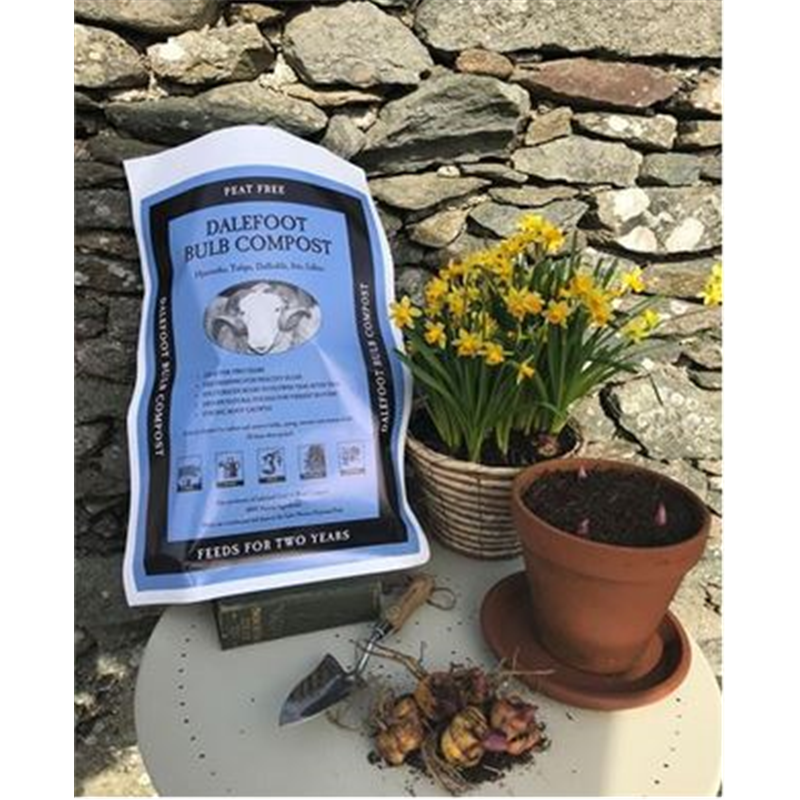 |
It was a rather damp, cold and windy day when the Gardeners of Eden visited Dalefoot Farm at Askham. But we were excited and intrigued as Dalefoot is the home of Lakeland Gold, a compost made of only natural materials with no chemicals or enhancers added. Of course, it is a secret recipe, but the company has gone from strength to strength, with a new product launched each year. This year they are very excited to be launching their tomato compost at Chelsea. This new compost has enough natural nutrients that the plants grown in it only need to be watered. What’s more, the compost has enough strength to perform again for another season! Tomatoes are recommended for the first year and potatoes in the second year. The bag can be used as a grow bag for two plants. Jane, the founder of Lakeland Gold explained that from tentative beginnings they have produced a consistently reliable product which is now preferred by HRH The Prince of Wales. Her husband took some persuading in the early days - he is a farmer and was involved in agricultural contracting, taking a large plant to bale for other farmers. But Jane thought that the profusion of bracken in Cumbria could surely be put to good use. There are potassium and trace elements in bracken, and the stems contain lignin which opens up clay soils. It is similar to seaweed and comfrey in this way. After much trial and error, a recipe was decided upon, and the first bags were offered for sale at Orton’s monthly Farmers Market, along with bags of their composted pony manure, called Horse Power! Foot and Mouth of 2001 was a setback, but it made time for further thinking. Farming became all been about diversity. Jane considered the masses of fleece that had to be taken off the sheep every year, and how it had dropped in value. Wool is water retentive and so wool in compost should reduce the need for watering. In fact, it reduces it by 50%. But fleece jammed the machines used for turning and grinding the compost, and this was a problem that had to be overcome. So, machines were designed and modified on the farm. There were 400 sheep on this farm, but it was not enough, and Jane wanted to buy fleece from the Lake District. Rough Fell and Swaledale, are common in these parts and their rough wool, are just what is needed. However, all fleece has to be sold to the Wool Marketing Board. Jane wanted undipped fleece so she sought a derogation (a relaxation of the rules to permit her to buy direct from the farmers) and she is now able to buy the undipped wool that she requires from 30 or 40 farms in the Lake District. Harvesting of bracken takes place under licence all over Cumbria and North Yorkshire. It has to be done carefully to protect the natural habitat. Bracken is abundant and shelters colonies of violets, a food plant of the caterpillars of the High Brown Fritillary, a rare butterfly in the UK. Bracken provides shelter for foxes and ground nesting birds too. The bracken is cut at ‘full frond’ in July when the most nutrients can be captured. At this stage there is enough potassium in the fronds to last for 3-5 years! The fronds gathered should not be sporing fronds, to protect those who are allergic, and to leave the fruiting bodies on site. GPS and mapping are used to ensure that areas are not over-harvested. Once on the farm, it is left to dry in huge barns. It is turned several times and the internal temperature of the heap must reach 75 degrees three times to ensure the safety of the product. It takes 12 weeks to make the compost. Bracken harvested from acidic areas is used to make an ericaceous product. The farm employs a small team of dedicated folk, both in the office and in the barns where the heavy work is undertaken, composting, turning, checking the temperature, turning again, mixing, screening, grinding and bagging. The company has designed their own bags too and there are now four different wool and bracken composts offered for sale. The future plan is to set up another production site in Wales where there is plenty of bracken and wool. Over 2500 bags of compost were produced last year and orders are increasing year on year. Initially, the Northern Vegetable Society was asked to trial the compost, and so were the Harrogate Spring Show competitors. Feedback has been excellent. Each batch has to be tested to ensure it reaches a certain standard, and each batch is put through a screener at the rate of 5 pallets an hour to remove any large chunks of material that might remain. The finished product is clean and fine and warm. We were able to handle and feel it. It will be good to work with. Wool Compost ‘Double Strength’ is best used as a top dressing, or used with sand and grit or composted bark chippings to dilute it. These composts are reaching garden centres now, with about 100 such outlets at present, and more hoped for. Work is ongoing to find a material other than plastic for bagging. The material must not biodegrade too fast, and it has to hold the weight of the compost, for several gardening seasons. We had a fascinating afternoon, and many of us will be using Dalefoot products in the future. It feels right to use a natural product that replaces peat that is of good quality. Supporting a local business at the same time is a bonus! |
|
| Tuesday, 05 February 2019 |
| Annual Lunch |
| Bay Horse in Winton |
 |
A good time was had by all. Thank you to the committee members - especially Jim, for organizing the event. And to The Bay Horse staff for their usual high standard of presentation in warm, comfortable surroundings. |
|
| Tuesday, 04 December 2018 |
| Christmas Party and Planning Meeting |
|
 |
A good time was had by all! Thank you to our hard-working committee for their efforts during this past year, We warmly welcome the new committee members for 2019 who are already working on a varied programme for the coming year. |
|
| Tuesday, 06 November 2018 |
| Talk - Ferns from the Fern Nursery in Lincolnshire |
| Neil Timm |
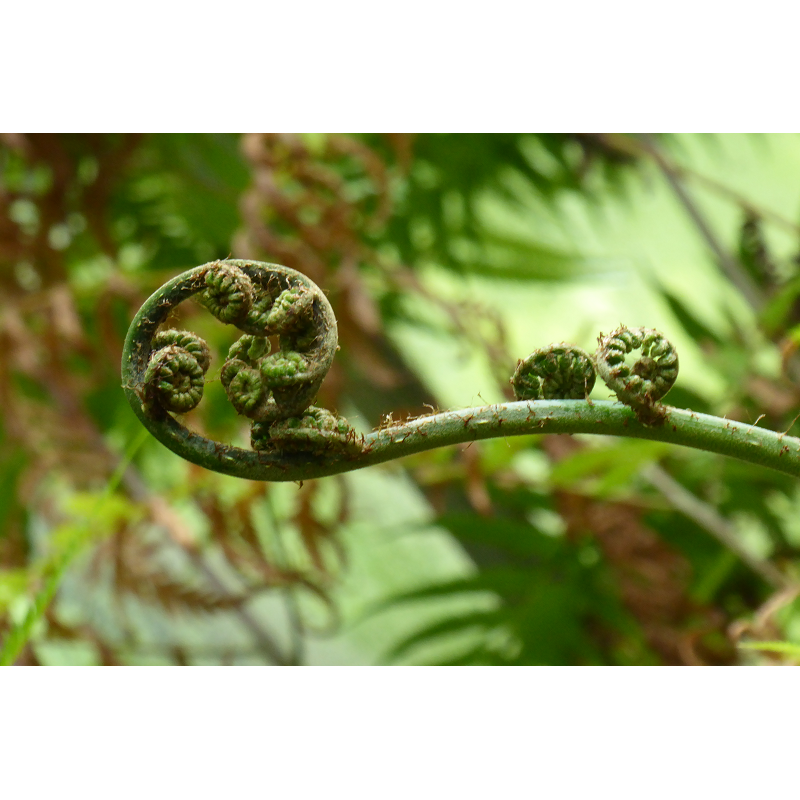 |
A packed house welcomed Neil Timm from the Fern Nursery in Lincolnshire and he began by telling us how complicated the reproduction of ferns is. On the back of some of the fronds on a mature plant, spore producing bodies are found. These are not seeds; they are the first prerequisite in the process and they are shed in vast numbers from the sporangia, beneath the indusium on the back of mature fronds. When a spore lands in promising circumstances, like the forest floor, where there is a reliable moisture source, then the spore will germinate and grow into a structure called the prothallus. This small plant structure cannot grow into the mature plant by itself. At this stage there are only half the number of chromosomes present, and fertilisation by sperm cells from a nearby prothallus, or from the same prothallus must take place for a mature plant to grow. Water is essential to permit the sperm cells to ‘swim’ to their destination, however short the distance. With the fusion of the two cells, the sperm cell and the egg cell, a new plant is born, and can grow into a fern. This process takes about eighteen months, and then a further year to grow to a size that Neil can sell. Some of our British native ferns have become rare, such as Ophioglossum or Adders Tongue. This is to do with the habit of the Victorians to collect ferns for their fashionable ferneries. People would go out into the woodlands and countryside and dig up favoured ferns and take them home to grow them there. Many of our natives have never recovered from this unfortunate hobby. Neil highlighted some ferns as being good to grow in our northern damp gardens. Polystichum setiferum (Soft shield fern) is nearly evergreen and easy to grow. There are extensive selections to choose from and all are magnificent specimens. They like light shade and a moist situation. Dryopteris is another large family of ferns, and includes D. wallichiana (Wallich’s wood fern) which grows tall and straight with warm yellow fronds and a lovely dark midrib. Another Dryoperis dilitata (Buckler fern) is also beautiful and easy. Ceterach officinalis (Rusty back fern) is a tiny British native and can be found growing in dry stone walls. This fern can cope with periods of dry weather and is happy in full sun. It has silvery hairs on the back of the fronds and in dry weather can curl itself into a little ball to protect itself till rain arrives. Asplenium ruta-muraria (wall rue) is a tiny and common fern. It requires limestone rocky outcrops to grow on and happily establishes in such conditions. Asplenium trichomanes (Maidenhair spleenwort) is a good garden plant, if one chooses the right plant. The true Maidenhair fern is not hardy here, but Adiantum venustum (Himalayan maidenhair) is the one to look out for. A damp, rocky and dappled shady spot is required. Small with delicate fronds and a black midrib, they are known for their elegance. Bracken is a native fern, but not one to encourage. Pteridium aqualinium thrives on open moorland, grows as tall as a man, and is a thug. It is invasive and poisonous and dies back each autumn, turning hillsides a rich rusty orange colour. Another thuggish spore-bearing plant is Equisetum arvense (horsetail). It has an extensive and deep underground root system making it very difficult to eradicate. Neil’s best advice is to cut off the top third of the foliage, and using a syringe, inject a strong solution of glycophosphate into each cut stem! Neil told us a bit about club moss, which have fronds and are fern-like. They are also known as ground pines. In the 19th century spores were harvested by the women and children. They were used in several situations, being so fine, like dust, they were used for taking fingerprints, but also, being volatile, for flashing stage effects, magic tricks and in the making of fireworks. A very attractive and popular fern is Asplenium scolopendrium (Hart’s Tongue fern). There are many varieties in cultivation nowadays and all are very beautiful. Some have wavy edges, some are fingered, or branched, some are crested, others are fringed, all are lovely. They need good drainage to flourish. Neil mentioned A. undulatum, A. Kayes variety and A. ramomarginatum. Neil went on to talk about mountain ferns and mentioned Cystopteris fragilis (Brittle Bladder fern) which grows high up on cliffs, and Cryptogramma crispa (Parsley fern) which is a small fern growing in rubble at above 2000 feet! Blechnum penna-marina (Pen of the Sea or Little Hard fern) is hardy and produces two distinct kinds of frond, one is narrow dark glossy green, and the other is the fertile brown frond bearing the spores. It needs to be in lime-free soil, is prettily pink and good for ground cover. Neil spoke of epiphytic ferns too. We don’t have any epiphytic ferns in this country, but the Polypodiums will grow anywhere where there is a bit of shade. They have a long and creeping rhizome which enables the plant to spread itself sideways. This is sometimes seen on fallen tree trunks. It is very tough and evergreen. A good cultivar is P. Cornubiense but it is infertile and reproduction is by division. Platicerium (Stagshorn fern) is a non-native epiphytic fern related to the Polypodys and grown here as an indoor plant. It needs moisture and shade, and can get very large. There are a few wetland ferns to look at. Pillularia globulifera (Pillwort) does not look like a fern, it is more like a grass. It grows in the bottom of muddy pools and has leaves that float on the surface. In dry weather the plant dies off, but the spores remain and germinate when the rain comes. Marsilea drummondii (Nardoo) is an Australian water fern, the spores are toxic. It is a plant that proliferates after the rains and again, the spores survive the drought. Azolla filiculoides (Fairy Moss) is another non-native water fern from the tropics. It is an ecological menace and is banned here. A good choice if you have space is Osmunda regalis (Royal fern). It is a European architectural fern with beautiful long green fronds and separate erect fertile fronds that make the plant look a bit like astilbe. Smaller ferns, described perhaps as compact or slow-growing can be a wonderful foil for river side plants such as Primula, or for use under windows or beside paths. They are unlikely to outgrow their space. Gymnocarpium dryopteris (Oak fern) is an easy fern so long as the soil is wet and acidic. It has beautiful feathery foliage and fine black stems. Phegopteris connectilis (Beech fern) is associated with mountains and moorland, has good autumn colour, and makes good ground cover. There was a craze in the Victorian era, for ferns. From 1830 to 1870 it was very fashionable to have a fernery, a domed glass house with underfloor heating so that wealthy Victorians could display their prize ferns. Many species were taken from the wild in the UK, and many forms have not really recovered. At the same time, a lot of breeding and development took place to satisfy the desire for large numbers of varieties, for showing off in the glass house. We now have many fancy types with crested or curly or wavy fronds, fingered, crimped and twisted. For example, Athyrium felix-femina (the Lady fern) has varieties such as A. congesta, A. Frizalliae, A. Veroniae A. Carbutmedusia. Nowadays we have access to many foreign forms, such as Matteuccia struthiopteri (Shuttlecock fern), from America, which is a very successful plant, spreading widely by underground rhizomes. Polystichum munitum (Sword fern), also from America, has done well here too, especially in the north where it enjoys our cooler and damper climate. For colour, choose Athyrium nipponicum ‘Pictum’ (the Painted Japanese Lady fern) It needs deep shade to give the various colours, but if happy it shines out in shades of silver and burgundy. There are climbing ferns and tree ferns, neither are really hardy here. The trunk of a tree fern is not a trunk, it is the root stock, which needs good protection in our winters. if you want to grow these, you need a big heated greenhouse or a move to Cornwall, according to Neil! Angiopteris (the Giant fern) is an Australian tree fern. There is a specimen at Kew Gardens. Mature fronds can measure 30 feet! Botrychium (Moonwort) is a small and rare British native. It is so small as to be almost invisible. It has a short season but much legend attached to it. It is said that the smoke from burnt Moonwort will send people to sleep, so giving the burglar easy access to his loot! Even stranger is the legendary power it has to break into locks, making life even easier for the burglar! |
|
| Tuesday, 16 October 2018 |
| Visit to Thorp Perrow Arboretum |
|
 |
Twenty or so members travelled by coach to Bedale, to the arboretum at Thorp Perrow. Thorp Perrow is a privately-owned house and the arboretum is the back garden! One hundred acres at least of planned woodland contains many interesting and rare trees, many with emotional attachment for the Ropner family who live there. We had a fine day and our tour guide was the curator. We were told that the arboretum was originally planted by Sir Leonard Ropner in 1931, and several of the areas he planted are still to be seen or are being re-established as the trees come to the end of their lives. At the end of his life Sir Leonard became somewhat grumpy, suffered dementia, and sacked all the staff! The woodland garden became neglected and overgrown. Sir John, Sir Leonard’s son knew nothing about trees, so when he inherited in 1977, he brought in the famous dendrologist Alan Mitchell to give advice. This advice has been crucial to the survival of the arboretum. He said it should be preserved at all costs, as it was a wonderful collection. Sir John and his family have worked tirelessly to preserve, manage and improve the arboretum, and today his son Sir Henry and his family have taken over the reins. Some years ago, Lord Hestletine was instrumental in helping to secure a grant of £50,000 in exchange for opening to the public. Thorp Perrow holds 5 National Plant Collections, of Lime, Ash, Cotinus, Laburnum and Walnut. Labels get stolen, so there is a different system for labelling the trees. Cow ear tags are used on the trees and each bears a code identifiable in the catalogue held in the office for anyone to refer to. Copies are available for sale, and a new edition will be available early next year. The woodland is divided up into sections and bays, connected by long avenues. We started in Section Z where our guide told us that this area is planted for colour as it is the first area the public sees. A stream runs through here, but it is dry for nine to ten months of the year. Our guide says she can notice that the climate is getting drier over the years, and some of our native trees are dying off from lack of water! Section X has a collection of fir trees underplanted with cherry trees. There is a fine specimen of a very rare and endangered Sicilian fir tree (Abies nebrodensis) with white cones. Measures are in place to preserve it, but it is genetically weak and hybridises easily. The only specimen of a rare Laburnum is here in this arboretum, and more are to be grown from it by grafting. A laburnum x cytisus (Laburnocytisus) was been planted here around 1950 and has become one of the 51 Champion trees growing here. The original elm trees that were planted on the Main Avenue have been lost to Dutch Elm Disease and have been replaced with cloned Italian Alder. In front of them is Acer palmatum osakazuki. At the time of our visit the leaves of these trees were changing to a beautiful orange glow. In the springtime there are daffodils all over the forest floor here. At one end of the Main Avenue is the house and at the other end is a beautiful monument to Sir Leonard Ropner, erected in 1980. It is surrounded by a horseshoe of fastigiate Yew, creating a lovely wide and tranquil area around the monument. Section V has old pines underplanted with crab apple and hawthorn. Some of the old and rare pines are being lost to Needle Blight, others are recovering. Cherry trees live up to about 80 years and the old cherry avenue has now been replaced with a new planting arrangement. The new plan has four different species of cherry trees planted in a repeating arrangement so as to extend the season of flowering and the variety of flower colour. At the far end, the focal point is an impressive cedar. Sir John Ropner was ill at the time of the new planting and so there is a memorial around the cedar bearing his oft-repeated expression ‘Don’t waste time’! As we approached Autumn Bay One, we stopped to admire an enormous and beautiful beech tree with boughs sweeping down to the forest floor. Beech trees are a little tricky to manage once they get to be so big. They don’t like high winds and they don’t like having boughs removed, and often die if pruning is too extreme. Judicious pruning over years is a better plan, but this beech has gone beyond this stage and has to be watched carefully. Just beside this majestic beech there was another, but it has had to be taken down as it became unsafe, and public safety has to be safeguarded. This ‘habitat stump’ as it is called, has become a haven for all sorts of plants and animals, some of which are wood-rotting species. We saw hornets nesting in there, and wasps, and several types of bracket fungus. One is called Artists fungus because it is possible to draw on the bright white underside. Rust-coloured fungal spores were all over the ivy that has also colonised the stump. Two years ago, there was a “waterfall” fungus, native but rare, looking as though it was running out of the stump from the top and down across the nearby grass. It must have been quite a sight. The National Collection of Cotinus is held in Autumn Bay One, and they were looking wonderful with their leaves having turned a vivid deep crimson. In the spring there are masses of bluebells here. A Blue Bean tree (Decaisnea fargesii) was stunning with the last of its crop of really very blue bean pods. It is a native of eastern Asia. Also, in these Autumn bays (there are three) is Liquidambar styraciflua (Sweet Gum), its leaves turning a strong red colour, a Scarlet Oak, Cotinus coggigria (also showing strong scarlet colour in the leaves), a Trident maple, so called because its leaves grow in triplets and several Parrotia (Persian Ironwood) which show variable colour depending on their situation. All these trees with their interesting leaf colour blended together with blue spruce to make a wonderfully exciting autumn vision. Another interesting tree there is Acer griseum, the paper bark maple. The bark is a stunning rusty colour and it peels. The tree is rare because it has to be reproduced by the vegetative method i.e. grafting, as it is not a particularly fertile species. As we walked along past an unusual oak, it was the semi-evergreen Quercus canadensis, we were told that the planet needs twenty trees per person to keep the oxygen/carbon dioxide balance right for life on the planet! So we need to plant trees. We were also told that any trees we manage to germinate will be gratefully received at Thorp Perrow and given homes. The Lime Avenue is very important, and contains some Champion trees. There is a great diversity amongst the limes here, and is another of their National Collections. In the spring, the avenue is buzzing with bees. There is also a National Collection of Juglans (walnut) here. There are eighteen different types. Unfortunately, they have been planted too close together, and there is a plan to resite the collection and plant new specimens before attempting to move the overcrowded ones. We came to an The Millennium Park where the poplar collection used to be. The poplars have been cleared except for one great tree, a Poplar trichocarpa from the North American west coast, affectionately known as Big Pop! Poplars are thirsty trees and their removal created a flood, now a lake. At the other end of this lake is an ugly oak tree, ugly because it has been pruned wrongly by someone who wanted to lift the crown. Oak trees are spreading rather than tall, and this tree has not enjoyed the treatment. So, a ten-year programme has been put in place, called ‘retrenchment’. The first prune has been designed to mimic what happens in storms, and the tree has been judiciously torn, rather than cut. The idea is to recreate a low canopy and a fat trunk. It is known as The Catherine Parr Oak, as it is thought to have been planted in 1535 to commemorate her marriage to Baron Latimer. There are three Jubilee oaks hereabouts, each was planted for a different jubilee, the first in 1935 for King George V, the second for the Queen’s Golden Jubilee and the third for her Diamond Jubilee. The curator can attest to the fact that the most recent planting is a tree propagated from the Royal Estate. As we walked back towards the entrance, we passed the trunk of an oak that had collapsed. It has been laid horizontally to one side of the pathway and has become a new habitat. It is fascinating to children who love to climb upon it and slide down the inner side of the trunk! Another area inside the arboretum is the Millbank Pinetum, established by Lady Augusta Millbank in the 1840s. She was particularly interested in North American species and there is a huge Sequoiadendron in the pinetum. We could see its thick corky bark which protects the tree from fire – fire being a hazard in the native land of the Sequoia. The Mound is a fairly new feature made from the spoil from another project. When Sir John was seventy, a central ‘Acorn’ in stone was set centrally, and the story goes that he was embarrassed. It is surrounded by lavender, grasses and buddleia, and steps have now been fashioned to give access to this herbaceous border on the top of the Mound. Springwood, another named area in the arboretum, is mentioned in the Doomsday Book. It is a medieval piece of the woodland grown in an area where there are springs. Here a fern-leaved beech, very dear to the family, is being carefully thinned and braced for safety. Not only are there beautiful acers in the Acer Glade, there are rare magnolias, for example Magnolia biloba, and a single Leylandii, being grown as a specimen. This tree was developed for a purpose, for screening in the 1970s and as the oldest examples are still growing, the full size of a mature specimen is still unknown! This one at Thorp Perrow is about 30 metres. The gardeners had a fascinating tour around the arboretum with a most enthusiastic and knowledgeable guide. The woodland has wonderful collection and is surely in safe hands. |
|
| Wednesday, 12 September 2018 |
| Talk - Artist and Gardener |
| Maureen Sawyer |
 |
Early on a late September morning, members of The Gardeners of Eden and The Quitters gathered to hear an illustrated talk given by Maureen Sawyer from Stretford, Manchester. The talk was called ‘Inspired by Gardens’ and Maureen told us how gardens had always inspired her art work, how she loved her own garden, and knows every plant in it. She is a graphic designer and textile artist and her garden is a rich source of ideas for form and shape and colour. First, she told us about her garden.
When she moved into her Victorian house in Stretford, the garden was a long narrow blank canvas. Since developing the garden, she has opened for the National Garden Scheme. In 18 years she has raised £42,000, some of which she has been sent to Christies Hospital.
She and her garden have been on Gardeners World, Britain’s Best Back Gardens and other programmes including with Alan Titchmarsh.
The opening date for the garden has been changed so as not to clash with Wimbledon. A team of people assist her before the opening. Her garden is organic, there is no spraying, and the soil is fed, not the plants. Maureen has three tons of manure and compost delivered every year, and now, with her back problems, she has learnt to multi-task – a bit of this job with a bit of another job and then back to the first task, until all, both or more tasks are completed.
Maureen’s garden is accessed through high decorative iron gates which separate the courtyard from the rest of the garden. This space is a shared paved area, with its own microclimate. There are two central heating vents from the houses either side which provide heat in the winter. Even this space is utilised as it is bright but shady. Ferns and hostas are very happy here, and are augmented in summer with colourful hanging baskets.
The first garden behind the house is the Mediterranean Garden. There is a little pond where the Koi swim amongst the tall reeds. All around are decorative terracotta pots burgeoning with phormiums and agapanthus, alliums and succulents. The step midway is overflowing with Erigeron karvinskianus. Clipped box is used throughout the garden for continuity and structure.
Next is a pebbled and paved shade garden which is undergoing some changes to become more sculptural and prevent self-seeding in the pathways. It leads to the Gravel Walk. This space has lots of tall flowering plants and always looks sunny, even when it isn’t. Here there are lots of yellow, white and lilac flowers such as Leucanthemum and Telekia, Anthemis, Astrantia, Phlox and Phlomis. This walk leads gently into the Kitchen Garden.
Maureen has used golden plants for the permanent planting here, and it is so effective. Low hedges of golden Oregano border the vegetable beds, and are punctuated with tall pots of Hakonecloa around the sides of the garden, along with ornamental box shapes. She even has golden coloured nets to protect her plants. A large greenhouse occupies part of this area where Maureen grows tomatoes and melons. Outside she grows sweet corn, carrots, beetroot and brassicas, with annuals for companion planting and to attract insects. Her favoured annuals are Ageratum ‘Blue Horizon’, Calendula, Ammi majus, and Tagetes.
Further still from the house is the Pond Garden. Here recycled materials have been used to build the pond. It is stocked with tench, bottom-feeders which help to keep the water clean. The area has a lawn with borders around. Hot colours are the theme here and Maureen likes to have strong colour in the autumn. Among her choice plants are Darmera peltata, Calamagrostis acutiflora, hardy geraniums and Achillea.
At the very end of the garden is the last area, a Woodland Garden. Here it is very shady, trees and bushes create a vertical garden in all shades of green. There is all manner of low growing shade-loving plants here, hostas and ferns predominate. There is a central stone urn planted with brunnera, and ferns at its feet. Maureen describes this spot as her spring garden, because there are masses of Galanthus and bluebells amongst the greenery.
Now we came to Maureen’s description of her work and how it is born. She told us that ‘form’ comes first with drawings and photographs to capture the essential nature. She is not trying to make an image or produce anything representational.
Her work appears in three forms. Boxed pieces are for viewing from one side only through a top or side Perspex window. Other work is displayed in a clear cube to be viewed from any side, and these can be any size. Other pieces are free-standing.
She has worked with children and finds them so free and inspiring. She says that children are at their most creative at the age of four! She also told us that Picasso spent 80 years trying to get back his own four-year-old self!
Some of her inspiration comes from earthworks such as worm casts (who would have thought it?), simple flowers – daisies of all sorts and dahlias are perfect, and even seeds.
Some of her work starts with a square white box! Colour is distracting and a square has no movement so is the preferred format.
After cutting the box and reassembling it into a new and curved shape to her liking and dependent on her inspiration, Maureen then starts to add colour using tissue paper, fabric, glue and threads. Pipe cleaners and wire, toothpicks and little felted pom-poms, almost anything can be used if it will add to the design as required.
Maureen brought some examples of her work to show us. We were amazed at how amazingly different her work is from anything we had seen before. We could see some of the influences – but by no means all! All her pieces were true works of art and were for sale. We were impressed by the amount of detail her work carries, and how, as she said herself, she spends hours in the detail, having patience for hand work that she never had in her early life. |
|
| Thursday, 19 July 2018 |
| Three Days in Scotland |
|
 |
Day 1 Dawyck Arboretum Originally this ‘garden’ was in private ownership, but the damage in the great storm of 1968 was so great as to be unsustainable for the owners. Some 50,000 trees were lost and the arboretum was gifted to the Royal Edinburgh Botanic Gardens.
Salmonberry invaded after the devastation and the loss of vast areas of canopy. The task was enormous.
But now, you would not know. The arboretum is a huge and fascinating area with very many tree species from around the world. There are trees from the Americas, for example, Red Oak (Quercus rubra) which has yellow foliage in autumn, and the Vine Maple (Acer cercinatum) which creates neat thickets by layering its branches. For this reason it is known as “Wood of the Devil”. Another North American native is Acer laxiflorum var. longifolium.2_Dawyck_View_Guide_AcerThere are giant redwoods, with all the space they need. A specimen of Sequoiadendron gigantium was planted in 1854, and its thick corky bark provides homes for wren and treecreeper.
The tallest tree in the garden is a Douglas Fir, measuring almost 50 metres! It was measured using a clinometer.
There are many Sorbus varieties in the garden, all are worthy plants. S. vilmorinii has feathery foliage which turns purple in the autumn. Another from Japan, S. commixta, described by our guide as the very best for autumn colour. It grows eventually to 30 feet, and gives brilliant reds and oranges as the leaves turn. Fruits are red when ripe.
Katsura (Cercidiphyllum magnificum) is a special tree and always good to see. Its unusual characteristic is that in autumn, the falling leaves give off a smell of burnt sugar, and the forest will smell of toffee!
Of equal interest to the trees was the understorey planting. The azeleas and rhododendrons were just over, so were the trillium. The shuttlecock ferns (Matteuccia struthiopteris) was plentiful and beautiful as the fronds were still unfurling. Another fern we saw was Polysticum munitum, a hardy sword fern from the western USA.
We saw Oplopanax horridus, a tall and very spiny bushy plant for the Pacific North-west. It is very irritating with spines on the tops of and the undersides of the leaves as well as on the stems.
In damp shade meconopsis were flowering in their dramatic vivid blue. Rodgersia was plentiful too, a large plant suited to damp forest conditions, with tall, pink, red or white pannicles of fluffy flower heads.
Shrubs make good underplantings too. The mountain laurel (Kalmia latifolia) is another from America. (We know it is the state flower of Connectticut from a recent previous meeting) It has deep pink crimped buds that open into elegant pale pink bowl-shaped flowers.
Some rhododendrons and other plants too, are adapted to conserve water because they are found in high and dry conditions. We saw R.roxieanum with its narrow curled and felted leaves. It is a mountain species from Tibet. Stobo Japenese Water Garden
This garden was artificially created in the 1900’s when Japanese influence was strong. By damming the burn that flows through this area to the River Tweed, a dramatic waterfall and a tranquil loch were created. Over the years the scene has become almost natural. There is a beautiful blend of natural Scottish landscape and elegant Japanese design. Acers and Prunus trees were used in the original design, along with Japanese lanterns in stonework, a tea-house and a pretty arched bridge over running water. There are sluices to control the flow of water, to maintain a gentle flow, and prevent any torrents.
Hugh, our host told us of the importance of water, for reflections and for the sound of gently running water. Unfortunately, the garden was affected by Storm Hector the week before our visit, and there had been considerable damage.
Lawson cypresses have recently been removed to let in more light. Rosa moyseii from China, grows tall, has large single red roses and makes big colourful elongated hips. A small acer plantation is growing beside the watercourse, and looks very Japanese. There will be good colour in the autumn. Kailzie Gardens As we entered the garden we walked beside a high wall that bounds the garden. On this outer side was a long border of nepeta, with roses on the wall, and erinus alpinus growing all over the surface of the wall. It was a lovely cool spot, where, we were told, there are no slugs!
During the war, the garden was given over to growing food, mostly potatoes. A garden gate was saved from the iron foundry at that time, and copies have been made since to restore the gates in the garden.
But since then, Lady Buchan-Hepburn has made a beautiful garden. She has had to bear in mind that the garden sits in a frost pocket, and all her plant choices needed to be hardy, even super hardy. In some years, frost has been recorded in every single moth of the year.
The rose garden, built as is often the case, in a circular form will be stunning in a week or two, when the flowers bloom. A few were out and it was looking beautiful. Rosa Constance Spry held centre stage, entwining with a white clematis. Groups of contrasting hardy geraniums in blues and white were effective as under planting, and tall willowy astrantias wafted in the gentle breeze, Meconopsis and sedum all played their part in this garden where there was ample space to walk at leisure and observe the whole view.
The greenhouse has huge pipework within it, and figs were growing against the back wall. There were fuschia in here, in large numbers and in all colours. Coleus, agapanthus and scented geraniums must also be favourites. In one section of the greenhouse was an area kept much warmer, and in here, to our surprise we found exotic butterflies, and chrysllides waiting their time to emerge.
Outside the greenhouse, and against the wall was an enormous Hydrangea petiolaris, flowering profusely. We walked through the laburnum arch, which was just as beautiful for being green as it would have been earlier when it was yellow with long raceames of flower.
As we turned a corner, suddenly we were at the head of the long double herbaceous border. It was so neat and ready to burst forth. At intervals, Alchemilla mollis spilled over onto the grass pathway, making a statement with the brilliant lime colour of its flowers. There was purple Aquilegia, orange Geum Mrs. Bradshaw, and the vivd peuce of Geranium psilostemon. I saw beautiful soft mid-blue Veronica, together with blood red Astrantia and deep red Astilbe. The peonies were just breaking bud, and the Veronicastrum at the back, with Cephalaria and Centaurea were coming along for later too. The herbaceous borders will be stunning, a riot, very soon. Day 2 Edinburgh Botanical Gardens The Royal Botanical Gardens of Scotland is comprised of three sites, Dawyck, Logan, Benmore in Argyll and Edinburgh. The organisation has an integrated Policy incorporating its Mission Statement with corporate planning, new Ministerial priorities, the Science Strategy and the National Heritage Act. The importance of the Living Collection is well recognised in the national and global context and has relevance for the environment, climate change and quality of life globally. The organisation is aware of the importance of international legislation, and ensures that the collections are well managed and available to all who wish to make use of them in any way.
All species in the garden are labelled. Those with yellow labels indicate the plant is under scientific investigation, they are monitored weekly or bi-weekly, the data collected and analysed. There is a direct link in this work with climate change and the early arrival of spring. Spring has advanced by 14 days over the last 30 years. It is also interesting to note that olive trees can now be grown in Edinburgh!
There are wide circles of bare soil around all the specimen trees. This is to facilitate rainwater to get to the tree roots. It is easier to care for a tree that has bare earth around it. Machinery for de-compacting the soil can easily be used and top dressings easily applied.
Fallen and semi-felled trees are sometimes purposely left where they fall, to create greater diversity for small animals, invertebrates and plant life.
The tulip tree wood is very sought after, particularly for making beautiful rocking horses! The wood has interestingly coloured variations in the grain creating lovely patterns ideal for a showy rocking horse!
The Botanic Cottage used to be home to the gardener and his family in the late eighteenth century, and later was used as a centre for learning. It has been rebuilt on this new site using traditional methods and is now a resource for the many students who come here to learn, returning the building to its previous use. In front of it are the garden beds used by the students and at the time of our visit, they had just been judged, so were looking their best.
The natural pond in the garden is used by kingfishers. When the river is in spate, they come to fish.
The now famous beech hedges are 110 years old, and were put in to divide area of the garden. Pleached lime and hornbeam have been used to good effect also, giving good structure to the garden. The Queen Mother has a beautiful Memorial Garden and Pavilion constructed in the Botanic Garden. It was completed in 2006 and comprises a myrtle maze, and a pavilion lined in shells with a roof lined with cones from conifers in the Botanic Gardens and representing all corners of the globe.
The Monkey Puzzle Conservation programme illustrates the international concern for the loss of its home range in Argentina and Chile due to fire, grazing of livestock and over-collection of the edible seeds. At Edinburgh, a small grove of Monkey Puzzles has been planted. Working with the International Conifer Conservation Programme and other organisations, there are sites in the UK (eg. The Victorian Woodland Garden in Grasmere) planting these trees and other endangered species of conifer from around the world in an effort to safeguard their future and the diversity of our planet.
After lunch we were free to explore the hot houses. Here there is a wealth of plants from tropical areas of the world, including temperate Mediterranean-type climates, wet and dry tropics and deserts. It was a fascinating afternoon. Drs Neal’s Garden Dr Andrew Neal and his wife Agnes, both GPs, began a garden on glebe land that was unsuitable for growing crops because of its steepness. The garden was begun in 1963 on the Duddingston Glebe field, not previously cultivated. The doctors asked their patients to help them with the project, thus encouraging them to take fresh air and exercise. The charitable Trust was formed in 1997 to take over the costs of running the garden and both the doctors died in 2005.
Claudia is the gardener and Maud is her dog, a delightful black bundle of fluff! We were delighted to meet them. Both have boundless energy and enthusiasm! Claudia told us that there is a shelter belt of conifers at an angle to the lochside, and 25 trees have had to come out since she has been the gardener, including a huge horse chestnut, 200-300 years old, just inside the gate. Other removals whilst in her charge have been a Turkey oak and many other repeats within the garden. She told us that the juniper and heather beds need renewing, they are overgrown with lilacs and azeleas.
Three coastal redwoods were planted by the doctors as seedlings, and a tulip tree. Claudia has planted the physic garden with many herbs relevant to the doctors’ work – one was a gyno-urinary specialist, the other an ENT specialist. She has had help from a herbalist who takes plant material for medicine making. The Apothecary’s rose is here, of course, R. officinalis, and ginkgo biloba, as well as other plants such as camomile, dead nettle, lemon balm and sweet violet.
Claudia still has help from volunteers, using people with Aspergers syndrome to count out the bulbs and sort them.
In spite of all the tree felling that has occurred, it is still a very wooded and sheltered garden, full of interesting and unusual species, with glimpses of the loch between them. There is a small area of meadow that, in spring, is full of narcissus praestans, white allium and cow parsley. There were crannogs on the loch during the Bronze Age and it is thought that this land was cultivated at that time.
At the bottom of the garden, to the right of the entrance, is an interesting bed with large shrub. There is a beautiful moss rose, R. William Lobb, Philadelphus ‘Belle Etoile’, and Crambe cordifolia.
A magnolia bed is planned and two varieties are so far planted, M. stellata and M. ‘Susan’.
Day 3 Edrom Nurseries
We arrived here via the coastal road on a splendidly sunny morning. There were beautiful rolling hills and wonderful sea views. A very happy hour and a half was spent here, on retail therapy!
This is a delightful, fascinating and well-stocked alpine nursery. Carolside Our visit to Carolside began with a delightful cup of tea on the lawn in the sunshine. It was tempting to remain, but we had things to see.
Carolside is a beautifully romantic garden set with roses and herbaceous perennials. The house and garden are set in the gentle wooded hills of the borders, nestling in a bend of the River Leader. The oval walled garden was a notable rose garden in Edwardian days and today holds an important collection of roses, and in particular pre-1900 Gallica roses.
As we approached from across the lawn, a huge semi-circular bed edged with Nepeta welcomed us in. Through a wooden gate and archways of greenery, we could glimpse the length of the herbaceous borders. With Alchemilla mollis and Nepeta, such a good combination, our eyes were drawn to the glasshouse at the end. Lupins, astrantia, peonies in all colours and iris were resplendent in the sunshine. Foxglove and the purple form of knapweed (centaurea) were backed by Veronicastrum which flower later.
There were riots of little viola faces, and the prettily fringed white bladder campion.
At the end we came to a rose garden, all neatly edged with thick box hedges, the whole area edged again with more box with Geranium magnificum luxuriating behind it. All the roses were a soft pink variety.
Through another gateway, we found a formal herb garden in a saltire design, again using box hedging. Within was marjoram, borage, chives and lettuce; and along the high walls, more roses with angelica and lovage. In shadier spots we found huge hostas, all perfectly formed. Herterton Hartington Hall is just next door, and Cromwell’s horses were changed here!
In 1614 a garden was made here, by a lady, an unusual occupation for a lady in those days. It was a small country garden where each ‘room’ had a different job. There would have been a cutting garden, a herb garden, a fruit and vegetable garden etc.
Mr and Mrs Lawley who live here now, have been gardeners since their thirties, and live at Herterton on a long lease from The National Trust. They came here when Mr Lawley was just in his forties, and he enters his eighties shortly. At that time the nursery garden was a farmyard, all hardcore. He told us it took them 8 years to build the walls and do the paving. (Interestingly, he went to Barras for the paving!) In 1986 Marjorie drew up plans for the planting. These were very detailed and now hang in the gazebo for everyone to see. Once the garden was established, Marjorie looked after the flowers and Mr Lawley took care of the hedges, and the paths. Sadly, Marjorie now has dementia, but she still enjoys gardening. They have given up the nursery side, now their pensions are coming in, and it is a relief and gives time for the garden proper.
The Gazebo built at the end of the garden gives views all round. “Gazebo’ means to gaze around, and originally one would first look out behind, outside the garden to check all was well. Then attention could be given to views of the garden.
The main garden by the house is the flower garden where herbaceous perennials are grown, there is evidence of a colour scheme with plants of the same colour arranged together. There is some topiary in this garden giving interest and structure and a particular pathway through from one garden to another.
At the side of the house is the Physic garden, with a willow-leaved pear as the centrepiece. With its silvery foliage, it creates a peaceful setting to this formal herb garden. The small beds around are all edged with a small red-flowered saxifrage, most effective.
The front garden is a topiary garden. Here there are box and privet and yew in striking shapes, globes and half-globes, spirals, boxes and even a pair of chickens. From the road the view is clever, of the house clothed in a white clematis giving a contrasting foil to the topiary pieces.
Returning to the back of the house, between the flower garden and the gazebo is another garden. It is the Fancy Garden and the inspiration for this comes from a formal needlework design. The only plant is box, and the ground is paved. A pattern of tiny short hedges is laid out in geometric style, in four quarters, each the same, with a wide walk down the centre edged with beautiful neat box balls. I counted 26, 13 on each side of the path. In the centre of each quarter is a short stone obelisk, and at the centre of the garden on the path is a large shallow stone bowl on a simple pedestal. It is a spectacular achievement, and is pristine. |
|
| Friday, 01 January 2016 |
| Activities in the Year 2016 |
|
 |
Reports of our activities for the year 2016 are published in an Annual Report booklet that can be borrowed from the Committee. The activities included: 03_ Gardens of Normandy Talk 04_History of Roses Talk by Jenni 05_Low Fell 06_Hazel Cottage 07_Artlegarth 07_Lincolnshire Three Day Trip 08_Fell Yeat 09_MembersGardens in Ravenstonedale and Newbiggin 10_Tulips of Kazakstan Talk |
|
| Thursday, 01 January 2015 |
| Reports for the year 2015 |
|
 |
Reports for the year 2015 are to be found in a printed Gardeners of Eden Annual Report. Please see the committee to borrow a copy. 03_ Wild Flowers and Garden Relatives Talk 04_ Members Gardens in Crosby Garrett 05 Holker Hall Nursery and Bus Trip 06_Wiltshire and Shropshire Three Day Trip 07_Boxwood House, Hartley 09_Sizergh Castle Gardens 07_Warnell Hall, Sedberghum 10_ Fantastic Flowers Talk 11_ High Close, Grasmere |
|